Und dann auf "Zum Home-Bildschirm [+]".

Stöbern
genialokal zum Startbildschirm hinzufügen
Installieren Sie die genialokal App auf Ihrem Startbildschirm für einen schnellen Zugriff und eine komfortable Nutzung.
Installieren Sie die genialokal App auf Ihrem Startbildschirm für einen schnellen Zugriff und eine komfortable Nutzung.
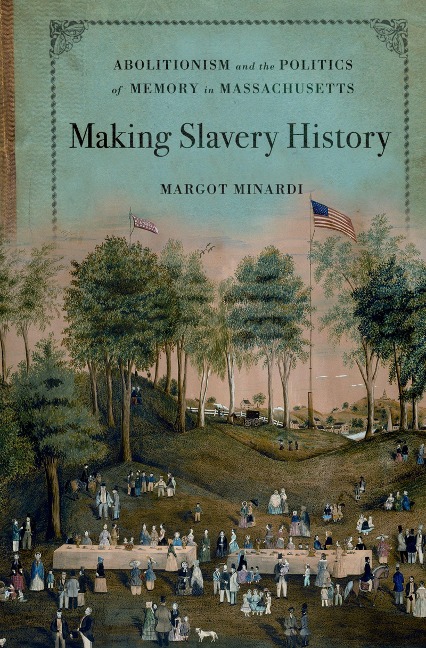
Making Slavery History focuses on how commemorative practices and historical arguments about the American Revolution set the course for antislavery politics in the nineteenth century. The particular setting is a time and place in which people were hyperconscious of their roles as historical actors and narrators: Massachusetts in the period between the Revolution and the Civil War. This book shows how local abolitionists, both black and white, drew on their state's Revolutionary heritage to mobilize public opposition to Southern slavery. When it came to securing the citizenship of free people of color within the Commonwealth, though, black and white abolitionists diverged in terms of how they idealized black historical agency. Although it is often claimed that slavery in New England is a history long concealed, Making Slavery History finds it hidden in plain sight. From memories of Phillis Wheatley and Crispus Attucks to representations of black men at the Battle of Bunker Hill, evidence of the local history of slavery cropped up repeatedly in early national Massachusetts. In fixing attention on these seemingly marginal presences, this book demonstrates that slavery was unavoidably entangled in the commemorative culture of the early republic-even in a place that touted itself as the "cradle of liberty." Transcending the particular contexts of Massachusetts and the early American republic, this book is centrally concerned with the relationship between two ways of making history, through social and political transformation on the one hand and through commemoration, narration, and representation on the other. Making Slavery History examines the relationships between memory and social change, between histories of slavery and dreams of freedom, and between the stories we tell ourselves about who we have been and the possibilities we perceive for who we might become.
Margot Minardi is Assistant Professor of History and Humanities at Reed College.
Prologue: Two Bodies Introduction: Who Makes History? Chapter 1: Facts and Opinions Chapter 2: Heroes and Paupers Chapter 3: Movements and Monuments Chapter 4: Tea and Memory Chapter 5: Fugitives and Soldiers Epilogue: Fishbones Abbreviations Notes Index
Dieses eBook wird im PDF-Format geliefert und ist mit einem Adobe Kopierschutz (DRM) versehen. Sie können dieses eBook mit allen Geräten lesen, die das PDF-Format und den Adobe Kopierschutz (DRM) unterstützen.
Zum Beispiel mit den folgenden Geräten:
• tolino Reader
Laden Sie das eBook direkt über den Reader-Shop auf dem tolino herunter oder übertragen Sie das eBook auf Ihren tolino mit einer kostenlosen Software wie beispielsweise Adobe Digital Editions.
• Sony Reader & andere eBook Reader
Laden Sie das eBook direkt über den Reader-Shop herunter oder übertragen Sie das eBook mit der kostenlosen Software Sony READER FOR PC/Mac oder Adobe Digital Editions auf ein Standard-Lesegeräte mit epub- und Adobe DRM-Unterstützung.
• Tablets & Smartphones
Möchten Sie dieses eBook auf Ihrem Smartphone oder Tablet lesen, finden Sie hier unsere kostenlose Lese-App für iPhone/iPad und Android Smartphone/Tablets.
• PC & Mac
Lesen Sie das eBook direkt nach dem Herunterladen mit einer kostenlosen Lesesoftware, beispielsweise Adobe Digital Editions, Sony READER FOR PC/Mac oder direkt über Ihre eBook-Bibliothek in Ihrem Konto unter „Meine eBooks“ - „online lesen“.
Schalten Sie das eBook mit Ihrer persönlichen Adobe ID auf bis zu sechs Geräten gleichzeitig frei.
Bitte beachten Sie, dass die Kindle-Geräte das Format nicht unterstützen und dieses eBook somit nicht auf Kindle-Geräten lesbar ist.