Und dann auf "Zum Home-Bildschirm [+]".

Stöbern
genialokal zum Startbildschirm hinzufügen
Installieren Sie die genialokal App auf Ihrem Startbildschirm für einen schnellen Zugriff und eine komfortable Nutzung.
Installieren Sie die genialokal App auf Ihrem Startbildschirm für einen schnellen Zugriff und eine komfortable Nutzung.
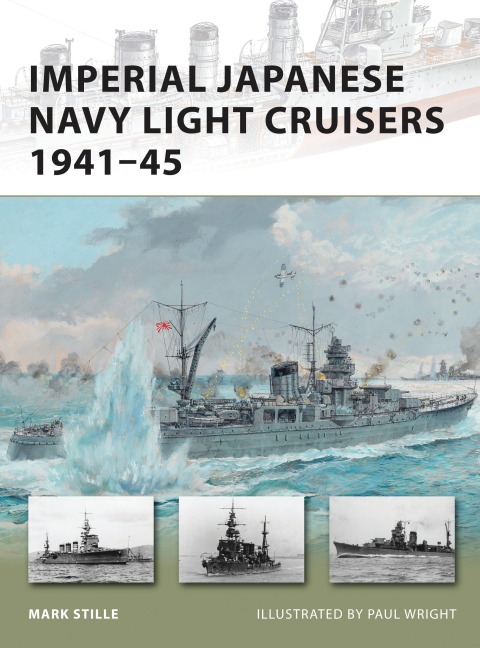
The Imperial Japanese Navy went to war with 17 light cruisers and another three cruiser-sized training ships.
Of these, most were 5,500-ton ships designed to act as destroyer squadron flagships. This made them much different in capabilities and mission from their American counterparts. During the war, the Japanese built another five light cruisers, all but one of which maintained the design premise of being able to serve as destroyer squadron flagships. During the war, Japanese light cruisers were active throughout the Pacific performing many missions in addition to their flagship duties.
Mark Stille continues Osprey's coverage of the IJN of WWII with this concise and complete study of all 25 ships, from their design and development to their ultimate fates. Detailed artwork and rare period photographs from the Fukui collection held in Kure, Japan illustrate this discussion.
Mark Stille is the author of numerous Osprey titles focusing on naval history in the Pacific. He recently concluded a nearly 40-year career in the intelligence community, including tours on the faculty of the Naval War College, on the Joint Staff and on US Navy ships. He received his BA in History from the University of Maryland and also holds an MA from the Naval War College.
Paul Wright has painted ships of all kinds for most of his career, specializing in steel and steam warships from the late 19th century to the present day. He is a Member of the Royal Society of Marine Artists and has illustrated the works of Patrick O'Brian, Dudley Pope and C.S. Forester amongst others.
Introduction
Japanese naval strategy and the role of the light cruiser
Japanese light cruiser tactics
Japanese light cruiser design and development and impact of the Washington and London Naval Treaties
Japanese light cruiser weapons
Japanese light cruiser radar
The Light Cruiser Classes (Tenryu Class, Tama Class, Nagara Class, Sendai Class, Yubari Class, Agano Class, Oyodo Class, Katori Class)
Analysis and Conclusion
Dieses eBook wird im PDF-Format geliefert und ist mit einem Adobe Kopierschutz (DRM) versehen. Sie können dieses eBook mit allen Geräten lesen, die das PDF-Format und den Adobe Kopierschutz (DRM) unterstützen.
Zum Beispiel mit den folgenden Geräten:
• tolino Reader
Laden Sie das eBook direkt über den Reader-Shop auf dem tolino herunter oder übertragen Sie das eBook auf Ihren tolino mit einer kostenlosen Software wie beispielsweise Adobe Digital Editions.
• Sony Reader & andere eBook Reader
Laden Sie das eBook direkt über den Reader-Shop herunter oder übertragen Sie das eBook mit der kostenlosen Software Sony READER FOR PC/Mac oder Adobe Digital Editions auf ein Standard-Lesegeräte mit epub- und Adobe DRM-Unterstützung.
• Tablets & Smartphones
Möchten Sie dieses eBook auf Ihrem Smartphone oder Tablet lesen, finden Sie hier unsere kostenlose Lese-App für iPhone/iPad und Android Smartphone/Tablets.
• PC & Mac
Lesen Sie das eBook direkt nach dem Herunterladen mit einer kostenlosen Lesesoftware, beispielsweise Adobe Digital Editions, Sony READER FOR PC/Mac oder direkt über Ihre eBook-Bibliothek in Ihrem Konto unter „Meine eBooks“ - „online lesen“.
Schalten Sie das eBook mit Ihrer persönlichen Adobe ID auf bis zu sechs Geräten gleichzeitig frei.
Bitte beachten Sie, dass die Kindle-Geräte das Format nicht unterstützen und dieses eBook somit nicht auf Kindle-Geräten lesbar ist.