Und dann auf "Zum Home-Bildschirm [+]".

Stöbern
genialokal zum Startbildschirm hinzufügen
Installieren Sie die genialokal App auf Ihrem Startbildschirm für einen schnellen Zugriff und eine komfortable Nutzung.
Installieren Sie die genialokal App auf Ihrem Startbildschirm für einen schnellen Zugriff und eine komfortable Nutzung.
Ihr gewünschter Artikel ist in 0 Buchhandlungen vorrätig - wählen Sie hier eine Buchhandlung in Ihrer Nähe aus:

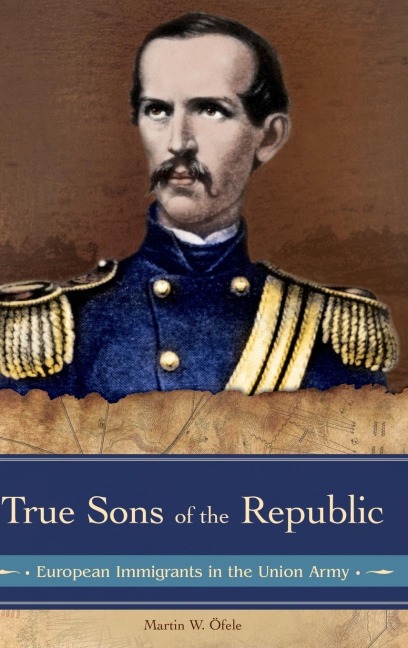
Up to 500,000 Union soldiers, or one fourth of the Union army, had been born in Europe. These immigrants had left their home countries for a multitude of reasons, mostly economic and political. In the United States, they envisioned a country of freedom that would allow them to pursue their goals of acquiring wealth and participating in politics. Soon immersed in the great debate over the expansion of slavery, many immigrants found themselves forced to take sides and eventually rallied around the Union flag. Ethnic Americans joined the northern army out of the same motivations as their native-born comrades, with one notable difference. By defending the Union, immigrant volunteers hoped to tear down nativist obstruction against their assimilation into society and prove their worth as full citizens. Declaring their unconditional loyalty, several groups entered into veritable competitions to raise separate regiments that would defend not only the Union but ethnic and national pride. Through their high visibility within the army, those units became synonymous with the ethnic war effort. The conduct of noticeable organizations such as the Irish Brigade or the partly German Eleventh Army Corps shaped public notions of immigrant participation in the war for decades to come, notwithstanding the fact that the large majority of foreign-born soldiers served in mixed and predominantly native American regiments. These new Americans contributed substantially to Union victory.
Martin W. Öfele has taught history at the Universities of Leipzig and Munich. He is the author of several publications on the Civil War Era in Germany.
Preface and Acknowledgements Chapter 1: Nineteenth Century European Emigration: Poverty and Revolutions Chapter 2: Immigrants in American Society, 1840-1860 Chapter 3: The Coming of the War Chapter 4: Serving Their Adopted Country Chapter 5: Ethnic Visibility in the Early War Chapter 6: To Fredericksburg: Slaughter and Glory Chapter 7: Chancellorsville to Missionary Ridge: Humiliation and Triumph Epilogue: The Aftermath of War Notes Bibliographical Essay