Und dann auf "Zum Home-Bildschirm [+]".

Stöbern
genialokal zum Startbildschirm hinzufügen
Installieren Sie die genialokal App auf Ihrem Startbildschirm für einen schnellen Zugriff und eine komfortable Nutzung.
Installieren Sie die genialokal App auf Ihrem Startbildschirm für einen schnellen Zugriff und eine komfortable Nutzung.
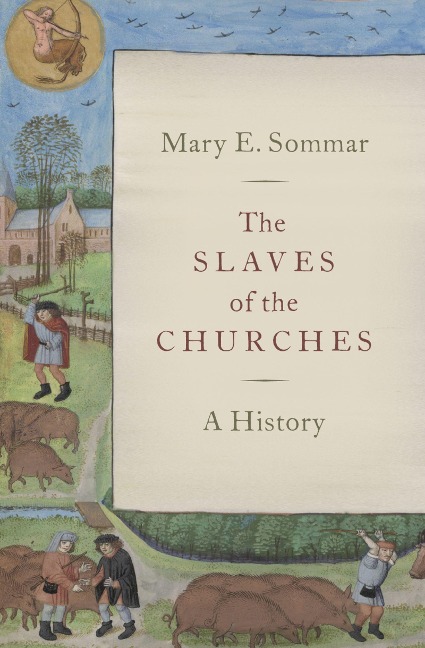
In recent years, stories of religious universities and institutions grappling with their slave-owning past have made headlines in the news. People find it shocking that the Church itself could have been involved in such a sordid business. This timely book, the result of many years of research, is a study of the origins of this problem. Mary E. Sommar examines how the church sought to establish norms for slave ownership on the part of ecclesiastical institutions and personnel, and for others' behavior towards such slaves. The story begins in the New Testament era, when the earliest Christian norms were established, and continues up to thirteenth-century establishment of a body of canon law that would persist into the twentieth century. Along with her analysis of the various policies and statutes, Sommar draws on chronicles, letters, and other documents from each of the various historical periods to provide insight into the situations of unfree ecclesiastical dependents. She finds that unfree dependents of the Church actually had less chance of achieving freedom than did the slaves of other masters. The church authorities' duty to preserve the Church's patrimony for the needs of future generations led them to hold on tightly to their unfree human resources. This accessibly written book does not present an apology for the behavior of past Christian leaders, but attempts to learn what they did and to arrive at some understanding of why they made those choices.
Mary Sommar has taught ancient and medieval history for the past twenty years, most of them at Millersville University in Pennsylvania. She also spent two years as a visiting scholar at the Stephan Kuttner Institute for Medieval Canon Law in Munich, Germany and a year as a Visiting Fellow at Yale University.
Acknowledgments Abbreviations 1: Introduction 2: The New Testament and Slavery 3: Slavery in the Early Church 4: Slavery in the Imperial Church 5: Ecclesiastical Slavery in the Germanic Kingdoms 6: Carolingians and Ecclesiastical Servitude Ecclesiastical Slavery in the British Isles 7: The Classical Canon Law 8: The Slaves of the Churches: Conclusions Latin Lexicon Appendix
Dieses eBook wird im PDF-Format geliefert und ist mit einem Adobe Kopierschutz (DRM) versehen. Sie können dieses eBook mit allen Geräten lesen, die das PDF-Format und den Adobe Kopierschutz (DRM) unterstützen.
Zum Beispiel mit den folgenden Geräten:
• tolino Reader
Laden Sie das eBook direkt über den Reader-Shop auf dem tolino herunter oder übertragen Sie das eBook auf Ihren tolino mit einer kostenlosen Software wie beispielsweise Adobe Digital Editions.
• Sony Reader & andere eBook Reader
Laden Sie das eBook direkt über den Reader-Shop herunter oder übertragen Sie das eBook mit der kostenlosen Software Sony READER FOR PC/Mac oder Adobe Digital Editions auf ein Standard-Lesegeräte mit epub- und Adobe DRM-Unterstützung.
• Tablets & Smartphones
Möchten Sie dieses eBook auf Ihrem Smartphone oder Tablet lesen, finden Sie hier unsere kostenlose Lese-App für iPhone/iPad und Android Smartphone/Tablets.
• PC & Mac
Lesen Sie das eBook direkt nach dem Herunterladen mit einer kostenlosen Lesesoftware, beispielsweise Adobe Digital Editions, Sony READER FOR PC/Mac oder direkt über Ihre eBook-Bibliothek in Ihrem Konto unter „Meine eBooks“ - „online lesen“.
Schalten Sie das eBook mit Ihrer persönlichen Adobe ID auf bis zu sechs Geräten gleichzeitig frei.
Bitte beachten Sie, dass die Kindle-Geräte das Format nicht unterstützen und dieses eBook somit nicht auf Kindle-Geräten lesbar ist.