Und dann auf "Zum Home-Bildschirm [+]".

Stöbern
genialokal zum Startbildschirm hinzufügen
Installieren Sie die genialokal App auf Ihrem Startbildschirm für einen schnellen Zugriff und eine komfortable Nutzung.
Installieren Sie die genialokal App auf Ihrem Startbildschirm für einen schnellen Zugriff und eine komfortable Nutzung.
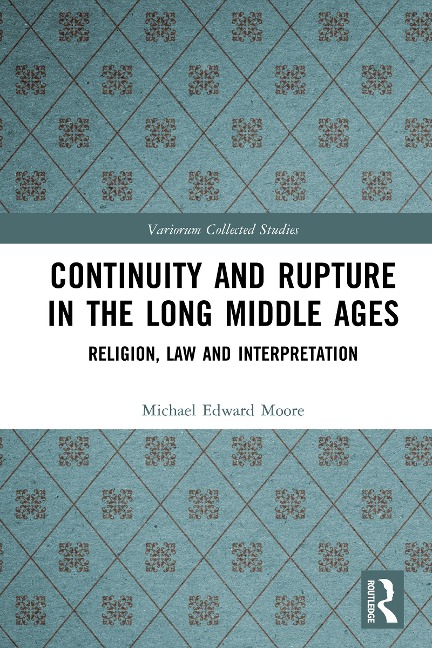
The "Long Middle Ages" indicates a span of time extending from Antiquity, across the Middle Ages, to the Early Modern period. The author tries to understand factors of historical continuity binding this period together and the periodic scenes of violent change that disrupted societies and traditions. The Long Middle Ages were established on classical and biblical foundations, while each generation interpreted and expanded on those origins. The cohesion of the Long Middle Ages was brought about by continuous acts of reflection and renascence. Scholarly practices and ideas of Antiquity were taken up in the monasteries and cathedral schools of the Middle Ages, while during the Renaissance, and then the Baroque period, thinkers looked back to Antiquity and to the Middle Ages. Continuity and Rupture in the Long Middle Ages is an interdisciplinary approach to intellectual history, which puts the history of ideas in the context of cultural, political, religious, and legal history. Medieval history is the central moment, while continuity and change are found in traditions extending from the Lord's Prayer (AD 30) to Jean Mabillon (AD 1632-1707) and onward to moderns like Ernst Cassirer and Paul Ricoeur. Readers will discover new significance in historical figures like the Venerable Bede, Boniface of Mainz, Charlemagne, and Pope Formosus - in the laws of medieval kings and bishops - and institutions like the monastery of Cluny. These essays, gathered together for the first time in this Variorum volume, offer powerful new interpretations for students and researchers in the fields of medieval studies, legal and literary interpretation, legal history, and the history of European intellectual life from ancient to modern times.
Michael Edward Moore is Emeritus Associate Professor of Medieval and European History, University of Iowa. He has published numerous essays on political culture and European intellectual history. He is the author of A Sacred Kingdom: Bishops and the Rise of Frankish Kingship and Nicholas of Cusa and the Kairos of Modernity. Born in Nuremberg, Germany, Moore was raised in New England and later among the woods and farmland of his native Michigan. He received his Ph.D. from the University of Michigan where he studied with Hans Küng and Czeslaw Milosz. He enjoys canoeing and hiking in the wilderness.
Introduction Part I: Religion 1. Demons and the Battle for Souls at Cluny Originally published as: "Demons and the Battle for Souls at Cluny." Studies in Religion / Sciences réligieuses 32.4 (2003): 485-497. Reprinted by permission of Sage Journals. 2. Bede's Devotion to Rome: The Periphery Defining the Center Originally published as: "Bede's Devotion to Rome: The Periphery Defining the Center." Bède le Vénérable entre tradition et postérité. Edited by Stephane Lebecq, Michel Perrin et Olivier Szerwiniack. Lille: CEGES, 2005. 199-208. Reprinted by permission of Université Lille, CEGES. 3. The Frankish Church and Missionary War in Central Europe Originally published as: "The Frankish Church and Missionary Warfare in Central Europe." Between Sword and Prayer: Warfare and Medieval Clergy in Cultural Perspective. Edited by Radoslav Kotecki, Jacek Maciejewsky, Jon S. Ott. Leiden: E.J. Brill, 2017. 46-87. Reprinted by permission of E.J. Brill - Leiden. 4. The Attack on Pope Formosus: Papal History in an Age of Resentment Originally published as: "The Attack on Pope Formosus: Papal History in an Age of Resentment (875-897)." Ecclesia et Violentia: Violence Against the Church and Violence Within the Church in the Middle Ages. Edited by Radoslav Kotecki and Jacek Maciejewski. Newcastle-upon-Tyne: Cambridge Scholars Publishing, 2014. 184-208. Reprinted by permission of Cambridge Scholars Publishing. 5. The Body of Pope Formosus Originally published as: "The Body of Pope Formosus." Millenium. Jahrbuch zu Kultur und Geschichte des ersten Jahrtausends n. Chr. / Yearbook on the Culture and History of the First Millenium C.E., 9 (2012): 277-297. Reprinted by permission of Walter de Gruyter Academic Publishing. Part II: Law 6. Carolingian Monarchy and Ancient Irish Models of Kingship Originally published as: "La Monarchie carolingienne et les anciens modeles irlandais." Annales - Histoire, Sciences Sociales, 51 (1996): 307-324. Translated into French by Alain Boureau. Reprinted by permission of Éditions de l'EHESS, Paris. 7. The Ancient Fathers: Christian Antiquity, Patristics and Frankish Canon Law Originally published as: "The Ancient Fathers: Christian Antiquity, Patristics and Frankish Canon Law." Millenium. Jahrbuch zu Kultur und Geschichte des ersten Jahrtausends n. Chr. / Yearbook on the Culture and History of the First Millenium C.E., Vol.7 (2010): 293-342. Reprinted by permission of Walter de Gruyter Academic Publishing. 8. Canon Law and Royal Power in the Councils and Letters of St. Boniface Originally published as: "Canon Law and Royal Power in the Councils and Letters of St. Boniface." The Bulletin of Medieval Canon Law 28 (2008) [2010]: 1-30. Reprinted by permission of The Catholic University of America Press. Part III: Interpretation 9. Philology and Presence Originally published as: "Philology and Presence." The European Legacy: Toward New Paradigms 22.4 (2017): 456-471. Reprinted by permission of Taylor & Francis Ltd, www.tandfonline.com on behalf of International Society for the Study of European Ideas ©International Society for the Study of European Ideas'. 10. Our Father: Glossing a Bohemian Prayer Originally published as: "Our Father: Glossing a Bohemian Prayer." Biblical Interpretation, 22 (2014): 71-89. Reprinted by permission of E.J. Brill - Leiden. 11. The God of Culture Originally published as: "The God of Culture." East European Politics and Societies 16:2 (Spring, 2002): 572-588. Reprinted by permission of Sage Journals. 12. Jean Mabillon and the Sources of Medieval Ecclesiastical History (Part 1) Originally published as: "Jean Mabillon and the Sources of Medieval Ecclesiastical History: Part One": American Benedictine Review 60:1 (March, 2009): 76-93. Reprinted by permission of The American Benedictine Academy. 13. Jean Mabillon and the Sources of Medieval Ecclesiastical History (Part 2) Originally published as: "Jean Mabillon and the Sources of Medieval Ecclesiastical History: Part Two": American Benedictine Review 60:2 (June, 2009): 121-134. Reprinted by permission of The American Benedictine Academy.
Dieses eBook wird im PDF-Format geliefert und ist mit einem Adobe Kopierschutz (DRM) versehen. Sie können dieses eBook mit allen Geräten lesen, die das PDF-Format und den Adobe Kopierschutz (DRM) unterstützen.
Zum Beispiel mit den folgenden Geräten:
• tolino Reader
Laden Sie das eBook direkt über den Reader-Shop auf dem tolino herunter oder übertragen Sie das eBook auf Ihren tolino mit einer kostenlosen Software wie beispielsweise Adobe Digital Editions.
• Sony Reader & andere eBook Reader
Laden Sie das eBook direkt über den Reader-Shop herunter oder übertragen Sie das eBook mit der kostenlosen Software Sony READER FOR PC/Mac oder Adobe Digital Editions auf ein Standard-Lesegeräte mit epub- und Adobe DRM-Unterstützung.
• Tablets & Smartphones
Möchten Sie dieses eBook auf Ihrem Smartphone oder Tablet lesen, finden Sie hier unsere kostenlose Lese-App für iPhone/iPad und Android Smartphone/Tablets.
• PC & Mac
Lesen Sie das eBook direkt nach dem Herunterladen mit einer kostenlosen Lesesoftware, beispielsweise Adobe Digital Editions, Sony READER FOR PC/Mac oder direkt über Ihre eBook-Bibliothek in Ihrem Konto unter „Meine eBooks“ - „online lesen“.
Schalten Sie das eBook mit Ihrer persönlichen Adobe ID auf bis zu sechs Geräten gleichzeitig frei.
Bitte beachten Sie, dass die Kindle-Geräte das Format nicht unterstützen und dieses eBook somit nicht auf Kindle-Geräten lesbar ist.