Und dann auf "Zum Home-Bildschirm [+]".

Stöbern
genialokal zum Startbildschirm hinzufügen
Installieren Sie die genialokal App auf Ihrem Startbildschirm für einen schnellen Zugriff und eine komfortable Nutzung.
Installieren Sie die genialokal App auf Ihrem Startbildschirm für einen schnellen Zugriff und eine komfortable Nutzung.
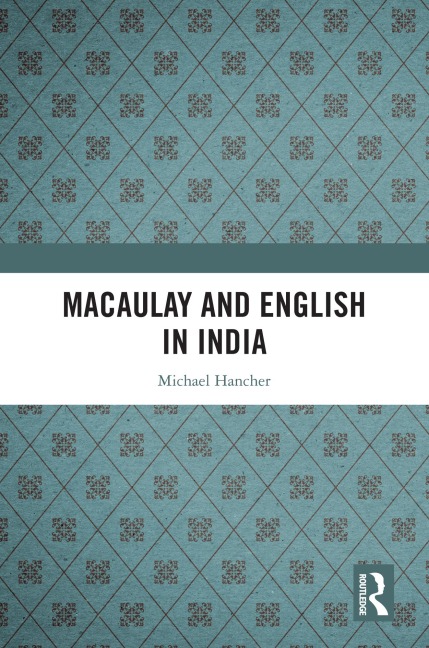
This book traces how the English language emerged from the nineteenth century not only as an imperial and bureaucratic language but also as a global one. It highlights the role of Thomas Babington Macaulay and his "Minutes" in this journey and his lasting impact on the English language and English studies. This work recovers the contexts of those interventions and assesses their far-reaching effects in India, Great Britain, and the United States. It explores a variety of themes including the early modern quest for a universal language; the European quarrel between the Ancients and the Moderns; the young Macaulay's precocious preference for the Moderns (despite his continuing infatuation with the Ancients); and Macaulay's more mature advocacy of a modern (English) rather than a classical literary curriculum. Further, it registers the ambivalent force of English, a "second language," on the development of Indian identity and culture; and it documents Macaulay's role in shaping the contested concept of "meritocracy," in England, the United States, and India. The volume will be of great interest to scholars and researchers of modern Indian history, English studies, colonialism and imperialism, and South Asian studies.
Michael Hancher is Professor Emeritus in the Department of English at the University of Minnesota. He has published research about Victorian writers and artists (R. Browning, Macaulay, Dickens, Carroll, Tenniel, Hunt, Millais); about intention and interpretation, speech-act theory, pragmatics, and the law; and about the history and rationale of pictorial illustration in dictionaries. Recent publications include The Tenniel Illustrations to the "Alice" Books (2nd ed., 2019); "Seeing and Tagging Things in Pictures" (2021); and "Illustrations in Dictionaries" (2024).
Figures viii Preface and Acknowledgments ix 1 After Latin: Seeking a universal language 1 2 1813, 1833 14 3 Texts and contexts of "Government of India" 25 4 Constructing Macaulay's Minute on Indian Education 59 5 Apocrypha 83 6 Macaulay's Minute on Indian Education, annotated 85 7 Bentinck's Resolution and vernacular education 112 8 Reading and writing the law 122 9 "Downward filtration" 145 10 College English in India: The first textbook 156 11 Examining English 181 12 The first competition wallahs 203 13 Macaulay and meritocracy 226 14 Global language 271 Works cited (except most newspapers) 279 Index 312