Und dann auf "Zum Home-Bildschirm [+]".

Stöbern
genialokal zum Startbildschirm hinzufügen
Installieren Sie die genialokal App auf Ihrem Startbildschirm für einen schnellen Zugriff und eine komfortable Nutzung.
Installieren Sie die genialokal App auf Ihrem Startbildschirm für einen schnellen Zugriff und eine komfortable Nutzung.
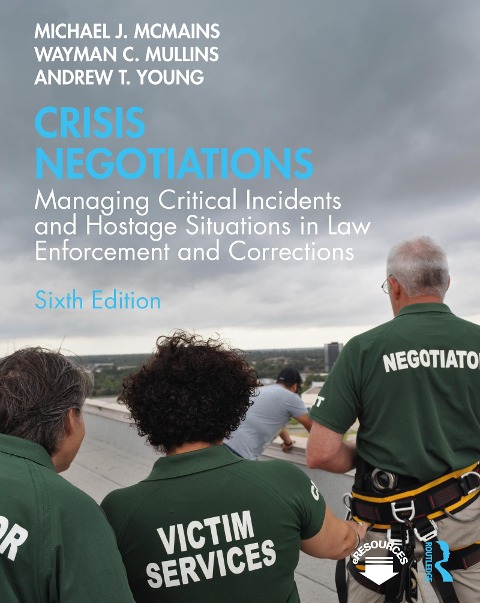
Crisis Negotiations: Managing Critical Incidents and Hostage Situations in Law Enforcement and Corrections, the sixth edition, is an invaluable resource for mitigating, managing, or responding to high-risk negotiation incidents. This revision includes the current research on negotiating high-risk incidents in the classroom and the field. It includes an applied analysis of the value of psychopathology to high-risk perpetrators. It refines the "empirical eclecticism" introduced in the fourth edition to provide a conceptual basis for crisis negotiations. The authors include summary bullet points at the end of each chapter for easy reference when negotiators are in the field and a review of the literature since the last edition appeared. Their discussion of the strategic planning process involved in high-risk negotiation incidents focuses clearly on the critical questions negotiators need to ask themselves about any high-risk incident and provides a practical approach to the psychology of individuals that engage in high-risk incidents. Known as "the bible" to experienced professionals in the field, this sixth edition of Crisis Negotiations is vital for practitioners as well as for criminology, criminal justice or psychology courses in crisis management, applied psychology, and special operations in law enforcement and corrections. Instructors will find it well supported by ancillary materials including discussion questions, slide presentations, and a test bank, as well as case studies and self-assessment quizzes for students, making it easy to develop a first-time course or to integrate it into an existing course.
Michael J. McMains earned a Ph.D. in clinical psychology from Vanderbilt University in Nashville, Tennessee. Since 1982, he has worked as the mental health consultant on over 500 crisis/hostage cases while attached to the special operations unit/crisis negotiations teams of the San Antonio Police Department and the Bexar County Sheriff's Office in Texas. He served as associate editor of the Journal of Police Crisis Negotiation, an international journal; has written multiple articles on crisis negotiations; developed hostage negotiation curriculum for the U.S. State Department; has written for international publication; and taught crisis negotiations locally, nationally and internationally. Wayman C. Mullins received his Ph.D. in psychology from the University of Arkansas. Since 1984, he has been a faculty member in the School of Criminal Justice, Texas State University, where he is a full professor. He is also a commissioned law enforcement officer and a member of the Hays County SO/San Marcos PD Crisis Negotiation Team. Dr. Mullins has been involved in negotiations as a team member, trainer, lecturer, and writer for over 35 years. Andrew T. Young received his Ed.D. in counselor education from Texas Tech University. Since 1996, he has been a full professor of psychology and counseling at Lubbock Christian University. He has been a hostage (crisis) negotiator and psychological consultant with the Lubbock Police Department's SWAT team since 2000, with the Lubbock County Sheriff's Office since 2008, and with the Texas Department of Public Safety (Region 5) since 2015. He has published research and lectures nationally on negotiating and crisis intervention, and has also written Fight or Flight: Negotiating Crisis on the Frontline.
1. Crisis Management: History and Overview; 2. Crisis Management: Crisis Response Team Elements; 3. Crisis Management: Basics of Negotiation; 4. Crisis Management: Risk Assessment; 5. Crisis Management: Communication in Crisis Negotiations; 6. Crisis Management: Negotiating with Emotionally Disturbed and Mentally Ill Individuals: Recognition and Guidelines; 7. Crisis Management: Negotiating with Depressed and Suicidal Persons; 8. Crisis Management: Negotiating with Special Populations; 9. Crisis Management: Hostage Dynamics; 10. Crisis Management: Managing Stress and Trauma; 11. Crisis Management: Special Topics in Negotiations
Dieses eBook wird im PDF-Format geliefert und ist mit einem Adobe Kopierschutz (DRM) versehen. Sie können dieses eBook mit allen Geräten lesen, die das PDF-Format und den Adobe Kopierschutz (DRM) unterstützen.
Zum Beispiel mit den folgenden Geräten:
• tolino Reader
Laden Sie das eBook direkt über den Reader-Shop auf dem tolino herunter oder übertragen Sie das eBook auf Ihren tolino mit einer kostenlosen Software wie beispielsweise Adobe Digital Editions.
• Sony Reader & andere eBook Reader
Laden Sie das eBook direkt über den Reader-Shop herunter oder übertragen Sie das eBook mit der kostenlosen Software Sony READER FOR PC/Mac oder Adobe Digital Editions auf ein Standard-Lesegeräte mit epub- und Adobe DRM-Unterstützung.
• Tablets & Smartphones
Möchten Sie dieses eBook auf Ihrem Smartphone oder Tablet lesen, finden Sie hier unsere kostenlose Lese-App für iPhone/iPad und Android Smartphone/Tablets.
• PC & Mac
Lesen Sie das eBook direkt nach dem Herunterladen mit einer kostenlosen Lesesoftware, beispielsweise Adobe Digital Editions, Sony READER FOR PC/Mac oder direkt über Ihre eBook-Bibliothek in Ihrem Konto unter „Meine eBooks“ - „online lesen“.
Schalten Sie das eBook mit Ihrer persönlichen Adobe ID auf bis zu sechs Geräten gleichzeitig frei.
Bitte beachten Sie, dass die Kindle-Geräte das Format nicht unterstützen und dieses eBook somit nicht auf Kindle-Geräten lesbar ist.