Und dann auf "Zum Home-Bildschirm [+]".

Stöbern
genialokal zum Startbildschirm hinzufügen
Installieren Sie die genialokal App auf Ihrem Startbildschirm für einen schnellen Zugriff und eine komfortable Nutzung.
Installieren Sie die genialokal App auf Ihrem Startbildschirm für einen schnellen Zugriff und eine komfortable Nutzung.

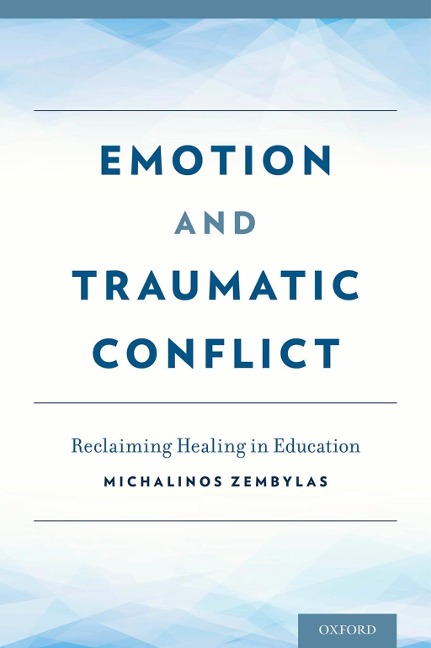
Do the emotional responses of students and to traumatic conflict constitute insurmountable obstacles in peace education efforts? How do hegemonic narratives shape the emotions of ethnic identity and collective memory, and what can be done pedagogically to transform the powerful influence of such narratives and emotions? Can peace education efforts that foreground emotion in critical ways become a productive pedagogical intervention in conflicted societies? Emotion and Traumatic Conflict takes us through an ethnographic journey into a specific site of conflict to show how emotions are entangled with educational efforts towards peacebuilding, healing, and reconciliation. While sociologists, anthropologists, historians, and political scientists have long analyzed the emotional dynamics of conflict and peace, rarely have educators looked into the emotional complexities of traumatic conflict, the impact of emotion in everyday school interactions and pedagogical practices, and the consequences of the role of emotion in what has become known as "critical peace education." This book not only offers an analysis of the emotional consequences of traumatic conflict in schools, it also develops an innovative, compelling, and cross-disciplinary perspective on the entanglement of emotion, power, politics, trauma, healing, and critical education. The book provides a detailed ethnographic analysis of the ideological appropriation of emotions of conflict in schools, yet it pushes boundaries further through a theorization of the consequences of this appropriation and the pedagogical interventions required to challenge, undermine, or subvert this process. Zembylas argues that these pedagogical interventions, rooted in both psychoanalytic and socio-political perspectives of trauma and emotion, ought to engage emotions as critical and transformative forces in peace education. Grounded in recent literature on affect and emotion that spans the social sciences, Zembylas's analysis of the emotions of traumatic conflict in education offers a provocative proposal for the role of critical peace education in healing and reconciliation.
Michalinos Zembylas is Associate Professor of Education at the Open University of Cyprus. His research interests are in the areas of educational philosophy and curriculum theory, and his work focuses on exploring the role of emotion and affect in curriculum and pedagogy. He is particularly interested in how affective politics intersect with issues of social justice pedagogies, intercultural and peace education, and citizenship education.
Acknowledgments Permissions
Part I: Introduction and Theoretical Positioning 1. Introduction 2. Theoretical Positioning
Part II: The Emotional Spaces of Racism and Nationalism in Schools 3. Investigating the Emotional Geographies of Exclusion 4. The Politics of Resentment in School Emotional Spaces 5. Children's Constructions and Experiences of Racism and Nationalism 6. Teachers' Constructions of Otherized Children's Identities
Part III: The Emotional Complexities of Traumatic Conflict: Openings and Closures 7. Negotiating Coexistence at a Shared School 8. Pedagogic Struggles to Enhance Inclusion and Reconciliation 9. The Vicissitudes of Teaching About/for Empathy
Part IV: Emotional Tensions and Critical Responses to Peace Education Efforts 10. Refugees, Emotions, and Critical Peace Education 11. Emotional Tensions of Toleration and Coexistence 12. Emotional Dilemmas of Human Rights Education in the Context of Peace Education Efforts 13. Toward Critical Pedagogies of Compassion and Shared Fate 14. Reclaiming Nostalgia
15. Epilogue: An Agonistics for Healing
References Index