Und dann auf "Zum Home-Bildschirm [+]".

Stöbern
genialokal zum Startbildschirm hinzufügen
Installieren Sie die genialokal App auf Ihrem Startbildschirm für einen schnellen Zugriff und eine komfortable Nutzung.
Installieren Sie die genialokal App auf Ihrem Startbildschirm für einen schnellen Zugriff und eine komfortable Nutzung.
Ihr gewünschter Artikel ist in 0 Buchhandlungen vorrätig - wählen Sie hier eine Buchhandlung in Ihrer Nähe aus:

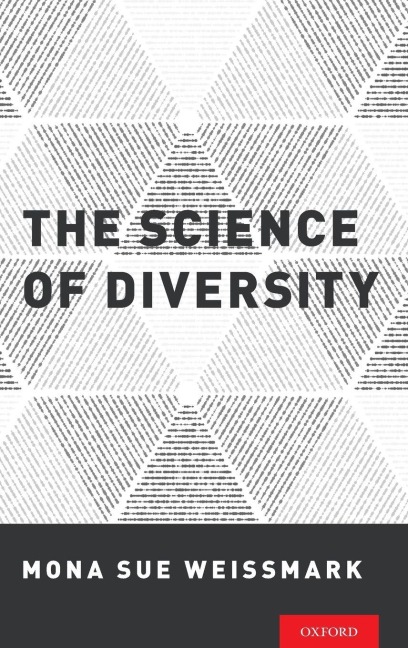
The Science of Diversity uses a multidisciplinary approach to excavate the theories, principles, and paradigms that illuminate our understanding of the issues surrounding human diversity, social equality, and justice. The book brings these to the surface holistically, examining diversity at the individual, interpersonal, and international levels. Shedding light on why diversity programs fail, the book provides tools to understand how biases develop and influence our relationships and interactions with others.
Mona Sue Weissmark is a clinical and social psychologist whose work on diversity and the psychological roots of injustice has received global recognition. She is the author of the books Doing Psychotherapy Effectively (University of Chicago Press), and Justice Matters: Legacies of the Holocaust & World War II (Oxford University Press). The founder and former director of the Program Initiative for Global Mental Health Studies at the Buffett Institute for Global Studies at Northwestern University and the founder and former director for The Center for Social Justice in Chicago, Dr. Weissmark is also Associate Professor of Psychiatry and Behavioral Sciences at Northwestern University's Feinberg School of Medicine and a Visiting Professor of Psychology at Harvard University, where she teaches the course 'Psychology of Diversity' and conducts research on diversity and social justice.
What is the Value of Scientific Thinking in a Polarized Society?
Preface
Chapter 1: What is diversity?
Chapter 2: The Self
Chapter 3: Categorizing
Chapter 4: Judging
Chapter 5: Diversity and Relationships
Chapter 6: Diversity and Groups
Chapter 7: Diversity and Social Justice
Chapter 8: Diversity and Ethnic Conflicts
Chapter 9: Diversity and Nations
Conclusion