Und dann auf "Zum Home-Bildschirm [+]".

Stöbern
genialokal zum Startbildschirm hinzufügen
Installieren Sie die genialokal App auf Ihrem Startbildschirm für einen schnellen Zugriff und eine komfortable Nutzung.
Installieren Sie die genialokal App auf Ihrem Startbildschirm für einen schnellen Zugriff und eine komfortable Nutzung.
Ihr gewünschter Artikel ist in 0 Buchhandlungen vorrätig - wählen Sie hier eine Buchhandlung in Ihrer Nähe aus:

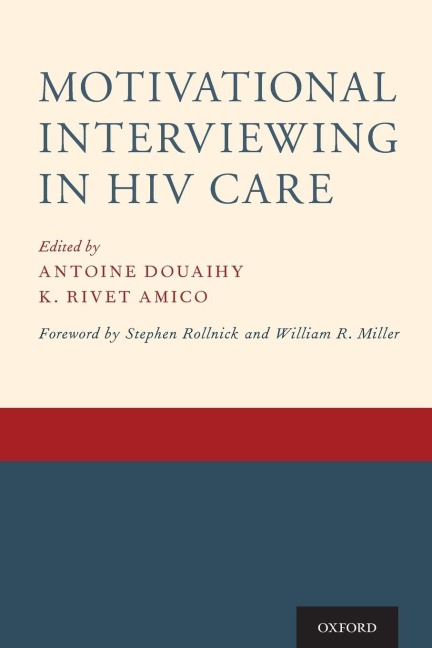
It is no exaggeration to say that motivational interviewing (MI) has transformed the culture of clinical practice and the way healthcare practitioners and researchers understand behavior change. MI, as an empirically supported therapeutic approach, has grown all across prevention, intervention, treatment, and research settings. Nowhere is the need to target behavior change more urgent than in people living with HIV. MI is a collaborative, person-centered clinical method that fosters a constructive practitioner-patient relationship and facilitates behavior change through eliciting and strengthening motivation for change. MI can be implemented as a stand-alone brief intervention, a prelude to treatment, or a platform for ongoing care. While MI has been shown to promote behavior change in a variety of healthcare settings and health behaviors in diverse cultures and communities, from substance use, safer sex, physical activity, medication and treatment adherence, more recently there has been an explosion of research that tailors MI to HIV care. This original and compassionate book, Motivational Interviewing in HIV Care, brings together researchers and healthcare practitioners who have considerably contributed to the science and clinical practice of MI in HIV care. It provides current, accessible review of the current status of the MI interventions, their clinical applications, and the evidence that supports them. Motivational Interviewing in HIV Care is essential reading for workers in the field of HIV, who will benefit from up-to-date research reviews and practical applications of MI across the continuum of HIV care.
Antoine Douaihy is Professor of Psychiatry and Medicine, Senior Academic Director of Addiction Medicine Services, and Director of the Addiction Psychiatry Fellowship at Western Psychiatric Hospital of the University of Pittsburgh Medical Center (UPMC) and Co-Director of the Tobacco Treatment Service at UPMC. He has a well-established record of clinical. leadership, and research expertise in substance use disorders (SUDs) and SUDs co-occurring with psychiatric disorders, psychology of behavior change, motivational interviewing, and HIV/AIDS. Dr. Douaihy has a well-established record of leadership and expertise in conducting clinical trials, having served and currently serving as a PI, Co-PI and Co-I on NIAAA, NIMH, NIDA, HRSA, SAMHSA, and industry sponsored grants.
K Rivet Amico is an Associate Professor at the University of Michigan's School of Public Health. As a counselling psychologist by training, her work has focused on applying social behavioural science to HIV treatment and
prevention. She works with adolescent and adult populations in a wide range of community settings on research and implementation efforts to end the HIV epidemic. Her interests center on optimizing social and structural environments, intrapersonal processes, and skills development to engage individuals and communities in protection and promotion of sexual and mental health. She has worked extensively with Motivational Interviewing informed and based approaches.
- I. Orientation to Motivational Interviewing and the Continuum of HIV care in Practice
- 1. Overview of Motivational Interviewing
- 2. Motivational Interviewing Processes and Skills
- 3. Motivational Interviewing Strategies
- 4. Motivational Interviewing and the Continuum of HIV care in Practice
- II. Applications of Motivational Interviewing- Intervening in the Continuum of HIV Care
- 5. Overview of Motivational Interviewing and the Adolescent-Young Adult HIV Care Continuum
- 6. An example program of Motivational Interviewing Informed Linkage to HIV Care
- 7. Overview of Motivational Interviewing to Enhance Initiation of and Adherence to Antiretroviral Therapy
- 8. Example interventions using Motivational Interviewing to Enhance Engagement in HIV Care
- III. Applications of Motivational Interviewing in Addressing Other Comorbid Conditions
- 9. Lifestyle Changes and Motivational Interviewing
- 10. Comorbid medical problems and Motivational Interviewing
- 11. Substance Use and Motivational Interviewing
- 12. Emotional management, psychological issues, and Motivational Interviewing
- IV. Implementation of Motivational Interviewing
- 13. Learning and Experiencing Motivational Interviewing
- 14. Motivational Interviewing in Global Practice Settings: The Importance of Ongoing Support
- 15. Integrating MI across Multiple Intervention Approaches and in Patient-Practitioner Communication
- 16. Motivational Interviewing and Technology
- V. Ethics
- 17. Ethical Challenges in the Applications of Motivational Interviewing in HIV Care
- Index