Und dann auf "Zum Home-Bildschirm [+]".

Stöbern
genialokal zum Startbildschirm hinzufügen
Installieren Sie die genialokal App auf Ihrem Startbildschirm für einen schnellen Zugriff und eine komfortable Nutzung.
Installieren Sie die genialokal App auf Ihrem Startbildschirm für einen schnellen Zugriff und eine komfortable Nutzung.

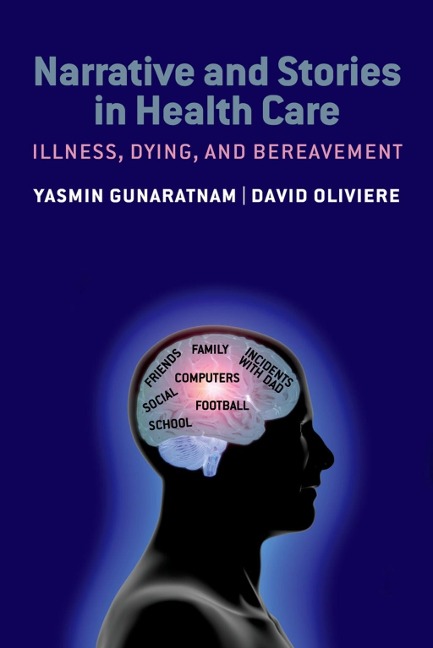
The use of narrative methods has a long history in palliative care, pioneered by Dame Cicely Saunders, founder of the modern hospice movement, Narrative and Stories in Health Care provides a vibrant, multidisciplinary examination of work with narrative and stories in contemporary health and social care, with a focus on the care of people who are ill and dying. It animates the academic literature with provocative 'real-world' examples from international contributors, including palliative care service users and those working in the social and human sciences, medicine, theology, and the creative arts. Narrative and Stories in Health Care addresses and clarifies core issues: What is a narrative? What is a story? What are some of the main methods and models that can be used and for what purposes? What practical and ethical dilemmas can the methods entail in work with illness, death and dying? As well as highlighting the power of stories to create new possibilities, the book also acknowledges the conceptual, methodological and ethnical problems and challenges inherent in narrative work. As the hospice and palliative care movement evolves to meet the challenges of 21st century health care, this fascinating book highlights how narratives and stories can be attended to in ways that are productive, ethical, and caring.
Yasmin Gunaratnam is a lecturer in the Sociology Department at Goldsmiths College (University of London) and has written in the field of race equality and health and social care. She is a published poet and is interested in the relationships between art and research. Yasmin has a particular interest in qualitative research methods and is author of 'Researching 'race' and ethnicity: methods, knowledge and power' (Sage, 2003).
David Oliviere is a trained social worker and couple counsellor and works as Director of Education and Training, St Christopher's Hospice. David has written widely in palliative care, including edited books with Pam Firth and Gill Luff, "Loss, Change and Bereavement in Palliative Care", and with Barbara Monroe, "Patient Participation in Palliative Care: a voice for the voiceless"; "Death, Dying and Social Differences"; and "Resilience and Palliative Care. Achievement in Adversity", Oxford University Press. David facilitates a number of user involvement activities at St Christopher's and his special interests include working with children and families, culture and ethnicity in palliative care and staff support.
- Section 1: Concepts and approaches - 1: John Paley: Narrative machinery - 2: Sayantani Das Gupta, Craig Irvine and Maura Spiegel: The possibilities of narrative palliative care medicine: 'Giving Sorrow Words' - 3: Yasmin Gunaratnam: Narrative interviews and research - 4: Kim Devery: Narrative-based evidence in palliative care - 5: Gillie Bolton: Therapeutic writing: 'writing is a way of saying things I can't say' - Section 2: Service and care development - 6: Gail Eva: Narrative, story and service evaluation - patients' stories and their consequences - 7: Karen Forbes: Narrative and storytelling in palliative care education and training - 8: Phil Cotterell, Helen Findlay and Ann Macfarlane: Patient and carer narratives and stories - 9: Tony Walter: Mediator deathwork - Section 3: Working with patients and carers - 10: Arthur Frank: The necessity and dangers of illness narratives, especially at the end of life - 11: Irene Renzenbrink: Life story and life review - 12: Jonathan Koffman: The meaning of illness and symptoms - 13: Rachel Stanworth: Spiritual care and attentiveness to narrative - 14: Patsy Way: Bereavement, children and families