Und dann auf "Zum Home-Bildschirm [+]".

Stöbern
genialokal zum Startbildschirm hinzufügen
Installieren Sie die genialokal App auf Ihrem Startbildschirm für einen schnellen Zugriff und eine komfortable Nutzung.
Installieren Sie die genialokal App auf Ihrem Startbildschirm für einen schnellen Zugriff und eine komfortable Nutzung.
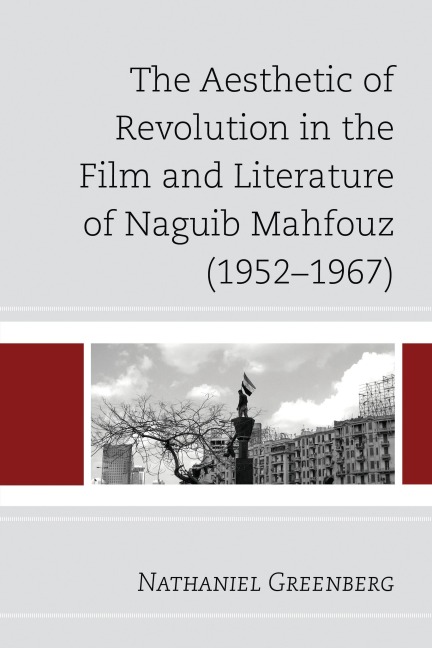
In the wake of the 1952 Revolution, Egypt's future Nobel laureate in literature devoted himself exclusively to writing for film. The Aesthetic of Revolution in the Film and Literature of Naguib Mahfouz is the first full-length study in English to examine this critical period in the author's career and to contextualize it within the scope of post-revolutionary Egyptian politics and culture. Before returning to literature in 1959 with his post-revolutionary masterpiece Children of the Alley, Mahfouz wrote or co-wrote some twenty odd scripts, many of them among the most successful in Egyptian history. He did so at a time when film was the country's second largest export commodity after cotton and the domestic film industry in Egypt the fourth largest in the world. Artistically, his screenplays channeled the ideology of the revolution, often raising themes of oppression and liberation, and almost always within a storyline of criminal transgression. But as he discussed in later articles and interviews, the capacity for film to enumerate the flow of life-through montage, jump cuts, lighting, and close ups-helped him to develop a darker, faster, and more complex vision of society. This technological revolution was followed by a literary one in the 1960s, a time when Mahfouz would generate through a series of short, trenchant, and often comedic novellas, a deeply measured meditation on the experience of collective upheaval and the interpersonal impact of political transformation.
Nathaniel Greenberg is assistant professor of English at Northern Michigan University.
Introduction: The Aesthetic of Revolution circa 1952
Chapter One: Criminality and the Public Sphere: Notes on a Post-Revolutionary Aesthetics of Film (1953-1957)
Chapter Two: The Aesthetic of Revolution in NaGuib Mahfouz's Children of the Alley
Chapter Three: The Criminal Inclinations of the Good Society: Naguib Mahfouz and the 1960s
Chapter Four: Partial Politics: Sectarianism and the New Woman Question in Naguib Mahfouz's Post-Revolutionary Film and Literature
Conclusion: Mahfouz's Wheel
Dieses eBook wird im PDF-Format geliefert und ist mit einem Adobe Kopierschutz (DRM) versehen. Sie können dieses eBook mit allen Geräten lesen, die das PDF-Format und den Adobe Kopierschutz (DRM) unterstützen.
Zum Beispiel mit den folgenden Geräten:
• tolino Reader
Laden Sie das eBook direkt über den Reader-Shop auf dem tolino herunter oder übertragen Sie das eBook auf Ihren tolino mit einer kostenlosen Software wie beispielsweise Adobe Digital Editions.
• Sony Reader & andere eBook Reader
Laden Sie das eBook direkt über den Reader-Shop herunter oder übertragen Sie das eBook mit der kostenlosen Software Sony READER FOR PC/Mac oder Adobe Digital Editions auf ein Standard-Lesegeräte mit epub- und Adobe DRM-Unterstützung.
• Tablets & Smartphones
Möchten Sie dieses eBook auf Ihrem Smartphone oder Tablet lesen, finden Sie hier unsere kostenlose Lese-App für iPhone/iPad und Android Smartphone/Tablets.
• PC & Mac
Lesen Sie das eBook direkt nach dem Herunterladen mit einer kostenlosen Lesesoftware, beispielsweise Adobe Digital Editions, Sony READER FOR PC/Mac oder direkt über Ihre eBook-Bibliothek in Ihrem Konto unter „Meine eBooks“ - „online lesen“.
Schalten Sie das eBook mit Ihrer persönlichen Adobe ID auf bis zu sechs Geräten gleichzeitig frei.
Bitte beachten Sie, dass die Kindle-Geräte das Format nicht unterstützen und dieses eBook somit nicht auf Kindle-Geräten lesbar ist.