Und dann auf "Zum Home-Bildschirm [+]".

Stöbern
genialokal zum Startbildschirm hinzufügen
Installieren Sie die genialokal App auf Ihrem Startbildschirm für einen schnellen Zugriff und eine komfortable Nutzung.
Installieren Sie die genialokal App auf Ihrem Startbildschirm für einen schnellen Zugriff und eine komfortable Nutzung.
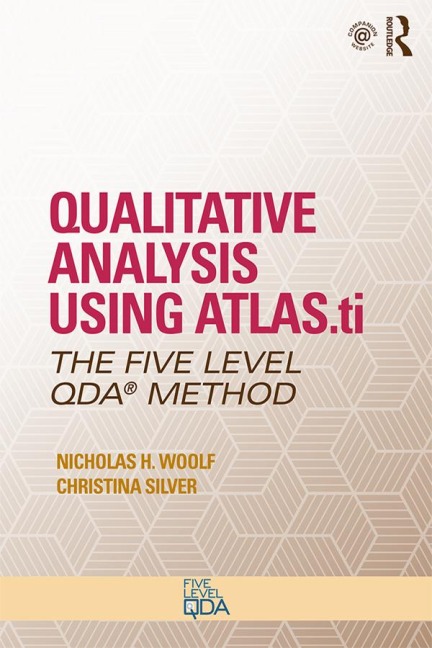
Software is cut-and-dried - every button you press has a predictable effect - but qualitative analysis is open-ended and unfolds in unpredictable ways. This contradiction is best resolved by separating analytic strategies - what you plan to do - from software tactics - how you plan to do it. Expert ATLAS.ti users have unconsciously learned to do this. The Five-Level QDA® method unpacks the process so that you can learn it consciously and efficiently. The first part of the book explains how the contradiction between analytic strategies and software tactics is reconciled by "translating" between them. The second part provides both an in-depth description of how ATLAS.ti works and comprehensive instruction in the five steps of "translation". these steps are illustrated with examples from a variety of research projects. The third part contains real-world qualitative research projects from a variety of disciplines, methodologies, and kinds of qualitative analysis, all illustrated in ATLAS.ti using the Five-Level QDA method. The book is accompanied by three sets of videos demonstrations on the Companion Website. While this book uses screenshots from the current ATLAS.ti Version 8, it is still fully applicable to users of older versions. The book and accompanying videos illustrate the Windows version of ATLAS.ti. As there are some differences in screen and interface design between the Mac and Windows versions please watch the video 'The ATLAS.ti Mac Interface' in the Component Orientation series of videos (available September 2017) The Five-Level QDA method is based on the authors' combined 40 years of experience teaching ATLAS.ti and other software packages used as platforms for conducting qualitative analysis. After many years observing their students' challenges they developed the Five-Level QDA method to describe the process that long-time ATLAS.ti experts unconsciously adopt. The Five-Level QDA method is independent of software program or methodology, and the principles apply to any type of qualitative project. Please see the following URL to access the accompanying materials for this book: https://www.qdaservices.co.uk/five-level-qda
Nicholas H. Woolf has worked as an independent qualitative research consultant, coach, and trainer since 1998. He has conducted or consulted on numerous research studies, from single-site to multinational studies in various fields in the behavioral sciences using a wide range of methodologies, from highly structured content analyses, to evaluations, grounded theory-style projects, and interpretive phenomenology. As a trainer Nick specializes in teaching qualitative analysis using ATLAS.ti. He has conducted 285 workshops at over 100 universities and other institutions, primarily in the USA and Canada, for more than 3,000 PhD students, professors, and research and evaluation consultants. In 2013 Nick introduced Five-Level QDA in his keynote address at the first ATLAS.ti user's conference in Berlin (Woolf, 2014). Christina Silver has worked at the CAQDAS Networking Project at the University of Surrey, UK since 1998. She is responsible for capacity-building activities and has designed and led training in all the major qualitative software programs, including ATLAS.ti, Dedoose, MAXQDA, NVivo, Transana, QDA Miner, Qualrus, and Quirkos. Christina also works as an independent researcher, consultant, and trainer, supporting researchers to plan and implement computer-assisted analysis, and contributing to doctoral research programs in several UK universities.
List of Figures List of Tables List of Boxes Acknowledgments Case Contributors Orientation Part I: The Principles of the Five-Level QDA Method Chapter 1. Strategies and Tactics Chapter 2. Developing Objectives and Analytic Plans (Levels 1 and 2) Chapter 3. Translating Analytic Tasks Into Software Tools (Levels 3, 4, and 5) Part II: The Five-Level QDA Method in Practice Chapter 4. Orientation to ATLAS.ti Chapter 5: The Architecture of ATLAS.ti Chapter 6: Mastering the Process of Translation Part III: Case IIlustrations Chapter 7. Orientation to Case Illustrations Chapter 8. Case Illustration - An Exploratory Literature Review Chapter 9. Case Illustration - A Discourse Analysis Study Appendices Appendix 1. Three Levels of Detail of Analytic Tasks Appendix 2. Five Analytic Activities Appendix 3. Examples of Units in Analytic Tasks Appendix 4. Identifying the Units of Analytic Tasks Appendix 5. Identifying the Purpose of Analytic Tasks Index
Dieses eBook wird im PDF-Format geliefert und ist mit einem Adobe Kopierschutz (DRM) versehen. Sie können dieses eBook mit allen Geräten lesen, die das PDF-Format und den Adobe Kopierschutz (DRM) unterstützen.
Zum Beispiel mit den folgenden Geräten:
• tolino Reader
Laden Sie das eBook direkt über den Reader-Shop auf dem tolino herunter oder übertragen Sie das eBook auf Ihren tolino mit einer kostenlosen Software wie beispielsweise Adobe Digital Editions.
• Sony Reader & andere eBook Reader
Laden Sie das eBook direkt über den Reader-Shop herunter oder übertragen Sie das eBook mit der kostenlosen Software Sony READER FOR PC/Mac oder Adobe Digital Editions auf ein Standard-Lesegeräte mit epub- und Adobe DRM-Unterstützung.
• Tablets & Smartphones
Möchten Sie dieses eBook auf Ihrem Smartphone oder Tablet lesen, finden Sie hier unsere kostenlose Lese-App für iPhone/iPad und Android Smartphone/Tablets.
• PC & Mac
Lesen Sie das eBook direkt nach dem Herunterladen mit einer kostenlosen Lesesoftware, beispielsweise Adobe Digital Editions, Sony READER FOR PC/Mac oder direkt über Ihre eBook-Bibliothek in Ihrem Konto unter „Meine eBooks“ - „online lesen“.
Schalten Sie das eBook mit Ihrer persönlichen Adobe ID auf bis zu sechs Geräten gleichzeitig frei.
Bitte beachten Sie, dass die Kindle-Geräte das Format nicht unterstützen und dieses eBook somit nicht auf Kindle-Geräten lesbar ist.