Und dann auf "Zum Home-Bildschirm [+]".

Stöbern
genialokal zum Startbildschirm hinzufügen
Installieren Sie die genialokal App auf Ihrem Startbildschirm für einen schnellen Zugriff und eine komfortable Nutzung.
Installieren Sie die genialokal App auf Ihrem Startbildschirm für einen schnellen Zugriff und eine komfortable Nutzung.
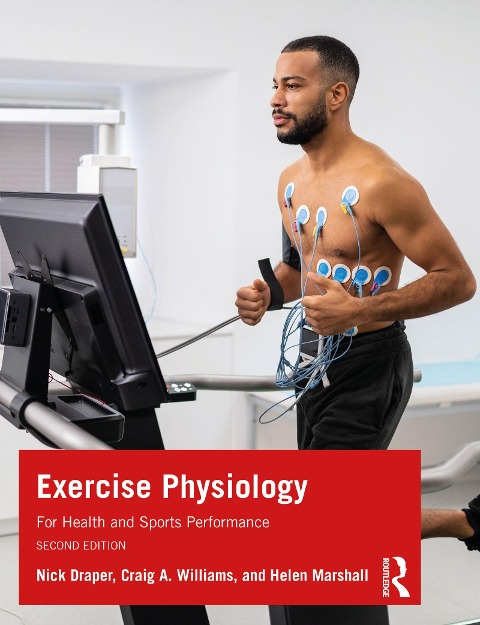
This second edition of Exercise Physiology: For Health and Sports Performance brings together all the essential human anatomy and applied physiology that students of exercise science, physical education, and sports coaching will need to know. Written in a friendly, accessible style, and containing a wide range of features to help develop understanding, this book provides a complete one-stop shop for exercise physiology broken down into three fundamental parts: foundations of exercise physiology, applied exercise physiology, and the new Part 3, exercise prescription. With Parts 1 and 2 examining the theory, testing, and practical applications of exercise physiology, the new Part 3 reflects the changes in the field by increasing focus on physical activity and diverse populations and helps provides a more complete course text for any exercise physiology course at universities around the world. This newly revised book is key reading for undergraduate and postgraduate students in the fields of exercise physiology, sports performance, sports therapy, fitness and personal training, and other related sport science courses.
Nick Draper has been a researcher and teacher at the University of Canterbury, New Zealand, for more than a decade but has a wealth of experience developed as a practitioner. Nick's research has a translational focus, with the aim of finding solutions to real-world problems. Nick completed his research training at the Universities of London and New Mexico, where he received a thorough grounding in qualitative and quantitative methods, both of which he applies to research problems in his chosen field of exercise physiology. Craig A. Williams is the director of the Children's Health and Exercise Research Centre (CHERC), Devon, UK. He lectures on the physiological aspects of the BSc and MSc degree programmes at the University of Exeter. He is internationally recognised for research in paediatric exercise physiology. Professor Williams specialises in investigating the physiological responses to high-intensity exercise and fatigue in children and adolescents (6-18 years). This work is translated into clinical settings, for example, children with cystic fibrosis and congenital heart disease, as well as applied youth sports performance (particularly in relation to the long-term development of young athletes). Helen Marshall, PhD, is a team leader and the health promotion degree coordinator at Ara Institute of Canterbury, New Zealand. Her main teaching focus is around the multiple ways by which people can be enabled to take control of their health, while her collaborative research has specifically focussed on the many health benefits of physical activity for a variety of populations.
PART 1 Foundations of exercise physiology 1 Introduction 2 Nutrition for health and sports performance 3 From cells to systems 4 The control systems: The nervous and endocrine systems 5 The movement systems: Skeletal and muscular 6 The transport systems: The respiratory and cardiovascular systems PART 2 Essential exercise physiology 7 General concepts for exercise physiology 8 Power and power endurance: The explosive sports 9 Anaerobic endurance: The speed endurance sports 10 High-intensity aerobic endurance sports 11 Lower-intensity aerobic endurance sports 12 Intermittent sports PART 3 Applied exercise physiology 13 Introduction to exercise programming, conditioning, and strength training 14 Physical activity prescription for people with chronic complex medical diseases - pulmonary, respiratory, cardiac, and circulatory conditions, obesity, and cancer 15 Physical activity prescription for people with chronic complex medical diseases - neurological, musculoskeletal, metabolic, and mental health conditions 16 Applied exercise physiology and the environment Appendix A: Recommended daily allowances for a range of vitamins Appendix B: Gas conversion table Appendix C: Body composition and its analysis
Dieses eBook wird im PDF-Format geliefert und ist mit einem Adobe Kopierschutz (DRM) versehen. Sie können dieses eBook mit allen Geräten lesen, die das PDF-Format und den Adobe Kopierschutz (DRM) unterstützen.
Zum Beispiel mit den folgenden Geräten:
• tolino Reader
Laden Sie das eBook direkt über den Reader-Shop auf dem tolino herunter oder übertragen Sie das eBook auf Ihren tolino mit einer kostenlosen Software wie beispielsweise Adobe Digital Editions.
• Sony Reader & andere eBook Reader
Laden Sie das eBook direkt über den Reader-Shop herunter oder übertragen Sie das eBook mit der kostenlosen Software Sony READER FOR PC/Mac oder Adobe Digital Editions auf ein Standard-Lesegeräte mit epub- und Adobe DRM-Unterstützung.
• Tablets & Smartphones
Möchten Sie dieses eBook auf Ihrem Smartphone oder Tablet lesen, finden Sie hier unsere kostenlose Lese-App für iPhone/iPad und Android Smartphone/Tablets.
• PC & Mac
Lesen Sie das eBook direkt nach dem Herunterladen mit einer kostenlosen Lesesoftware, beispielsweise Adobe Digital Editions, Sony READER FOR PC/Mac oder direkt über Ihre eBook-Bibliothek in Ihrem Konto unter „Meine eBooks“ - „online lesen“.
Schalten Sie das eBook mit Ihrer persönlichen Adobe ID auf bis zu sechs Geräten gleichzeitig frei.
Bitte beachten Sie, dass die Kindle-Geräte das Format nicht unterstützen und dieses eBook somit nicht auf Kindle-Geräten lesbar ist.