Und dann auf "Zum Home-Bildschirm [+]".

Stöbern
genialokal zum Startbildschirm hinzufügen
Installieren Sie die genialokal App auf Ihrem Startbildschirm für einen schnellen Zugriff und eine komfortable Nutzung.
Installieren Sie die genialokal App auf Ihrem Startbildschirm für einen schnellen Zugriff und eine komfortable Nutzung.
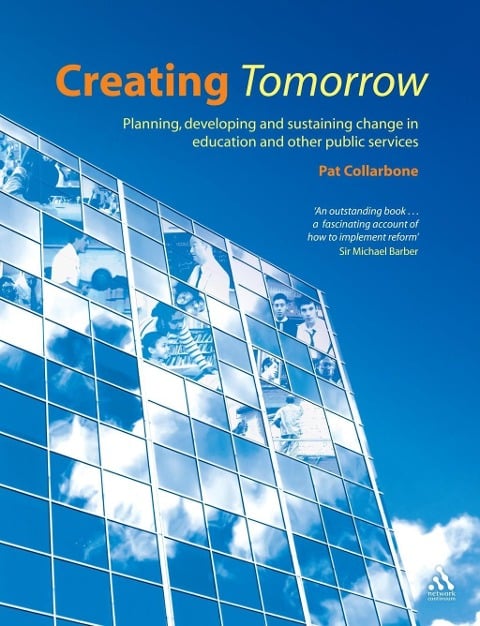
This book is about workforce modernisation and cultural change. In the last few years, remodelling has been taking place in UK schools and in local authorities, children's centres, and locally based agencies and services that support young people. Some of these organisations have worked through the remodelling process but others need to and would benefit from doing so. The book will be of benefit to all as its primary focus is on sustainable change rather than simply getting started. Work has recently begun on remodelling in the Further Education sector.
Pat Collarbone taught for 28 years in inner London and established a reputation for innovation and achievement during her headship at Haggerston School in Hackney. In 1996 she established the London Leadership Centre at the Institute of Education, University of London. In 2002 she was seconded from the IoE as Director of Leadership Development Programmes at the National College for School Leadership (NCSL), a post she held until December 2004. She was a Director of NCSL and the Director of the National Remodelling Team within NCSL until March 2005, continuing in this role when the NRT transferred to the Training and Development Agency (TDA).
In 2006, she set up Education Change Associates Limited, a private consultancy firm, but is also a principal advisor to the TDA, and is involved with work for NCSL on the ECM agenda, and with the Innovation Unit and the DfES.
Pat is noted as an outstanding speaker and frequently delivers presentations on leadership development and remodelling at national and international conferences. She received a DBE in 1997 as an acknowledgement for her services to education.
Foreword by Sir Michael Barber
Introduction
A brief resumé of the book's content and readership - ranging from senior politicians and government officials to anyone facing and leading organizational change in the public sector, including senior managers in LAs and other regional organizations, business leaders, headteachers, staff in public care trusts and other health care organizations. Leaders often need to alter their style and learn new skills to facilitate change.
Chapter 1: The Imperative for change
- The context for remodelling today
- Global issues
- Public Sector Reform: e.g. more local control of public services; increased regulation from Europe
- Key challenges including economic stability, social cohesion and social equity.
- Future vision/scenarios: reference to Every Child Matters, The Children's Plan, inclusion, looked after children, cultural diversity etc.
Chapter 2: Remodelling: The early days
The principles of remodelling and why they are important/essential to the process.
Remodelling: where it came from; what it is; description of the change process (stages/ tools/skills), change levers, role of change agent, change teams
Why it works: remodelling is a cycle for continuous improvement.
Chapter 3: Remodelling: Extending the agenda
- Five years in: the evidence base; including case studies. The remodeling change process has proved itself a very adept and powerful tool in helping schools develop appropriate and sustainable extended services.
- Effective partnership working
- Multi-agency working
- Personalization
- The importance of shared leadership.
- Adaptation of the remodeling process for School Improvement Planning.
Chapter 4: Remodelling: The process
- The 5 stages of the remodeling change process (TDA terminology): Mobilize, discover, Deepen, Develop and Deliver, and the implicit sixth stage: Sustain.
- Linking the remodelling process to the change curve: the 'dip' during the challenging early stages of the process that requires most support.
- An example of a change team: the membership of a change team in an education/children's services context, but applicable across different sectors. Includes stakeholders in a school change team; the roles of school leaders, classroom teachers, premises officers, ESCOs, TAs, parents, governors, other agencies and pupils.
Chapter 5: Remodelling: Making it work
- Successful remodelling needs to be underpinned by 6 core remodelling elements:
Shared and effective leadership
Inclusive culture
Constructive collaboration
Proactive and inclusive change team/s
Proven change process
Rational, political and emotional considerations.
Chapter 6: Remodelling: The change team
- Setting up a change team
- Leading change teams
- School change teams, including case studies.
Chapter 7: Remodelling: The critical importance of leadership
- The paradox: the remodeling process involves devolved leadership and making it fully inclusive, but strong senior leadership that supports the process is key to its success.
- Leaders need to focus on: personalization, modernization and partnership working.
- Case study of an example of remodeling with shared leadership.
Chapter 8: Remodelling: Sustaining change References
Dieses eBook wird im PDF-Format geliefert und ist mit einem Adobe Kopierschutz (DRM) versehen. Sie können dieses eBook mit allen Geräten lesen, die das PDF-Format und den Adobe Kopierschutz (DRM) unterstützen.
Zum Beispiel mit den folgenden Geräten:
• tolino Reader
Laden Sie das eBook direkt über den Reader-Shop auf dem tolino herunter oder übertragen Sie das eBook auf Ihren tolino mit einer kostenlosen Software wie beispielsweise Adobe Digital Editions.
• Sony Reader & andere eBook Reader
Laden Sie das eBook direkt über den Reader-Shop herunter oder übertragen Sie das eBook mit der kostenlosen Software Sony READER FOR PC/Mac oder Adobe Digital Editions auf ein Standard-Lesegeräte mit epub- und Adobe DRM-Unterstützung.
• Tablets & Smartphones
Möchten Sie dieses eBook auf Ihrem Smartphone oder Tablet lesen, finden Sie hier unsere kostenlose Lese-App für iPhone/iPad und Android Smartphone/Tablets.
• PC & Mac
Lesen Sie das eBook direkt nach dem Herunterladen mit einer kostenlosen Lesesoftware, beispielsweise Adobe Digital Editions, Sony READER FOR PC/Mac oder direkt über Ihre eBook-Bibliothek in Ihrem Konto unter „Meine eBooks“ - „online lesen“.
Schalten Sie das eBook mit Ihrer persönlichen Adobe ID auf bis zu sechs Geräten gleichzeitig frei.
Bitte beachten Sie, dass die Kindle-Geräte das Format nicht unterstützen und dieses eBook somit nicht auf Kindle-Geräten lesbar ist.