Und dann auf "Zum Home-Bildschirm [+]".

Stöbern
genialokal zum Startbildschirm hinzufügen
Installieren Sie die genialokal App auf Ihrem Startbildschirm für einen schnellen Zugriff und eine komfortable Nutzung.
Installieren Sie die genialokal App auf Ihrem Startbildschirm für einen schnellen Zugriff und eine komfortable Nutzung.
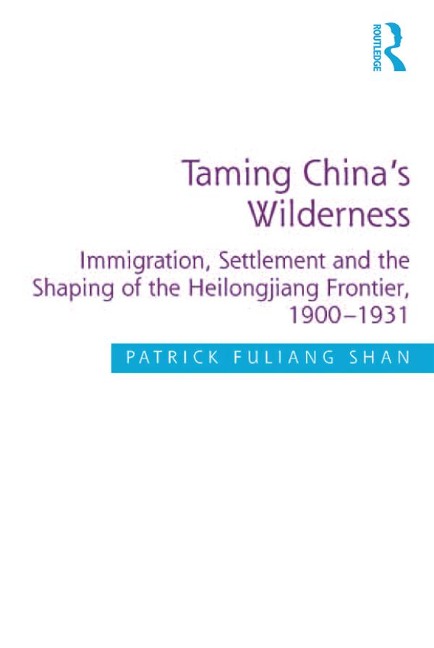
Until the beginning of the twentieth century, the Chinese province of Heilongjiang, historically known as Northern Manchuria, remained a sparsely populated territory on the northeastern frontier. For about two centuries, the rulers of the Qing dynasty (1644-1912) - whose historical homeland was in Manchuria - enforced a policy that prohibited Chinese immigration and settlement and maintained the region's reputation as the Great Northern Wilderness. Yet, as this new study demonstrates, by the early 20th century the Chinese government reversed its previous policy and began to encourage immigration into Heilongjiang, turning a backwater into a thriving frontier region. Covering the period between the reversal of the anti-immigration policy around 1900 and the Japanese occupation of Heilongjiang in 1931, this book investigates this distinctive frontier and the impact upon it of the settlement of four million Chinese settlers during a thirty-one year period. Following an introduction providing a background to the period covered, the study is divided into five chapters. The first chapter looks at patterns of immigrations, settlement and the features of the newly developing frontier society. Chapter two then deals with land possession, tenure and relations amongst the newly arrived settlers. The third chapter discusses the transformation of the ethnic make-up of the region, and the move from a largely nomadic culture to one of settled farmers. Chapter four probes the social problems these changes caused, particularly banditry. The final chapter revises commonly held notions about Russian dominance of the region, arguing that Russia's influence was limited to the railway zone. Taken together, these chapters not only provide an overview of a territory undergoing rapid and sustained change, but also provide insights into wider Chinese history, as well as adding to the on-going scholarly interest in border and frontier studies.
Patrick Fuliang Shan, Ph.D, is an associate professor of history at Grand Valley State University where he teaches Chinese history, East Asian history and world history. He has served as the president of the Chinese Historians in the United States (2009-2011), a member of the board of the Historical Society for Twentieth Century China (2010-2014), and an associate editor of American Review of China Studies (since 2012). Currently, he is the coordinator of the East Asian Studies Program at Grand Valley State University.
Introduction; Chapter 1 Immigrants, Settlers and New Communities; Chapter 2 Land, Tenancy and Economic Transformation; Chapter 3 Ethnic Transition to Agricultural Life; Chapter 4 Insecurity, Banditry and Social Order; Chapter 5 Russian Influence and Chinese Response;
Dieses eBook wird im PDF-Format geliefert und ist mit einem Adobe Kopierschutz (DRM) versehen. Sie können dieses eBook mit allen Geräten lesen, die das PDF-Format und den Adobe Kopierschutz (DRM) unterstützen.
Zum Beispiel mit den folgenden Geräten:
• tolino Reader
Laden Sie das eBook direkt über den Reader-Shop auf dem tolino herunter oder übertragen Sie das eBook auf Ihren tolino mit einer kostenlosen Software wie beispielsweise Adobe Digital Editions.
• Sony Reader & andere eBook Reader
Laden Sie das eBook direkt über den Reader-Shop herunter oder übertragen Sie das eBook mit der kostenlosen Software Sony READER FOR PC/Mac oder Adobe Digital Editions auf ein Standard-Lesegeräte mit epub- und Adobe DRM-Unterstützung.
• Tablets & Smartphones
Möchten Sie dieses eBook auf Ihrem Smartphone oder Tablet lesen, finden Sie hier unsere kostenlose Lese-App für iPhone/iPad und Android Smartphone/Tablets.
• PC & Mac
Lesen Sie das eBook direkt nach dem Herunterladen mit einer kostenlosen Lesesoftware, beispielsweise Adobe Digital Editions, Sony READER FOR PC/Mac oder direkt über Ihre eBook-Bibliothek in Ihrem Konto unter „Meine eBooks“ - „online lesen“.
Schalten Sie das eBook mit Ihrer persönlichen Adobe ID auf bis zu sechs Geräten gleichzeitig frei.
Bitte beachten Sie, dass die Kindle-Geräte das Format nicht unterstützen und dieses eBook somit nicht auf Kindle-Geräten lesbar ist.