Und dann auf "Zum Home-Bildschirm [+]".

Stöbern
genialokal zum Startbildschirm hinzufügen
Installieren Sie die genialokal App auf Ihrem Startbildschirm für einen schnellen Zugriff und eine komfortable Nutzung.
Installieren Sie die genialokal App auf Ihrem Startbildschirm für einen schnellen Zugriff und eine komfortable Nutzung.
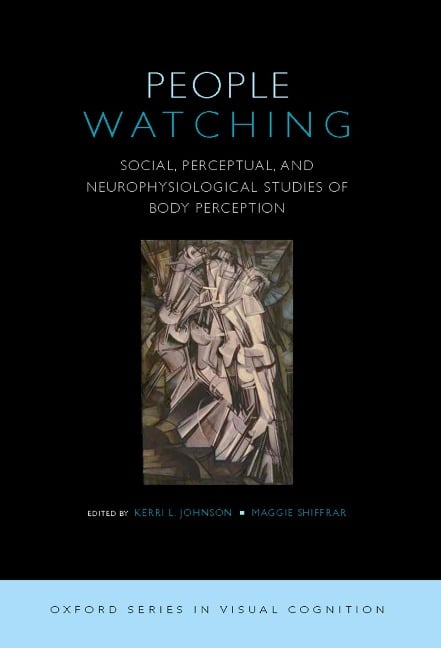
The human body has long been a rich source of inspiration for the arts, and artists have long recognized the body's special status. While the scientific study of body perception also has an important history, recent technological advances have triggered an explosion of research on the visual perception of the human body in motion, or as it is traditionally called, biological motion perception. Now reaching a point of burgeoning inter-disciplinary focus, biological motion perception research is poised to transform our understanding of person construal. Indeed, several factors highlight a privileged role for the human body as one of the most critical classes of stimuli affecting social perception. Human bodies in motion, for example, are among the most frequent moving stimulus in our environment. They can be readily perceived at a physical distance or visual vantage that precludes face perception. Moreover, body motion conveys meaningful psychological information such as social categories, emotion state, intentions, and underlying dispositions. Thus, body perception appears to serve as a first-pass filter for a vast array of social judgments from the routine (e.g., perceived friendliness in interactions) to the grave (e.g., perceived threat by law enforcement). This book provides an exciting integration of theory and findings that clarify how the human body is perceived by observers.
Kerri L. Johnson is Assistant Professor of Communication Studies and Psychology at the University of California, Los Angeles. Her research is focused on how people form impressions of one another by using cues in the face and body. Her lab tests both the production and perception of cues that convey identities such as sex, race, age, and sexual orientation. Johnson is particularly interested in how and why a variety of cues impinge on observers' judgments of other people. To study this, she uses a variety of methods -- such as corneal reflection eye tracking, three--dimensional motion capture, computer mouse tracking, and computer animation -- to determine how social perceptions are formed.
Maggie Shiffrar is Professor of Psychology at Rutgers University. Her research is focused on how the visual system interprets moving objects. To develop a unified understanding of visual system function, members of her laboratory examine the relationships between visual physiology and visual perception for both "high" and "low" levels of analysis. This includes behavioral studies of the visual analysis of human movement, implicit memory of objects in motion, and the role of image segmentation cues in motion coherence and visual memory for shape. At present, she is studying how visual experience, motor experience, and social processes all contribute to the visual analysis of human movement.
I. Introduction Chapter 1: Making Great Strides: Advances in Research on the Perception of the Human Body Chapter 2: Gunnar Johansson, Events, and Biological Motion II. Psychophysics Chapter 3: Top-Down versus Bottom-up Processing of Biological Motion Chapter 4: Seeing You through Me: Creating Self-Other Correspondences for Body Perception Chapter 5: What Does "Biological Motion" Really Mean? Differentiating Visual Percepts of Human, Animal, and Non-biological Motions Chapter 6: Shape-Independent Processing of Biological Motion
Chapter 7: Action Perception from a Common Coding Perspective III. Development and Individual Differences Chapter 8: Developmental Origins of Biological Motion Perception Chapter 9: Experience and the Perception of Biological Motion
Chapter 10: Variability in the Visual Perception of Human Motion as a Function of the Observer's Autistic Traits Chapter 11: Development of Body Motion Processing in Normalcy and Pathology
IV. Social Perspectives Chapter 12: Person (Mis)Perception? On the Biased Representation of the Human Body. Chapter 13: It's the Way You Walk: Kinematic Specification of Vulnerability to Attack Chapter 14: Coordinating Social Beings in Motion Chapter 15: Functionalism Redux: How Adaptive Action Constrains Perception, Simulation, and Evolved Intuitions
V. Neurophysiology Chapter 16: Neural mechanisms for action observation Chapter 17: Neural Mechanisms for Biological Motion and Animacy Chapter 18: The How, When, and Why of Configural Processing in the Perception of Human Movement Chapter 19: Brain Mechanisms for Social Perception: Moving towards an Understanding of Autism Chapter 20: From Body Perception to Action Preparation: A Distributed Neural System for Viewing Bodily Expressions of Emotion Chapter 21: Sensory and Motor Brain Areas Subserving Biological Motion Perception: Neuropsychological and Neuroimaging Studies Chapter 22: Computational Mechanisms of the Visual Processing of Action Stimuli
Index
Dieses eBook wird im PDF-Format geliefert und ist mit einem Adobe Kopierschutz (DRM) versehen. Sie können dieses eBook mit allen Geräten lesen, die das PDF-Format und den Adobe Kopierschutz (DRM) unterstützen.
Zum Beispiel mit den folgenden Geräten:
• tolino Reader
Laden Sie das eBook direkt über den Reader-Shop auf dem tolino herunter oder übertragen Sie das eBook auf Ihren tolino mit einer kostenlosen Software wie beispielsweise Adobe Digital Editions.
• Sony Reader & andere eBook Reader
Laden Sie das eBook direkt über den Reader-Shop herunter oder übertragen Sie das eBook mit der kostenlosen Software Sony READER FOR PC/Mac oder Adobe Digital Editions auf ein Standard-Lesegeräte mit epub- und Adobe DRM-Unterstützung.
• Tablets & Smartphones
Möchten Sie dieses eBook auf Ihrem Smartphone oder Tablet lesen, finden Sie hier unsere kostenlose Lese-App für iPhone/iPad und Android Smartphone/Tablets.
• PC & Mac
Lesen Sie das eBook direkt nach dem Herunterladen mit einer kostenlosen Lesesoftware, beispielsweise Adobe Digital Editions, Sony READER FOR PC/Mac oder direkt über Ihre eBook-Bibliothek in Ihrem Konto unter „Meine eBooks“ - „online lesen“.
Schalten Sie das eBook mit Ihrer persönlichen Adobe ID auf bis zu sechs Geräten gleichzeitig frei.
Bitte beachten Sie, dass die Kindle-Geräte das Format nicht unterstützen und dieses eBook somit nicht auf Kindle-Geräten lesbar ist.