Und dann auf "Zum Home-Bildschirm [+]".

Stöbern
genialokal zum Startbildschirm hinzufügen
Installieren Sie die genialokal App auf Ihrem Startbildschirm für einen schnellen Zugriff und eine komfortable Nutzung.
Installieren Sie die genialokal App auf Ihrem Startbildschirm für einen schnellen Zugriff und eine komfortable Nutzung.
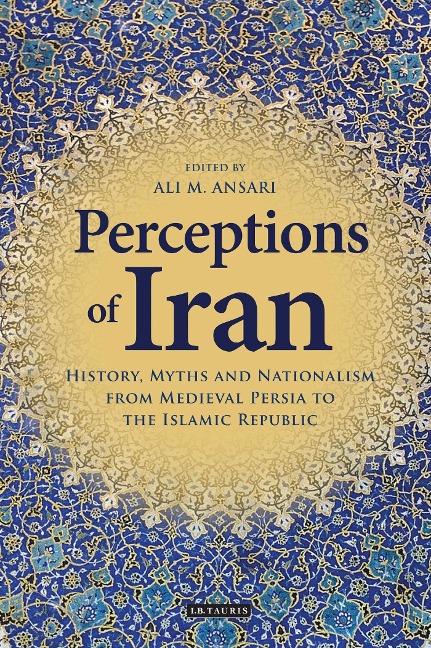
I.B.Tauris in association with the Iran Heritage Foundation
From the Sasanian to the Safavid Empire, and from Qajar Iran to the current Islamic Republic, the history of Iran is one which has been coloured by a rich tradition of myths and narratives and shaped by its wealth of philosophers, cultural theorists and political thinkers. Perceptions of Iran dissects the construction of Iranian identity, to reveal how nationalism has been continually re-formulated and how Iran's self-perception has been moulded by its literary past.
Here, Ali M. Ansari gathers together a varied and wide-ranging account of the long history of Iranian encounters with the Western world, whether via the observations of Herodotus, or the knowledge - via the Old Testament - of Cyrus liberating the Jews from Babylon, or into the modern era when nineteenth and twentieth century interactions reflect the unequal power
relationship between Iran and the West. Perceptions of Iran also explores the salient elements in the country's narrative which helped to form Iran's identity, such as Ferdowsi's creation of the Shahnameh - the national epic - the exquisite architecture of Safavid Isfahan or the unfulfilled promise of the Constitutional Movement in the early twentieth century. It offers analysis of the Qajar Shahs' use of a mythical and dynastic past, as they drew on the narratives of Jamshid's glory and Khusraw's splendour in order to legitimise their rule. At the same time, it examines the ways in which foreign travellers
and diplomats understood and conceived of the royal courts of Safavid Persia.
As it covers 2,500 years of political and intellectual history, Perceptions of Iran ties together the diverse threads of Iranian experience that have underpinned the country's social and cultural movements, spanning Mirza Agha Khan Kermani's writing on Persian history and liberal nationalism, through to the strident anti- Western discourses of Seyyed Jamal al-Afghani, Jalal Al-e Ahmad and Ayatollah Khomeini. The book is therefore vital for researchers of Iranian history and
those interested in the use of myth in the construction of national identity more widely.
Ali M. Ansari is Professor in the School of History at the University of St. Andrews. He is the author of several books on Iran, including Iran, Islam and Democracy: The Politics of Managing Change (2000).
Chapter 1: History, National Identity and Myths in the Iranian Contemporary Political Thought: Mirza Fathali Akhundzadeh (1812-78), Mirza Agha Khan Kermani (1853-96) and Hassan Taqizadeh (1878-1970) - Pejman Abdolmohammadi
Chapter 2: Iran in the Mediaeval Mind - Robert Bartlett
Chapter 3: History and Chronology in Early Modern Iran: The Safavid Empire in Comparative Perspective - Stephen P. Blake
Chapter 4: Historiography in Late Antique Iran - Touraj Daryaee
Chapter 5: The Growth of historical nationalism and new trend in historiography of Iranian in early twenty century: the Case of Pirniya's Ancient History - Mohammad T. Imanpour
Chapter 6: Reverse Orientalism: Iranian Reactions to the West - Farhang Jahanpour
Chapter 7: Herodotus' Cyrus and political freedom - Lynette Mitchell
Chapter 8: Iran and the Aryan Myth - David Motadel
Chapter 9: History and Its Meaning in the Islamic Republic of Iran: The Case of the Mongol Invasion(s) and Rule - Anja Pistor-Hatam
Chapter 10: Safavid Persia through Italian eyes: from reign of freedom to land of oppression - Elisa Sabadini
Chapter 11: History and the Iranian Drama: The Case of Bahram Beyzaie - Saeed Talajooy
Dieses eBook wird im PDF-Format geliefert und ist mit einem Adobe Kopierschutz (DRM) versehen. Sie können dieses eBook mit allen Geräten lesen, die das PDF-Format und den Adobe Kopierschutz (DRM) unterstützen.
Zum Beispiel mit den folgenden Geräten:
• tolino Reader
Laden Sie das eBook direkt über den Reader-Shop auf dem tolino herunter oder übertragen Sie das eBook auf Ihren tolino mit einer kostenlosen Software wie beispielsweise Adobe Digital Editions.
• Sony Reader & andere eBook Reader
Laden Sie das eBook direkt über den Reader-Shop herunter oder übertragen Sie das eBook mit der kostenlosen Software Sony READER FOR PC/Mac oder Adobe Digital Editions auf ein Standard-Lesegeräte mit epub- und Adobe DRM-Unterstützung.
• Tablets & Smartphones
Möchten Sie dieses eBook auf Ihrem Smartphone oder Tablet lesen, finden Sie hier unsere kostenlose Lese-App für iPhone/iPad und Android Smartphone/Tablets.
• PC & Mac
Lesen Sie das eBook direkt nach dem Herunterladen mit einer kostenlosen Lesesoftware, beispielsweise Adobe Digital Editions, Sony READER FOR PC/Mac oder direkt über Ihre eBook-Bibliothek in Ihrem Konto unter „Meine eBooks“ - „online lesen“.
Schalten Sie das eBook mit Ihrer persönlichen Adobe ID auf bis zu sechs Geräten gleichzeitig frei.
Bitte beachten Sie, dass die Kindle-Geräte das Format nicht unterstützen und dieses eBook somit nicht auf Kindle-Geräten lesbar ist.