Und dann auf "Zum Home-Bildschirm [+]".

Stöbern
genialokal zum Startbildschirm hinzufügen
Installieren Sie die genialokal App auf Ihrem Startbildschirm für einen schnellen Zugriff und eine komfortable Nutzung.
Installieren Sie die genialokal App auf Ihrem Startbildschirm für einen schnellen Zugriff und eine komfortable Nutzung.
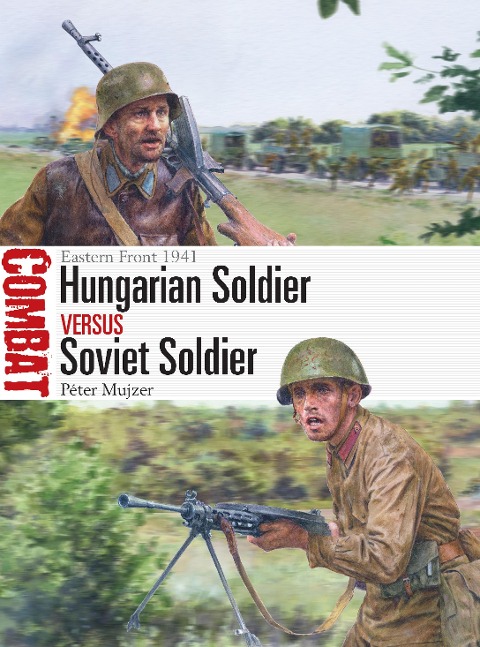
On 26 June 1941, unidentified bombers attacked the Hungarian town of Kassa, prompting Hungary to join its Axis partners in Operation Barbarossa, Hitler's invasion of the Soviet Union.
Hungary's contribution to Barbarossa was designated the Carpathian Group, its most powerful component being the Mobile Corps, which fielded motorized rifle, cavalry, bicycle and light armoured troops. The Hungarians faced Soviet forces belonging to the Kiev Military District, deployed in four armies along a 940km-long front.
During the opening battles (4-13 July), the Hungarian motorized rifle and armoured units clashed with the withdrawing Red Army forces. In the battle for Uman (15 July-8 August) the Hungarians blocked the Soviet troops' efforts to break out from encirclement. During the Hungarian defensive operation at the River Dniepr (30 August-6 October), counter-attacking Soviet units exerted heavy pressure on the defending Hungarians. Both sides would seek to draw lessons from these opening battles as the war in the East continued to rage into 1942.
Fully illustrated, this book investigates the Hungarian and Soviet soldiers who fought in three battles of the Barbarossa campaign, casting new light on the role played by the forces of Nazi Germany's allies on the Eastern Front.
Péter Mujzer served in the Hungarian armed forces for 20 years and is now a military historian with a particular interest in Hungary's armed forces during World War II. He is the author of five previous books, plus more than fifty articles on associated topics, many in English. This is his first book for Osprey.
Steve Noon was born in Kent, UK, and attended art college in Cornwall. He's had a life-long passion for illustration, and since 1985 has worked as a professional artist, illustrating over 40 books for Osprey.
Introduction
The Opposing Sides
Openaing Battles, 1-14 July 1941
Golovanevsk, 6 August 1941
Zaporozh'ye, 1-6 September 1941
Analysis
Aftermath
Unit Organizations
Bibliography
Index
Dieses eBook wird im PDF-Format geliefert und ist mit einem Adobe Kopierschutz (DRM) versehen. Sie können dieses eBook mit allen Geräten lesen, die das PDF-Format und den Adobe Kopierschutz (DRM) unterstützen.
Zum Beispiel mit den folgenden Geräten:
• tolino Reader
Laden Sie das eBook direkt über den Reader-Shop auf dem tolino herunter oder übertragen Sie das eBook auf Ihren tolino mit einer kostenlosen Software wie beispielsweise Adobe Digital Editions.
• Sony Reader & andere eBook Reader
Laden Sie das eBook direkt über den Reader-Shop herunter oder übertragen Sie das eBook mit der kostenlosen Software Sony READER FOR PC/Mac oder Adobe Digital Editions auf ein Standard-Lesegeräte mit epub- und Adobe DRM-Unterstützung.
• Tablets & Smartphones
Möchten Sie dieses eBook auf Ihrem Smartphone oder Tablet lesen, finden Sie hier unsere kostenlose Lese-App für iPhone/iPad und Android Smartphone/Tablets.
• PC & Mac
Lesen Sie das eBook direkt nach dem Herunterladen mit einer kostenlosen Lesesoftware, beispielsweise Adobe Digital Editions, Sony READER FOR PC/Mac oder direkt über Ihre eBook-Bibliothek in Ihrem Konto unter „Meine eBooks“ - „online lesen“.
Schalten Sie das eBook mit Ihrer persönlichen Adobe ID auf bis zu sechs Geräten gleichzeitig frei.
Bitte beachten Sie, dass die Kindle-Geräte das Format nicht unterstützen und dieses eBook somit nicht auf Kindle-Geräten lesbar ist.