Und dann auf "Zum Home-Bildschirm [+]".

Stöbern
genialokal zum Startbildschirm hinzufügen
Installieren Sie die genialokal App auf Ihrem Startbildschirm für einen schnellen Zugriff und eine komfortable Nutzung.
Installieren Sie die genialokal App auf Ihrem Startbildschirm für einen schnellen Zugriff und eine komfortable Nutzung.
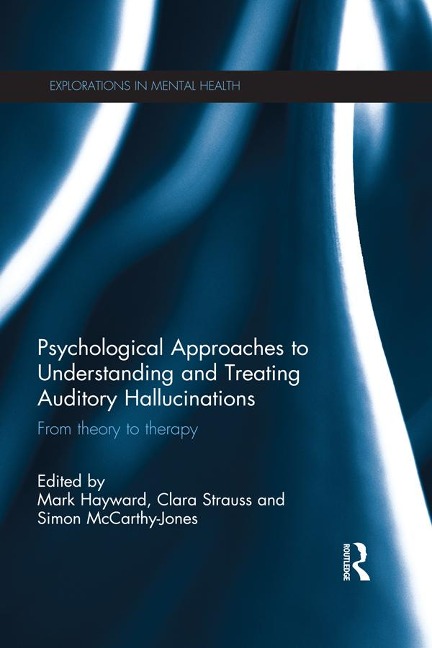
This book draws on clinical research findings from the last three decades to offer a review of current psychological theories and therapeutic approaches to understanding and treating auditory hallucinations, addressing key methodological issues that need to be considered in evaluating interventions. Mark Hayward, Clara Strauss and Simon McCarthy-Jones present a historical narrative on lessons learnt, the evolution of evidence bases, and an agenda for the future. The text also provides a critique of varying therapeutic techniques, enabling practice and treatment decisions to be grounded in a balanced view of differing approaches. Chapters cover topics including: - behavioural and coping approaches - cognitive models of voice hearing - the role of self-esteem and identity - acceptance-based and mindfulness approaches - interpersonal theory. Psychological Approaches to Understanding and Treating Auditory Hallucinations brings together and evaluates diffuse literature in an accessible and objective manner, making it a valuable resource for clinical researchers and postgraduate students. It will also be of significant interest to academic and clinical psychologists working within the field of psychotic experiences.
Mark Hayward is Director of Research at Sussex Partnership NHS Foundation Trust and Honorary Senior Lecturer at the University of Sussex, UK. Clara Strauss is a Clinical Research Fellow at Sussex Partnership NHS Foundation Trust and an Honorary Lecturer at the University of Sussex, UK. Simon McCarthy-Jones is a Research Fellow at Macquarie University, Sydney, Australia, and an Honorary Research Fellow in the Department of Psychology at Durham University, UK.
Introduction Simon McCarthy-Jones, Clara Strauss and Mark Hayward 1. What Have We Learnt About the Phenomenology of Voice-Hearing? Simon McCarthy-Jones 2. What Have We Learnt from Behavioural and Coping Interventions for Voices? Neil Thomas, Georgie Paulik, Stephanie Louise, John Farhall and Mark Hayward 3. What Have We Learnt About Cognitive Appraisals of Voices? Clara Strauss 4. What Have We Learnt About Cognitive Appraisals of the Self? Katherine Berry and Sandra Bucci 5. What Have We Learnt About the Ability of Cognitive Behavioural Therapy to Help with Voice-Hearing? Simon McCarthy-Jones, Neil Thomas, Guy Dodgson, Charles Fernyhough, Emilie Brotherhood, Gemma Wilson and Robert Dudley 6. What Have We Learnt About How to Capture and Measure the Outcomes of Psychological Therapies for Voices? Neil Thomas 7. What Have We Learnt About Relational Approaches for Voices? Mark Hayward and Georgie Paulik 8. What Have We Learnt About Mindfulness-Based Interventions and Acceptance and Commitment Therapy for Distressing Voices? Clara Strauss 9. Psychological Approaches to Distressing Voices: Where Are We Now and Where Are We Going? Clara Strauss, Simon McCarthy-Jones and Mark Hayward
Dieses eBook wird im PDF-Format geliefert und ist mit einem Adobe Kopierschutz (DRM) versehen. Sie können dieses eBook mit allen Geräten lesen, die das PDF-Format und den Adobe Kopierschutz (DRM) unterstützen.
Zum Beispiel mit den folgenden Geräten:
• tolino Reader
Laden Sie das eBook direkt über den Reader-Shop auf dem tolino herunter oder übertragen Sie das eBook auf Ihren tolino mit einer kostenlosen Software wie beispielsweise Adobe Digital Editions.
• Sony Reader & andere eBook Reader
Laden Sie das eBook direkt über den Reader-Shop herunter oder übertragen Sie das eBook mit der kostenlosen Software Sony READER FOR PC/Mac oder Adobe Digital Editions auf ein Standard-Lesegeräte mit epub- und Adobe DRM-Unterstützung.
• Tablets & Smartphones
Möchten Sie dieses eBook auf Ihrem Smartphone oder Tablet lesen, finden Sie hier unsere kostenlose Lese-App für iPhone/iPad und Android Smartphone/Tablets.
• PC & Mac
Lesen Sie das eBook direkt nach dem Herunterladen mit einer kostenlosen Lesesoftware, beispielsweise Adobe Digital Editions, Sony READER FOR PC/Mac oder direkt über Ihre eBook-Bibliothek in Ihrem Konto unter „Meine eBooks“ - „online lesen“.
Schalten Sie das eBook mit Ihrer persönlichen Adobe ID auf bis zu sechs Geräten gleichzeitig frei.
Bitte beachten Sie, dass die Kindle-Geräte das Format nicht unterstützen und dieses eBook somit nicht auf Kindle-Geräten lesbar ist.