Und dann auf "Zum Home-Bildschirm [+]".

Stöbern
genialokal zum Startbildschirm hinzufügen
Installieren Sie die genialokal App auf Ihrem Startbildschirm für einen schnellen Zugriff und eine komfortable Nutzung.
Installieren Sie die genialokal App auf Ihrem Startbildschirm für einen schnellen Zugriff und eine komfortable Nutzung.
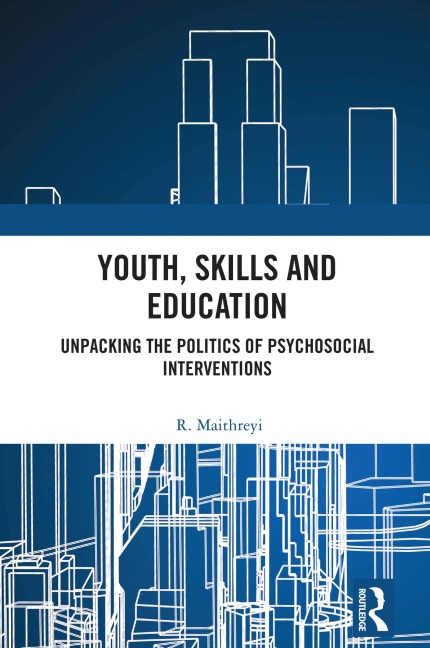
The book critically examines psycho-educational developmental interventions that arguably contribute to 'Positive Youth Development', especially for marginalized youth conceived to be at-risk. Tracing the growth and circulation of these programmes from the Global North to the Global South, the book shows how these interventions seek to cultivate youth as entrepreneurial citizens who can cater to global developmental agendas. Using Life Skills Education programmes in India as an illustration, the book locates these programmes within the larger context of neoliberalization of education and training globally through programmes for social-emotional learning, personality, employability, and vocational skills. It shows how such programmes cultivate an ethic of self-responsibility among 'youth at-risk', to overcome structural disadvantages by working upon themselves. However, sociocultural disconnects and youth agencies that emerge during programme implementation do not allow for straightforward replication of global neoliberal agendas. Closely examining the outcomes of programmes on youth, the book presents alternative agendas that can be truly empowering for young people in the Global South. Educators, policymakers, scholars, and students working in the areas of education, childhood and youth studies, development studies, and psychology benefit from the book's in-depth analysis of young people's expectations of education and developmental interventions, and how these programmes impact young people's lives.
R. Maithreyi is a critical childhood studies and education scholar, focusing on youth in the Global South. She currently works at Karnataka Health Promotion Trust, Bengaluru. Her previous books include Educating Youth: Regulation through Psychosocial Skilling in India (2021) and Modernity, Schooling, and Childhood in India: Trajectories of Exclusion (2022).
Acknowledgements xii 1 Introduction - Global Agendas Around Youth and Neoliberal Development 1 1.0 Conceptions of Youth 1 1.1 Harnessing the Youth Dividend: Regulation and 'Responsibilization' of Youth 5 1.2 Navigating Youthhood 7 1.3 About This Book 13 2 The 'Psy Complex' and Development Work with Youth 18 2.0 The 'Psy-Sciences' and New Forms of Governance 18 2.1 PYD and Entrepreneurial Youth 20 2.2 PYD and the Proliferation of Governance 25 3 LSE for 'Enterprise' or 'Educational Reform'? 30 3.0 The Generalization of Psycho-Education and Youth Development: The Indian Context 30 3.1 LSE - A Genealogical Examination 33 3.1.1 The Self-Help and Skills Revolution within Psychology 36 3.2 Emergence and Circulation in the Indian Context 39 3.2.1 The Targets of Life Skills Interventions 42 4 A Range of Actors in Indian Education 46 4.0 A Range of Actors and the Intent of Life Skilling 46 4.1 Life Skills Programmes as 'Global Middle-Class' Cultural Capital 48 4.1.1 Imagine Possibilities 50 4.1.2 Viveka Youth Brigade 53 4.1.3 Media for Change Limited 55 5 Technologies of Self - LSE and the Shaping of the Entrepreneurial Self 60 Diary Entry: February 17, 2012; 5:30-7:00 am, Eidgah Maidan, Bengaluru 60 5.0 A Pedagogy for Discipline 60 5.1 The Pedagogic Format of LSE 61 5.1.1 Participation, and the Practices of 'Care', Confession, and 'Visibilization' 63 5.1.2 Role of Language within the Programmes 67 5.1.3 Modulation of Body Rhythm, Mood, and Behaviour 71 6 Curricular Agendas, Classroom Transactions, and Social Reproduction of Youth Identities 77 The Story of 'Warm Fuzzies' and 'Cold Pricklies' 77 6.0 Classroom Agendas and the Reconstruction of Youth Selves 77 6.1 Meeting the Expectations of Schools 78 6.2 Meeting the Ends of Donors and Funders 82 6.3 Meeting the Middle-Class Vision of Development 85 6.4 Meeting the Patriarchal Expectations of Society 88 6.5 The Entrepreneurial Self: Educated but De-Skilled and Malleable 91 7 Cultural Disconnects and Youth Formations Through Enterprise and Social Reproduction 95 7.0 Field Realities and the Outcomes of LSE Programmes 95 7.0.1 Students' Account of LSE 95 7.0.2 LSE and the Affordances of Better Education 98 7.0.3 Facilitators and the Production of a New Professional Status 101 7.0.4 'Managers' and the Production of 'Distinction' 107 8 Psycho-Regulation Programmes and 'Strategic Opportunizing': Theorizing the Possibilities: Youth Identity Formations 113 8.0 Local Contexts, Global Discourses, and 'Cultural Disconnects': Understanding the Responses to Psychosocial Interventions 113 8.1 LSE and Middle-Class Cultural Capital 113 8.1.1 The TTP by IP 114 8.1.2 Lava Pit and Fissures within Team Dynamics 117 8.2 Class, Self, and Habitus 121 8.3 Governmentality, Power, and the Possibilities for Resistance 123 8.4 'Strategic Opportunism' and the (Re)Production of Youth Identities 125 9 Conclusion 129 9.0 Developmentalism and Education 129 9.1 Youth Aspirations, Appropriations, and Resistances 130 9.2 Alternative Possibilities and Social Transformation Through LSE Programmes 132 Appendices 137 List of Abbreviations 143 References 144 Index 160
Dieses eBook wird im PDF-Format geliefert und ist mit einem Adobe Kopierschutz (DRM) versehen. Sie können dieses eBook mit allen Geräten lesen, die das PDF-Format und den Adobe Kopierschutz (DRM) unterstützen.
Zum Beispiel mit den folgenden Geräten:
• tolino Reader
Laden Sie das eBook direkt über den Reader-Shop auf dem tolino herunter oder übertragen Sie das eBook auf Ihren tolino mit einer kostenlosen Software wie beispielsweise Adobe Digital Editions.
• Sony Reader & andere eBook Reader
Laden Sie das eBook direkt über den Reader-Shop herunter oder übertragen Sie das eBook mit der kostenlosen Software Sony READER FOR PC/Mac oder Adobe Digital Editions auf ein Standard-Lesegeräte mit epub- und Adobe DRM-Unterstützung.
• Tablets & Smartphones
Möchten Sie dieses eBook auf Ihrem Smartphone oder Tablet lesen, finden Sie hier unsere kostenlose Lese-App für iPhone/iPad und Android Smartphone/Tablets.
• PC & Mac
Lesen Sie das eBook direkt nach dem Herunterladen mit einer kostenlosen Lesesoftware, beispielsweise Adobe Digital Editions, Sony READER FOR PC/Mac oder direkt über Ihre eBook-Bibliothek in Ihrem Konto unter „Meine eBooks“ - „online lesen“.
Schalten Sie das eBook mit Ihrer persönlichen Adobe ID auf bis zu sechs Geräten gleichzeitig frei.
Bitte beachten Sie, dass die Kindle-Geräte das Format nicht unterstützen und dieses eBook somit nicht auf Kindle-Geräten lesbar ist.