Und dann auf "Zum Home-Bildschirm [+]".

Stöbern
genialokal zum Startbildschirm hinzufügen
Installieren Sie die genialokal App auf Ihrem Startbildschirm für einen schnellen Zugriff und eine komfortable Nutzung.
Installieren Sie die genialokal App auf Ihrem Startbildschirm für einen schnellen Zugriff und eine komfortable Nutzung.
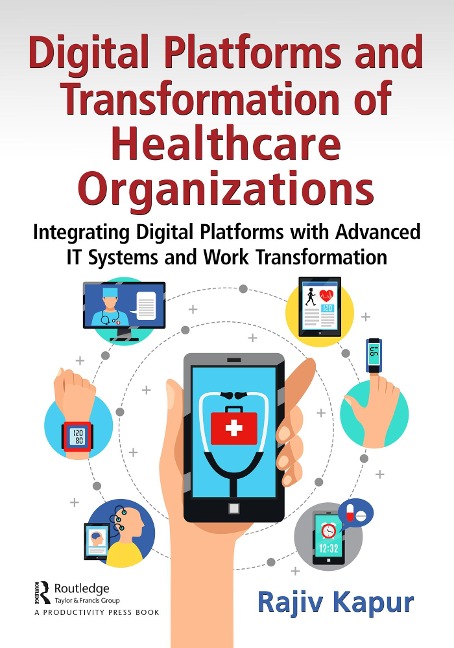
COVID-19 accelerated healthcare's transition towards digital technology since it helped expand the capacity of healthcare organizations (HCOs) through extended patient access and isolation. In addition to HCOs, this transition was adopted by other participants in the healthcare ecosystem, such as independent digital health platform (DHP) vendors, self-insured employers, drug chains/pharmacy benefit managers, and insurance companies. It was not long before independent DHPs, payers, and self-insured employers realized the value of digital technology, so they increased their commitment towards this transition. The goal of this book is to help HCOs understand, prepare, implement, and leverage digital transformation. The book opines that, to be successful, digital transformation must be led and supported by senior management. Equally important is the cultural transformation of HCOs towards successful change management, which requires an evolutionary approach to continuous process improvements of increasing scope and complexity. Next, HCOs must generate a comprehensive digital transformation roadmap that aligns with their strategic plan for enhancing clinical and related capabilities while improving patient engagement. To accomplish their digital transformation, HCO management and key stakeholders must comprehend and meet prerequisite requirements for: digital health platforms, advanced information technology, and work transformation methodologies. DHPs, and associated hardware and software complements, form the foundation of digital health technologies prevalent in modern-day healthcare and have gained increasing importance since COVID-19. Advanced information technology includes concepts vital to healthcare transformation such as EHRs, interoperability, big data, artificial intelligence, natural language processing, data security, and privacy. Lastly, work transformation methodologies address work redesign that incorporates different levels of process improvements and phases of digital transformation, lean/six sigma, agile methodologies, and human factors engineering to ensure well-designed interfaces for care providers and patients. The overarching goal of this book is to provide a roadmap for US healthcare towards an organized digital transformation which will lead to improved outcomes, reduced costs, and improved patient satisfaction.
After graduating from the Indian Institute of Technology (IIT), Rajiv Kapur joined the University of Texas Industrial Engineering Department where he earned his M.S. (Industrial Engineering) and his PhD. His research was conducted in conjunction with UTA, Wichita State University, and Cerebral Palsy Research Foundation of Kansas. The project, Available Motion Inventory, resulted in models that were utilized to modify workspaces and employ severely handicapped cerebral palsied individuals at Boeing Military Aircraft Company. He joined Holy Cross Hospital, Silver Spring, MD as a management engineer after receiving his PhD and shortly moved to Georgetown University Medication as a Senior Management Engineer. Over the next 4 years at GUMC, he was promoted to Director of Management Systems and subsequently to Assistant Administrator, Systems (VP and CIO) where he worked with in-house engineers to develop the first fourth generation language (4GL) electronic health record system name Patient Care Information Systems (PCIS) which won a major grant from Sun Microsystems (now part of Oracle) to implement PCIS. He has held several senior management level positions in both technology companies and healthcare facilities before staring his own consulting firm. In 2003 he formed Cura Consulting Solutions, Inc. (Cura) with expertise in work redesign and information system implementation. Cura signed facilities management contracts (implementing, integrating, and managing HIT systems) with several healthcare organizations and was "facilities managing" over 50 programmers, analysts, and technicians across the US. Rajiv Kapur is a well-respected consultant and educator. This is first book and is based on his life's work to provide a practical guide for health care organizations and entrepreneurs to digitally transform U.S. healthcare status quo, while improving patient access, outcomes, and lowering costs.
1. Introduction, SECTION I - Digital Health Platforms (DHPs), 2. Primer: Digital Platforms, 3. Introduction to Digital Health Platforms (DHPs), 4. Digital Healthcare Platform Configurations, 5. Digital Health Platform Strategies, 6. DHP Types and Examples, SECTION II - IT Systems, 7. Managing HCO-IT Systems, 8. Usability of Healthcare Information Systems, 9. Big Data, AI, and Interoperability, 10. Security, Privacy and Technical Considerations, SECTION III - Work Transformation, 11. Work Transformation of HCOs, 12. Work Transformation Tools, Techniques, and Methodologies, 13. Design Principles for Digital Transformation, 14. Assessment Framework: Readiness for Digital Transformation
Dieses eBook wird im PDF-Format geliefert und ist mit einem Adobe Kopierschutz (DRM) versehen. Sie können dieses eBook mit allen Geräten lesen, die das PDF-Format und den Adobe Kopierschutz (DRM) unterstützen.
Zum Beispiel mit den folgenden Geräten:
• tolino Reader
Laden Sie das eBook direkt über den Reader-Shop auf dem tolino herunter oder übertragen Sie das eBook auf Ihren tolino mit einer kostenlosen Software wie beispielsweise Adobe Digital Editions.
• Sony Reader & andere eBook Reader
Laden Sie das eBook direkt über den Reader-Shop herunter oder übertragen Sie das eBook mit der kostenlosen Software Sony READER FOR PC/Mac oder Adobe Digital Editions auf ein Standard-Lesegeräte mit epub- und Adobe DRM-Unterstützung.
• Tablets & Smartphones
Möchten Sie dieses eBook auf Ihrem Smartphone oder Tablet lesen, finden Sie hier unsere kostenlose Lese-App für iPhone/iPad und Android Smartphone/Tablets.
• PC & Mac
Lesen Sie das eBook direkt nach dem Herunterladen mit einer kostenlosen Lesesoftware, beispielsweise Adobe Digital Editions, Sony READER FOR PC/Mac oder direkt über Ihre eBook-Bibliothek in Ihrem Konto unter „Meine eBooks“ - „online lesen“.
Schalten Sie das eBook mit Ihrer persönlichen Adobe ID auf bis zu sechs Geräten gleichzeitig frei.
Bitte beachten Sie, dass die Kindle-Geräte das Format nicht unterstützen und dieses eBook somit nicht auf Kindle-Geräten lesbar ist.