Und dann auf "Zum Home-Bildschirm [+]".

Stöbern
genialokal zum Startbildschirm hinzufügen
Installieren Sie die genialokal App auf Ihrem Startbildschirm für einen schnellen Zugriff und eine komfortable Nutzung.
Installieren Sie die genialokal App auf Ihrem Startbildschirm für einen schnellen Zugriff und eine komfortable Nutzung.
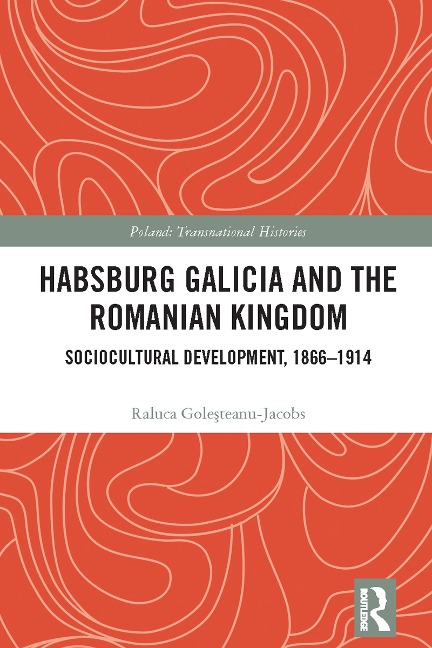
This comparative attempt, intended for postgraduates and scholars of Eastern-Central Europe, investigates the political, economic, and cultural landscape of Habsburg Galicia and the Romanian Kingdom in the second half of the 19th century. Often, in historiography and in the public sphere alike, the two cases under study have been separately regarded as contexts that provided atypical answers to modernity, and parts of a region that has been regarded as atypical in itself. Recently, efforts have been made to integrate each of the cases in a post-imperial paradigm, identifying the complex interactions between their socio-political modernisation and historical memory. This book continues this trend by investigating for the first time the two cases together, as parts of a space of alterity, as labs of shifting ideologies and labels. The public figures and the institutions depicted in the book are physically located in Central and in Eastern Europe, but by sometimes competing experiences they are illustrative for several identities and historical realms, local, regional, and continental. Secondly, the current work addresses dilemmas related to Nationalism and nation building, for the sake of separating those discourses which reflected on civic nationalism from those which directed the public mind to the values of ethnic nationalism.
Raluca Gole-teanu-Jacobs is a teacher of foreign languages and history for secondary and high school students and a visual art blogger, with interests in urban culture at the end of the 19th century and history of Eastern-Central Europe in the 19th and 20th century. Author of "The Towns of Drohobycz and Roman in the Work of Bruno Schulz (1892-1942)", "Max Blecher (1909-1938). A Study in Local History, Personal Geography and Jewish Identity at the Peak of Modernity" (2016), "Representations of Central and Eastern Europe in Travelogues of Romanian and Polish Public Figures" (2015), and "The Woman and The City in the Lyrics of the British Band Pulp" (2017).
Introduction. Part 1: Methods. 1. Habsburg Galicia and the Romanian Kingdom: Theoretical Framework. Part 2: Contexts 2. The political and social outlook of Habsburg Galicia and the Romanian Kingdom 1866-1914 Part 3: Ideas. 3. The intellectual genealogy of conservatism in Habsburg Galicia and the Romanian Kingdom 4. The evolution of the conservative ideology and its prodigious legacy in Habsburg Galicia and the Romanian Kingdom 5. Democrats and socialists: Ideologues and practitioners of socioeconomic development in Habsburg Galicia and the Romanian Kingdom 6. Epilogue: Modernisation, Westernisation, Habsburg Galicia, and the Romanian Kingdom's guide for development (1866-1914) 7. Conclusions.
Dieses eBook wird im PDF-Format geliefert und ist mit einem Adobe Kopierschutz (DRM) versehen. Sie können dieses eBook mit allen Geräten lesen, die das PDF-Format und den Adobe Kopierschutz (DRM) unterstützen.
Zum Beispiel mit den folgenden Geräten:
• tolino Reader
Laden Sie das eBook direkt über den Reader-Shop auf dem tolino herunter oder übertragen Sie das eBook auf Ihren tolino mit einer kostenlosen Software wie beispielsweise Adobe Digital Editions.
• Sony Reader & andere eBook Reader
Laden Sie das eBook direkt über den Reader-Shop herunter oder übertragen Sie das eBook mit der kostenlosen Software Sony READER FOR PC/Mac oder Adobe Digital Editions auf ein Standard-Lesegeräte mit epub- und Adobe DRM-Unterstützung.
• Tablets & Smartphones
Möchten Sie dieses eBook auf Ihrem Smartphone oder Tablet lesen, finden Sie hier unsere kostenlose Lese-App für iPhone/iPad und Android Smartphone/Tablets.
• PC & Mac
Lesen Sie das eBook direkt nach dem Herunterladen mit einer kostenlosen Lesesoftware, beispielsweise Adobe Digital Editions, Sony READER FOR PC/Mac oder direkt über Ihre eBook-Bibliothek in Ihrem Konto unter „Meine eBooks“ - „online lesen“.
Schalten Sie das eBook mit Ihrer persönlichen Adobe ID auf bis zu sechs Geräten gleichzeitig frei.
Bitte beachten Sie, dass die Kindle-Geräte das Format nicht unterstützen und dieses eBook somit nicht auf Kindle-Geräten lesbar ist.