Und dann auf "Zum Home-Bildschirm [+]".

Stöbern
genialokal zum Startbildschirm hinzufügen
Installieren Sie die genialokal App auf Ihrem Startbildschirm für einen schnellen Zugriff und eine komfortable Nutzung.
Installieren Sie die genialokal App auf Ihrem Startbildschirm für einen schnellen Zugriff und eine komfortable Nutzung.
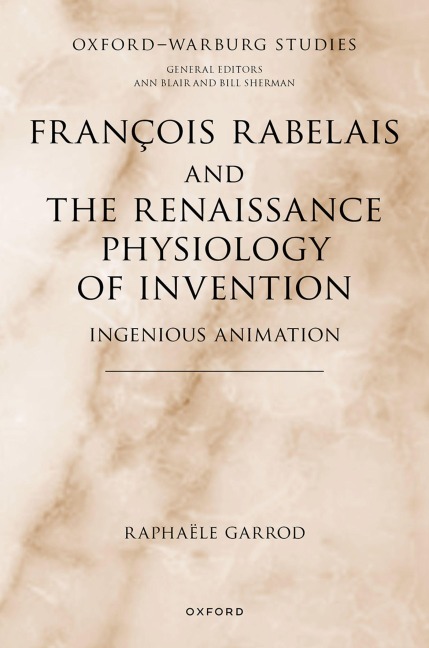
François Rabelais and the Renaissance Physiology of Invention: Ingenious Animation explores the medical poetics of inventive, embodied thinking or ingenuity instantiated in Rabelais' Gargantua and, mostly,in his Quart livre. It unsettles established dichotomies in Rabelaisian scholarship between Rabelais's 'lowly' laughter and his 'high', erudite message and reassesses the Rabelaisian grotesque by highlighting its debts to grotesque ornament, this marginal yet omnipresent Renaissance visual art. Bodily functions are a trademark of Rabelais's poetics. Scholarship has read them as signs of carnivalesque inversion, in line with the Bakhtinian grotesque, or of satirical degradation: in both instances, the 'lowly' is opposed to the 'high', the belly to the head. Yet for a physician like Rabelais, the 'head' or the brain as the site of cognition is not opposed to what is below it: the chest as the site of breathing, the belly and its nether regions as sites of nutrition and generation. In Renaissance medicine, these are integrated physiological systems whose products fuel each other's operations, including cognition. Read through this lens and alongside his diagnosis of the healthy or diseased culture of his time (rotting scholasticism, the humanist digestion of the classical heritage, or the schismatic convulsions shaking Christianity) Rabelais's fictions testify to his reflexive investigation into how culture results from physiological processes fuelling the inventive ability of the human animal, made manifest in pedagogical, artistic, mechanical, and spiritual 'inventions'. They display the life (rather than the truth) of culture stemming from human ingenia, that is, wits conditioned by biological natures. While these might be idiosyncratic, their animation is fuelled and shaped by the food one eats, the air one breathes, the places one inhabits, the company one keeps. In this respect Rabelaisian fiction is grotesque in a period sense. With its emphasis on hybrid forms capturing the metamorphic powers of animation, grotesque ornament reflexively commented on the embodied inventive processes underpinning Renaissance mimesis. Rabelais's fictions display a similar logic: they foreground the inventive powers of ingenious animation and articulate reflexive, often ironic alternatives to the humanist views they alter: a thoroughly embodied anthropology, a naturalist genealogy of cultural production and transmission, a phantastical account of artistic invention as uncanny liveliness.
Raphaële Garrod is tutorial fellow at Magdalen College, Oxford and Associate Professor of Early Modern French at the University of Oxford. She obtained her PhD in early modern French from Trinity College, Cambridge, and went on to several postdoctoral positions in Cambridge and Australia. She was a secondary-school teacher in France before embarking on postgraduate studies in the UK. Her current work focuses on conceptions and representations of the human at the intersection between early modern intellectual history (especially history of science) and poetics in XVIth- and XVIIth-French and European texts.
- Introduction - Cultural Production as a Natural Process: An Alternative Topography - Ingenuity in Natural Philosophy and Medicine: Lyon-Paris, 1530-50 - 2: A Diagnostic in Docility: Quick-Wittedness and Natural Copia in the Torchecul episode (Gargantua XIII) - 3: Popemaniacs (1). Idolatrous Ingenuity: Diseased Animation and Dædalic Art (Quart livre XLVIII-L) - 4: Popemaniacs (2). Grotesque Reflections on Social Ingenuity: Conversation, Gastronomy, Ceremonies. (Quart livre LI-LIV) - En Marge 1 - Groignet, The Slashing Tailor. Rabelais's Historiographical Grotesque Against Raphaël's Vatican Stanze - 5: The Fuel of Engines: The Encounter with Gaster (Quart livre LVII-LXII) - En Marge 2 - Ingenuity and the Needful, Illiberal Roots of Order: A Rabelaisian Reading of Dürer's Grotesque Trophies - 6: The Breath and the Breeze. Experiencing Death in the Macræons episode (Quart livre XXV-XXVIII) - 7: Animation and the Matter of Voice: The Thawing Words episode (Quart livre LV-LVI) - En Fin. Rabelais and Renaissance Grotesque Ornament - Bibliography - Index
Dieses eBook wird im PDF-Format geliefert und ist mit einem Adobe Kopierschutz (DRM) versehen. Sie können dieses eBook mit allen Geräten lesen, die das PDF-Format und den Adobe Kopierschutz (DRM) unterstützen.
Zum Beispiel mit den folgenden Geräten:
• tolino Reader
Laden Sie das eBook direkt über den Reader-Shop auf dem tolino herunter oder übertragen Sie das eBook auf Ihren tolino mit einer kostenlosen Software wie beispielsweise Adobe Digital Editions.
• Sony Reader & andere eBook Reader
Laden Sie das eBook direkt über den Reader-Shop herunter oder übertragen Sie das eBook mit der kostenlosen Software Sony READER FOR PC/Mac oder Adobe Digital Editions auf ein Standard-Lesegeräte mit epub- und Adobe DRM-Unterstützung.
• Tablets & Smartphones
Möchten Sie dieses eBook auf Ihrem Smartphone oder Tablet lesen, finden Sie hier unsere kostenlose Lese-App für iPhone/iPad und Android Smartphone/Tablets.
• PC & Mac
Lesen Sie das eBook direkt nach dem Herunterladen mit einer kostenlosen Lesesoftware, beispielsweise Adobe Digital Editions, Sony READER FOR PC/Mac oder direkt über Ihre eBook-Bibliothek in Ihrem Konto unter „Meine eBooks“ - „online lesen“.
Schalten Sie das eBook mit Ihrer persönlichen Adobe ID auf bis zu sechs Geräten gleichzeitig frei.
Bitte beachten Sie, dass die Kindle-Geräte das Format nicht unterstützen und dieses eBook somit nicht auf Kindle-Geräten lesbar ist.