Und dann auf "Zum Home-Bildschirm [+]".

Stöbern
genialokal zum Startbildschirm hinzufügen
Installieren Sie die genialokal App auf Ihrem Startbildschirm für einen schnellen Zugriff und eine komfortable Nutzung.
Installieren Sie die genialokal App auf Ihrem Startbildschirm für einen schnellen Zugriff und eine komfortable Nutzung.
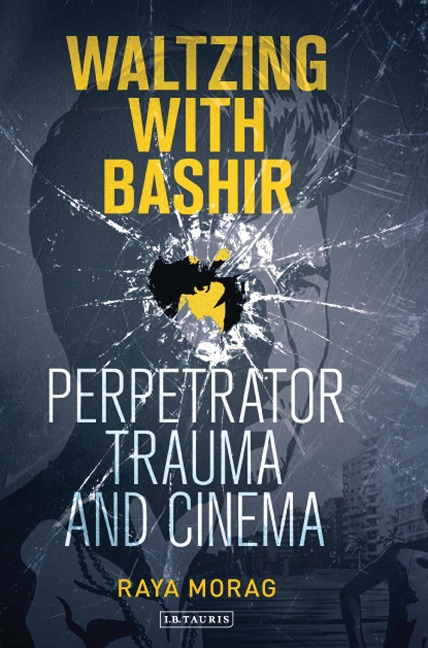
Waltzing with Bashir proposes a new paradigm for cinema trauma studies - the trauma of the perpetrator. Recognizing a current shift in interest from the trauma suffered by victims to that suffered by perpetrators, the book seeks to theorize this still under-studied field thus breaking the repression of this concept and phenomenon in psychoanalysis and in cinema literature. Taking as a point of departure the distinction between testimony given by the victim and confession made by the perpetrator, this pioneering work ventures to define and analyze perpetrator trauma in scholarly, representational, literary, and societal contexts. In contrast to the twentieth-century definition of the perpetrator based on modern wars and totalitarian regimes,Morag defines the perpetrator in the context of the twenty-first century's new wars and democratic regimes. The direct result of a drastic transformation in the very nature of war, made manifest by the lethal clash between soldier and civilian in a battlefield newly defined in bodily terms, the new trauma paradigm stages the trauma of the soldier turned perpetrator, thus offering a novel perspective on issues of responsibility and guilt.
Such theoretical insights demonstrate that the epistemology of the post-witness era requires breaking deep-seated psychological and psychiatric, as well as cultural and political, repression. Driven by the emergence of a new wave of Israeli documentary cinema, Waltzing with Bashir analyzes the Israeli film and literature produced in the aftermath of the second Intifada. As Ari Folman's Waltz with Bashir and other new wave films demonstrate, Israeli cinema, attached on one side to the legacy of the Holocaust and on the other to the Israeli Occupation, is a highly relevant case for probing the limits of both victim and perpetrator traumas, and for revisiting and recontextualizing the crucial moment in which the victim/perpetrator cultural symbiosis is dismantled.
Raya Morag is Associate Professor of Cinema Studies at the Department of Communication and Journalism, The Hebrew University of Jerusalem, Israel.
Acknowledgements
List of Illustrations
Preface
Introduction: From Victim to Perpetrator Trauma
Part I: Victim Trauma
Chapter 1: The Body as the Battlefield
Chapter 2: Chronic Victim Trauma and Terror
Chapter 3: Queerness, Ethnicity and Terror
Part II: Perpetrator Trauma
Chapter 4: The New Wave of Documentary Cinema: The Male Perpetrator
Chapter 5: The New Wave of Documentary Cinema: The Female Perpetrator
Chapter 6: The New Wave of Documentary Literature
Conclusion: The Perpetrator Complex
Notes
Works Cited
Further Reading
Filmography
Index
Dieses eBook wird im PDF-Format geliefert und ist mit einem Adobe Kopierschutz (DRM) versehen. Sie können dieses eBook mit allen Geräten lesen, die das PDF-Format und den Adobe Kopierschutz (DRM) unterstützen.
Zum Beispiel mit den folgenden Geräten:
• tolino Reader
Laden Sie das eBook direkt über den Reader-Shop auf dem tolino herunter oder übertragen Sie das eBook auf Ihren tolino mit einer kostenlosen Software wie beispielsweise Adobe Digital Editions.
• Sony Reader & andere eBook Reader
Laden Sie das eBook direkt über den Reader-Shop herunter oder übertragen Sie das eBook mit der kostenlosen Software Sony READER FOR PC/Mac oder Adobe Digital Editions auf ein Standard-Lesegeräte mit epub- und Adobe DRM-Unterstützung.
• Tablets & Smartphones
Möchten Sie dieses eBook auf Ihrem Smartphone oder Tablet lesen, finden Sie hier unsere kostenlose Lese-App für iPhone/iPad und Android Smartphone/Tablets.
• PC & Mac
Lesen Sie das eBook direkt nach dem Herunterladen mit einer kostenlosen Lesesoftware, beispielsweise Adobe Digital Editions, Sony READER FOR PC/Mac oder direkt über Ihre eBook-Bibliothek in Ihrem Konto unter „Meine eBooks“ - „online lesen“.
Schalten Sie das eBook mit Ihrer persönlichen Adobe ID auf bis zu sechs Geräten gleichzeitig frei.
Bitte beachten Sie, dass die Kindle-Geräte das Format nicht unterstützen und dieses eBook somit nicht auf Kindle-Geräten lesbar ist.