Und dann auf "Zum Home-Bildschirm [+]".

Stöbern
genialokal zum Startbildschirm hinzufügen
Installieren Sie die genialokal App auf Ihrem Startbildschirm für einen schnellen Zugriff und eine komfortable Nutzung.
Installieren Sie die genialokal App auf Ihrem Startbildschirm für einen schnellen Zugriff und eine komfortable Nutzung.
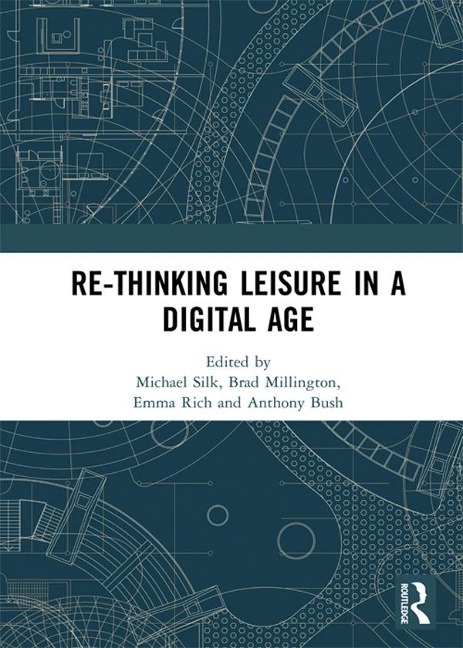
Digital worlds and cultures-social media, web 2.0, youtube, wearable technologies, health and fitness apps-dominate, if not order, our everyday lives. We are no longer 'just' consumers or readers of digital culture but active producers through facebook, twitter, Instagram, youtube and other emerging technologies. This book is predicated on the assumption that out understanding of our everyday lives should be informed by what is taking place in and through emerging technologies given these (virtual) environments provide a crucial context where traditional, categorical assumptions about the body, identity and leisure may be contested. Far from being 'virtual', the body is constituted within and through emerging technologies in material ways. Recent 'moral panics' over the role of digital cultures in teen suicide, digital drinking games, an endless array of homoerotic images of young bodies being linked with steroid use, disordered eating and body dissatisfaction, facebook games/fundraising campaigns (e.g. for breast cancer), movements devoted to exposing 'everyday sexism' / metoo, twitter abuse (of feminists, of athletes, of racist nature to name but a few), speak to the need for critical engagement with digital cultures. While some of the earlier techno-utopian visions offered the promise of digitality to give rise to participatory, user generator collaborations, within this book we provide critical engagement with digital technologies and what this means for our understandings of leisure cultures. The chapters originally published in a special issue in Leisure Studies.
Michael Silk is a Professor and Deputy Dean (Research & Professional Practice) in the Faculty of Management. His research and scholarship is interdisciplinary and focuses on the relationships between sport & physical activity (physical culture), the governance of bodies, mediated (sporting) spectacles, identities and urban spaces. Brad Millington is a Lecturer in the Department for Health at the Univesity of Bath. His research is focussed on how technology has helped shape sporting practices in different historical eras, in sport and physical activity policy, and in the meanings people ascribe to their sport and physical activity experiences. Emma Rich is a Reader in the Department for Health at the University of Bath. Her research examines sport, physical activity and physical/health education with a specific interest in digital health technologies (e.g. mobile and digital health, big data, wearable technologies). Anthony Bush is a Senior Lecturer in the Department for Health at the University of Bath. He is an interdisciplinary scholar specialising on issues concerning the physically active body in a myriad of spaces and sites including, but not limited to, the elite sporting context.
Foreword: lively devices, lively data and lively leisure studies Deborah Lupton 1. (Re-)thinking digital leisure Michael Silk, Brad Millington, Emma Rich and Anthony Bush 2. Young people, digital media making and critical digital citizenship D. McGillivray, G. McPherson, J. Jones and A. McCandlish 3. Video games and the political and cultural economies of health-entertainment Brad Millington 4. Exploring online fitness culture and young females Stephanie T. Jong and Murray J. N. Drummond 5. Be who you are and be proud: Brittney Griner, intersectional invisibility and digital possibilities for lesbian sporting celebrity Megan Chawansky 6. Towards typologies of virtual maltreatment: sport, digital cultures & dark leisure Emma Kavanagh, Ian Jones and Lucy Sheppard-Marks 7. (Re)constructing the tourist experience? Editing experience and mediating memories of learning to dive Stephanie Merchant 8. Immaterial labour in spaces of leisure: producing biopolitical subjectivities through Facebook Jeff Rose and Callie Spencer Afterword: a new digital Leisure Studies for Theoretical Times Steve Redhead
Dieses eBook wird im PDF-Format geliefert und ist mit einem Adobe Kopierschutz (DRM) versehen. Sie können dieses eBook mit allen Geräten lesen, die das PDF-Format und den Adobe Kopierschutz (DRM) unterstützen.
Zum Beispiel mit den folgenden Geräten:
• tolino Reader
Laden Sie das eBook direkt über den Reader-Shop auf dem tolino herunter oder übertragen Sie das eBook auf Ihren tolino mit einer kostenlosen Software wie beispielsweise Adobe Digital Editions.
• Sony Reader & andere eBook Reader
Laden Sie das eBook direkt über den Reader-Shop herunter oder übertragen Sie das eBook mit der kostenlosen Software Sony READER FOR PC/Mac oder Adobe Digital Editions auf ein Standard-Lesegeräte mit epub- und Adobe DRM-Unterstützung.
• Tablets & Smartphones
Möchten Sie dieses eBook auf Ihrem Smartphone oder Tablet lesen, finden Sie hier unsere kostenlose Lese-App für iPhone/iPad und Android Smartphone/Tablets.
• PC & Mac
Lesen Sie das eBook direkt nach dem Herunterladen mit einer kostenlosen Lesesoftware, beispielsweise Adobe Digital Editions, Sony READER FOR PC/Mac oder direkt über Ihre eBook-Bibliothek in Ihrem Konto unter „Meine eBooks“ - „online lesen“.
Schalten Sie das eBook mit Ihrer persönlichen Adobe ID auf bis zu sechs Geräten gleichzeitig frei.
Bitte beachten Sie, dass die Kindle-Geräte das Format nicht unterstützen und dieses eBook somit nicht auf Kindle-Geräten lesbar ist.