Und dann auf "Zum Home-Bildschirm [+]".

Stöbern
genialokal zum Startbildschirm hinzufügen
Installieren Sie die genialokal App auf Ihrem Startbildschirm für einen schnellen Zugriff und eine komfortable Nutzung.
Installieren Sie die genialokal App auf Ihrem Startbildschirm für einen schnellen Zugriff und eine komfortable Nutzung.
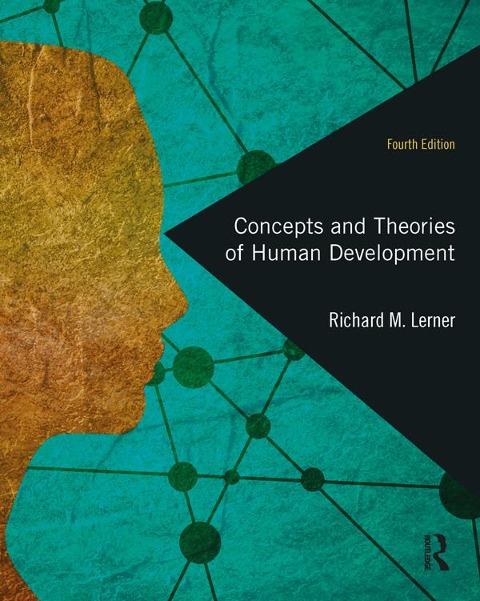
Concepts and Theories of Human Development is the most comprehensive and in-depth overview of the foundational theoretical contributions to understanding human development and the influence of these contributions for contemporary research and application in developmental science. Since its initial publication in 1976, it has been an essential resource for students and professionals alike, and has become the go-to book for graduate students studying for their comprehensive exam on human development. In this new Fourth Edition, Richard M. Lerner concentrates his focus on advanced students and scholars already familiar with the basic elements of major psychological theories. The book discusses the assumptions involved in such topics as stage theories, the nature-nurture issue, the issue of continuity-discontinuity, and the important role of philosophical ideas about theories - in particular, metatheories - in understanding the links between theory and research. It particularly focuses on relational developmental systems (RDS) metatheory, exploring its roots in the 1930s, following its development into the present day, and contrasting it with the fundamentally flawed genetic reductionist models that continue to be circulated by scientists, the media, and the general public. It discusses implications of theory for research methods and for applications aimed at the promotion of health, positive development, and social justice among diverse people across the life span.
Richard M. Lerner is the Bergstrom Chair in Applied Developmental Science and the Director of the Institute for Applied Research in Youth Development, in the Eliot Pearson Department of Child Study and Human Development, at Tufts University.
Foreword. Preface. 1. On the Primacy of Concepts and Theories 2. Concepts and Theories within Contemporary Developmental Science: An Overview 3. Philosophical and Scientific Roots of Contemporary Developmental Science 4. Metatheoretical Models of Development 5. Theoretical Roots of Contemporary Developmental Science: Nomothetic (Stage), Differential, and Idiographic (Ipsative) Approaches 6. Toward Resolving the Nature-Nurture Controversy: Contributions and Implications of the Scholarship of Anne Anastasi 7. Toward Resolving the Nature-Nurture Controversy: Contributions and Implications of the Scholarship of T. C. Schneirla 8. Contributions and Implications of the Scholarship of Heinz Werner: The Orthogenetic Principle and the Resolution of the Continuity-Discontinuity Issue 9. Relational Developmental Systems-Based Theories: Comparative, Evolutionary, and Ontogenetic Conceptions 10. Relational Developmental Systems-Based Theories: Sample Cases 11. Genetic Reductionism in Developmental Science: Sample Cases from the 20th Century 12. Genetic Reductionism in Developmental Science: Sample Cases from the 20th and 21st Centuries 13. Some Implications of Relational Developmental Systems-Based Theories for Research Methods and for the Application of Developmental Science
Dieses eBook wird im PDF-Format geliefert und ist mit einem Adobe Kopierschutz (DRM) versehen. Sie können dieses eBook mit allen Geräten lesen, die das PDF-Format und den Adobe Kopierschutz (DRM) unterstützen.
Zum Beispiel mit den folgenden Geräten:
• tolino Reader
Laden Sie das eBook direkt über den Reader-Shop auf dem tolino herunter oder übertragen Sie das eBook auf Ihren tolino mit einer kostenlosen Software wie beispielsweise Adobe Digital Editions.
• Sony Reader & andere eBook Reader
Laden Sie das eBook direkt über den Reader-Shop herunter oder übertragen Sie das eBook mit der kostenlosen Software Sony READER FOR PC/Mac oder Adobe Digital Editions auf ein Standard-Lesegeräte mit epub- und Adobe DRM-Unterstützung.
• Tablets & Smartphones
Möchten Sie dieses eBook auf Ihrem Smartphone oder Tablet lesen, finden Sie hier unsere kostenlose Lese-App für iPhone/iPad und Android Smartphone/Tablets.
• PC & Mac
Lesen Sie das eBook direkt nach dem Herunterladen mit einer kostenlosen Lesesoftware, beispielsweise Adobe Digital Editions, Sony READER FOR PC/Mac oder direkt über Ihre eBook-Bibliothek in Ihrem Konto unter „Meine eBooks“ - „online lesen“.
Schalten Sie das eBook mit Ihrer persönlichen Adobe ID auf bis zu sechs Geräten gleichzeitig frei.
Bitte beachten Sie, dass die Kindle-Geräte das Format nicht unterstützen und dieses eBook somit nicht auf Kindle-Geräten lesbar ist.