Und dann auf "Zum Home-Bildschirm [+]".

Stöbern
genialokal zum Startbildschirm hinzufügen
Installieren Sie die genialokal App auf Ihrem Startbildschirm für einen schnellen Zugriff und eine komfortable Nutzung.
Installieren Sie die genialokal App auf Ihrem Startbildschirm für einen schnellen Zugriff und eine komfortable Nutzung.



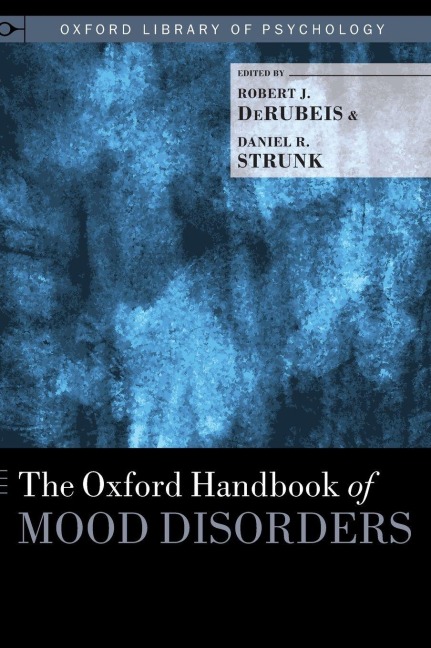
The most comprehensive volume of its kind, The Oxford Handbook of Mood Disorders provides detailed coverage of the characterization, understanding, and treatment of mood disorders. Chapters are written by the world's leading experts in their respective areas. The Handbook provides coverage of unipolar depression, bipolar disorder, and variants of these disorders. Current approaches to classifying the mood disorders are reviewed and contemporary controversies are placed in historical context. Chapter authors offer a variety of approaches to understanding the heterogeneity of the experiences of those who meet criteria for mood disorders, both within and across cultures. The role of genetic and environmental risk factors as well as premorbid personality and cognitive processes in the development of mood pathology are detailed. Interpersonal, neurobiological, and psychological factors also receive detailed consideration. The volume reviews mood disorders in special populations (e.g., postpartum and seasonal mood disorders) as well as common comorbidities (e.g., anxiety, substance use disorders). Somatic and psychosocial treatment approaches receive in-depth coverage with chapters that describe and review empirical evidence regarding each of the most influential treatment approaches. The depth and breadth offered by this Handbook make it an invaluable resource for clinicians and researchers, as well as scholars and students.
Robert J. DeRubeis, PhD, is the Samuel H. Preston Term Professor in the Social Sciences and Professor of Psychology in the School of Arts and Sciences, and Professor of Education in the Graduate School of Education, at University of Pennsylvania. His research and writings focus on the processes that cause and maintain mood disorders as well as the treatment processes that reduce and prevent the return of mood symptoms.
Daniel R. Strunk, PhD, is Associate Professor of Psychology at The Ohio State University. His research focuses on the processes that facilitate therapeutic gains in psychotherapeutic treatment of depression, and methods for promoting enduring treatment effects.
Part I. Overview
1. Introduction to Mood Disorders
Daniel R. Strunk and Robert J. DeRubeis
Part II. Phenomenology, Classification, Epidemiology, and Assessment
2. History of Depression
Allan V. Horwitz, Jerome C. Wakefield, and Lorenzo Lorenzo-Luaces
3. The Evolution of Depressive Phenotypes
Paul W. Andrews and Zachary Durisko
4. Phenomenology and Course of the Mood Disorders
Daniel R. Strunk and Katherine E. Sasso
5. Sex, Sexual Orientation, and Depression
Katie A. McLaughlin and Mark L. Hatzenbuehler
6. Suicide
Matt S. Michaels, Carol Chu, and Thomas E. Joiner, Jr.
7. Disordered Mood in Cultural-Historical Context
Andrew G. Ryder, Yue Zhao, and Yulia E. Chentsova-Dutton
8. Uncomplicated Depression as Normal Sadness: Re-thinking the Boundary between Normal and Disordered Depression
Jerome C. Wakefield, Allan V. Horwitz, and Lorenzo Lorenzo-Luaces
9. The Diagnosis and Assessment of Mood Disorders
Catherine D'Avanzato and Mark Zimmerman
Part III. Etiologic, Vulnerability, and Risk Factors
10. Genetics of Bipolar and Unipolar Disorders
Wade Berrettini and Falk W. Lohoff
11. Environmental Risk and Protection in Unipolar Depression
Scott M. Monroe and Lori F. Cummins
12. Environmental Risk and Protective Factors in Bipolar Disorder
Sheri L. Johnson, Anda Gershon, and Kaja R. Johnson
13. Cognitive Vulnerability and Unipolar Depression
Lauren B. Alloy, Lyn Y. Abramson, Jonathan P. Stange, and Rachel H. Salk
14. Personality and Depression
Jay C. Fournier and Tony Z. Tang
Part IV. Interpersonal and Intra-individual Processes
15. Interpersonal Perspectives on Depression
Mark A. Whisman
16. Information Processing in Mood Disorders
Jonathan P. Roiser and Barbara J. Sahakian
17. Neuroendocrine and Neurochemical Processes in Depression
Philip J. Cowen
18. Neuropsychological Mechanisms of Depression and Treatment
Catherine J. Harmer and Abigail Pringle
19. Neural Structure and Organization of Mood Pathology
Brianne M. Disabato, Isabelle E. Bauer, Jair C. Soares, and Yvette I. Sheline
Part V. Subtypes and sub-populations
20. Persistent Depressive Disorder
Daniel N. Klein and Sarah R. Black
21. Premenstrual Dysphoric Disorder
Ellen W. Freeman
22. Seasonal Affective Disorder
Kelly J. Rohan and Jennifer N. Rough
23. Postpartum Mood Disorders
Jennifer E. McCabe-Beane and Michael W. O'Hara
24. Depression during Childhood and Adolescence
Benjamin L. Hankin
25. Bipolar Disorder during Childhood and Adolescence
Mary A. Fristad and Elizabeth A. Nick
26. Mood Disorders in Late Life
Patricia A. Arean, Eric Lenze, and Joaquin A. Anguera
Part VI. Common Comorbidities
27. Anxiety and Depression
Ayelet Meron Ruscio and Gabriela Kattan Khazanov
28. Personality Disorders and Disorders of Mood
Jennifer S. Cheavens and Sophie A. Lazarus
29. Substance Use Disorders and Disorders of Mood
Carl W. Lejuez, Laura MacPherson, and Anahi Collado-Rodriguez
30. Depressive Syndromes and Medical Comorbidities
Derek R. Hopko, Crystal C. McIndoo, and Audrey A. File
Part VII. Prevention and Treatment of Mood Disorders
31. Prevention of Depression
Steven M. Brunwasser and Judy Garber
32. Pharmacological Interventions for Depression
Richard C. Shelton
33. Pharmacotherapy of Bipolar Disorder
Jay D. Amsterdam and Janusz K. Rybakowski
34. Brain Stimulation Treatments for Depression
Mark S. George, E. Baron Short, and Suzanne E. Kerns
35. Cognitive Therapy of Depression
Daniel R. Strunk, Abby D. Adler, and Steven D. Hollon
36. Behavior Therapy of Depression
Samuel H. Hubley and Sona Dimidjian
37. Acceptance-Based Interventions
Robert D. Zettle and Suzanne R. Gird
38. Psychodynamic and Interpersonal Psychotherapies
Jacques P. Barber, Sigal Zilcha-Mano, and Michael J. Constantino
39. Humanistic and Experiential Approaches
Jeanne Watson and Alberta E. Pos
40. Self-Directed Approaches to the Treatment of Depression
Pim Cuijpers and Annet M. Kleiboer
41. Toward a Rational Model of Depression Treatment
Nicholas R. Forand, David A. Richards, Marcus J. H. Huibers, and Claudi L. H. Bockting
42. Psychosocial Approaches to the Treatment and Prevention of Bipolar Disorder
Noreen A. Reilly-Harrington
Index