Und dann auf "Zum Home-Bildschirm [+]".

Stöbern
genialokal zum Startbildschirm hinzufügen
Installieren Sie die genialokal App auf Ihrem Startbildschirm für einen schnellen Zugriff und eine komfortable Nutzung.
Installieren Sie die genialokal App auf Ihrem Startbildschirm für einen schnellen Zugriff und eine komfortable Nutzung.
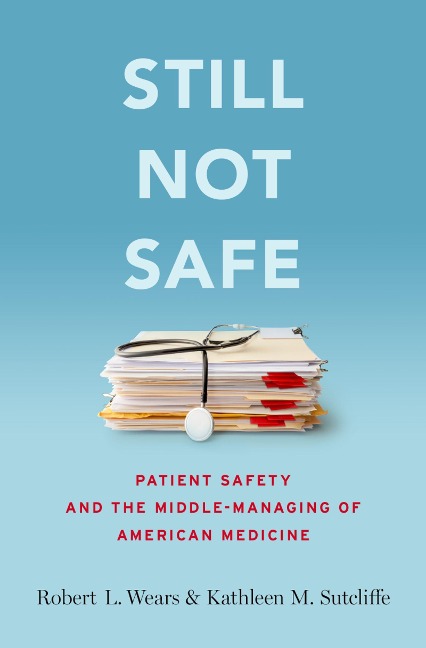
The term "patient safety" rose to popularity in the late nineties, as the medical community -- in particular, physicians working in nonmedical and administrative capacities -- sought to raise awareness of the tens of thousands of deaths in the US attributed to medical errors each year. But what was causing these medical errors? And what made these accidents to rise to epidemic levels, seemingly overnight? Still Not Safe is the story of the rise of the patient-safety movement -- and how an "epidemic" of medical errors was derived from a reality that didn't support such a characterization. Physician Robert Wears and organizational theorist Kathleen Sutcliffe trace the origins of patient safety to the emergence of market trends that challenged the place of doctors in the larger medical ecosystem: the rise in medical litigation and physicians' aversion to risk; institutional changes in the organization and control of healthcare; and a bureaucratic movement to "rationalize" medical practice -- to make a hospital run like a factory. If these social factors challenged the place of practitioners, then the patient-safety movement provided a means for readjustment. In spite of relatively constant rates of medical errors in the preceding decades, the "epidemic" was announced in 1999 with the publication of the Institute of Medicine report To Err Is Human; the reforms that followed came to be dominated by the very professions it set out to reform. Weaving together narratives from medicine, psychology, philosophy, and human performance, Still Not Safe offers a counterpoint to the presiding, doctor-centric narrative of contemporary American medicine. It is certain to raise difficult, important questions around the state of our healthcare system -- and provide an opening note for other challenging conversations.
ROBERT L. WEARS, MD, (1947-2017) was Professor in the Department of Emergency Medicine at the University of Florida and Visiting Professor in the Clinical Safety Research Unit at Imperial College London. His research focused on technical work studies, joint cognitive systems, and understanding the nature of safety and resilience in complex socio-technical systems, including medicine and healthcare. KATHLEEN M. SUTCLIFFE, PhD, is Bloomberg Distinguished Professor at Johns Hopkins University with appointments in the Carey Business School, School of Medicine, and the Armstrong Institute for Patient Safety and Quality. Her interests lie in understanding how high-hazard organizations and systems manage for the unexpected and how they can be designed to be more reliable and resilient.
Preface Acknowledgements
Part I: The Rise of Patient Safety
1. Setting the Stage 2. Beginnings 3. Rationalizing Health Care: Scientific-Bureaucratic Medicine 4. The Special Case of Anesthesia 5. Three Views of 'Human Error' 6. Halting Steps: Early Work on Patient Safety 7. Pressure Builds for Reform Part II: The Reign of Patient Safety
8. Irruption 9. Institutionalization 10. Consolidation and Stagnation
Part III: The Waning of Patient Safety 11. Reflections 12. The Future of Patient Safety
Afterword Glossary Bibliography
Dieses eBook wird im PDF-Format geliefert und ist mit einem Adobe Kopierschutz (DRM) versehen. Sie können dieses eBook mit allen Geräten lesen, die das PDF-Format und den Adobe Kopierschutz (DRM) unterstützen.
Zum Beispiel mit den folgenden Geräten:
• tolino Reader
Laden Sie das eBook direkt über den Reader-Shop auf dem tolino herunter oder übertragen Sie das eBook auf Ihren tolino mit einer kostenlosen Software wie beispielsweise Adobe Digital Editions.
• Sony Reader & andere eBook Reader
Laden Sie das eBook direkt über den Reader-Shop herunter oder übertragen Sie das eBook mit der kostenlosen Software Sony READER FOR PC/Mac oder Adobe Digital Editions auf ein Standard-Lesegeräte mit epub- und Adobe DRM-Unterstützung.
• Tablets & Smartphones
Möchten Sie dieses eBook auf Ihrem Smartphone oder Tablet lesen, finden Sie hier unsere kostenlose Lese-App für iPhone/iPad und Android Smartphone/Tablets.
• PC & Mac
Lesen Sie das eBook direkt nach dem Herunterladen mit einer kostenlosen Lesesoftware, beispielsweise Adobe Digital Editions, Sony READER FOR PC/Mac oder direkt über Ihre eBook-Bibliothek in Ihrem Konto unter „Meine eBooks“ - „online lesen“.
Schalten Sie das eBook mit Ihrer persönlichen Adobe ID auf bis zu sechs Geräten gleichzeitig frei.
Bitte beachten Sie, dass die Kindle-Geräte das Format nicht unterstützen und dieses eBook somit nicht auf Kindle-Geräten lesbar ist.