Und dann auf "Zum Home-Bildschirm [+]".

Stöbern
genialokal zum Startbildschirm hinzufügen
Installieren Sie die genialokal App auf Ihrem Startbildschirm für einen schnellen Zugriff und eine komfortable Nutzung.
Installieren Sie die genialokal App auf Ihrem Startbildschirm für einen schnellen Zugriff und eine komfortable Nutzung.
Ihr gewünschter Artikel ist in 0 Buchhandlungen vorrätig - wählen Sie hier eine Buchhandlung in Ihrer Nähe aus:

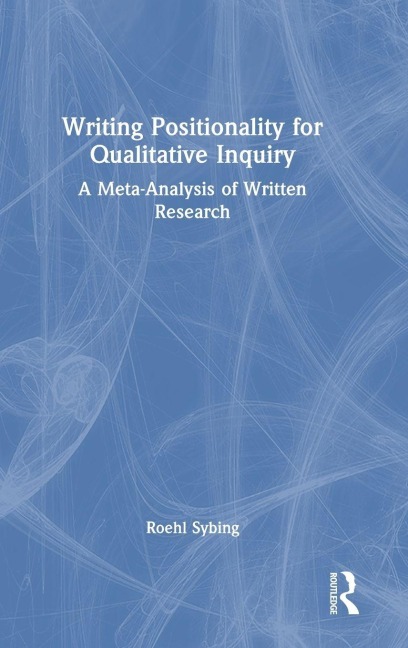
Writing Positionality for Qualitative Inquiry: A Meta-Analysis of Written Research provides fundamental instruction for researchers on expressing positionality and incorporating written positionality statements into their research writing. The book offers a distinctive progression from identifying problems to implementing solutions, serving as a practical manual that emphasizes positionality's importance while guiding researchers through critical reflections on their data collection and analysis practices. Structured in three comprehensive parts, the work provides an overview of research writing practices and engages with existing scholarship to demonstrate how positionality has expanded scientific knowledge development beyond traditional objectivist foundations. Readers gain deep understanding of positionality's necessity within qualitative research through discussion of four major dimensions of written positionality, covering crucial issues such as sociocultural identities. The book explores future modes of positionality through pathways including intersectionality, intertextuality, and temporality, while an appendix featuring the author's own positionality statement serves as a practical reference exemplifying the concepts explored throughout. This valuable resource serves both emerging and established researchers across social science disciplines seeking to enhance research rigor by situating their role in data collection and analysis. It proves particularly useful for graduate students, qualitative researchers, ethnographers, and academics in sociology, anthropology, education, psychology, and related fields who need practical guidance for developing and articulating their positionality within scholarly work.
Dr Roehl Sybing is a Research Associate at the University of North Dakota. He was previously Assistant Professor in the Faculty of Global Communications at Doshisha University, Kyoto, having taught English as a foreign language, intercultural communication, and social science research methods. He obtained his PhD in Education from the University of Massachusetts Amherst in 2020 and his Master of Arts in TESOL & Foreign Language Education (Japanese) from New York University. His research interests include research writing practices, qualitative research methodology, and intercultural communication and dialogue.
Chapter 1 - Introduction Chapter 2 - Underpinnings of Positionality Chapter 3 - Prevailing Theories of Positionality Chapter 4 - Intrinsic Reflexivity vs. Expressions of Positionality Chapter 5 - Positionality as Sociocultural Identities Chapter 6 - Positionality to Research Participants Chapter 7 - Using Positionality to Conduct Research Chapter 8 - Situating Positionality in Research Writing Chapter 9 - Critical Potential of Positionality in Research Writing Appendix - My Positionality Index