Und dann auf "Zum Home-Bildschirm [+]".

Stöbern
genialokal zum Startbildschirm hinzufügen
Installieren Sie die genialokal App auf Ihrem Startbildschirm für einen schnellen Zugriff und eine komfortable Nutzung.
Installieren Sie die genialokal App auf Ihrem Startbildschirm für einen schnellen Zugriff und eine komfortable Nutzung.
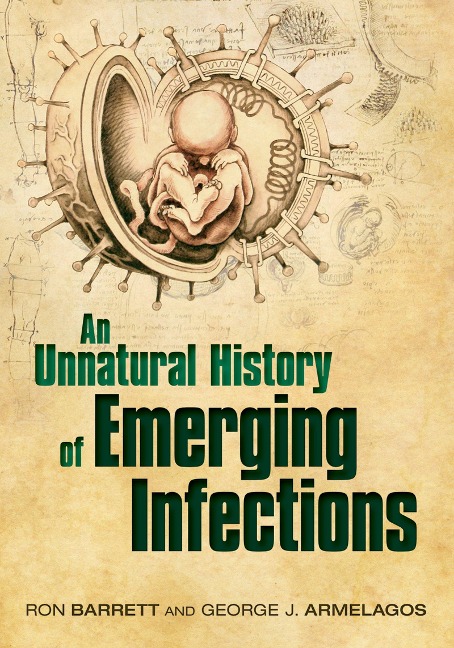
This book traces the social and environmental determinants of human infectious diseases from the Neolithic to the present day. Despite recent high profile discoveries of new pathogens, the major determinants of these emerging infections are ancient and recurring. These include changing modes of subsistence, shifting populations, environmental disruptions, and social inequalities. The recent labeling of the term "re-emerging infections" reflects a re-emergence, not so much of the diseases themselves, but rather a re-emerging awareness in affluent societies of long-standing problems that were previously ignored.
An Unnatural History of Emerging Infections illustrates these recurring problems and determinants through an examination of three major epidemiological transitions. The First Transition occurred with the Agricultural Revolution beginning 10,000 years ago, bringing a rise in acute infections as the main cause of human mortality. The Second Transition first began with the Industrial Revolution; it saw a decline in infectious disease mortality and an increase in chronic diseases among wealthier nations, but less so in poorer societies. These culminated in today's "worst of both worlds syndrome" in which globalization has combined with the challenges of the First and Second Transitions to produce a Third Transition, characterized by a confluence of acute and chronic disease patterns within a single global disease ecology.
This accessible text is suitable for advanced undergraduate and graduate level students and researchers in the fields of epidemiology, disease ecology, anthropology, health sciences, and the history of medicine. It will also be of relevance and use to undergraduate students interested in the history and social dynamics of infectious diseases.
Ron Barrett is an Associate Professor of Medical Anthropology at Macalester College. His research concerns the social aspects of infectious diseases, with an ethnographic focus on northern and western India. His work on the biosocial aspects of leprosy and other socially stigmatized diseases can be found in, Aghor Medicine: Pollution, Death, ad Healing in Northern India (University of California Press), which was recently awarded the Wellcome Medal for Medical Anthropology by the Royal Anthropological Institute. His currently the primary investigator for an NSF-sponsored research on the relationship between social support networks and health-seeking for influenza-like illnesses in a western Indian slum community. Professor Barrett is co-editor of a textbook reader, Understanding and Applying Medical Anthropology (McGraw Hill). He is also a registered nurse with clinical experience in hospice, neuro-intensive care, and brain injury rehabilitation.
George J. Armelagos is Goodrich C. White Professor of Anthropology at Emory University. His research interests have concerned the paleopathology and evolution of diet and disease in prehistoric human populations. His research has involved the osteological and pathological analysis of mummified and skeletal populations from North Africa and North America, tracing health changes associated with the Neolithic transition to sedentism and agriculture. He has also published osteopathic and phylogenetic evidence in support of the New World origin of syphilis. Professor Armelagos is the former president of the American Association of Physical Anthropologists (AAPA). He is a recipient of the Franz Boas Award (American Anthropological Association), the Charles Darwin Award (AAPA), and the Viking Medal (Wenner Gren Foundation).
- Introduction - Part One - The First Transition - 1: The Prehistoric Baseline - 2: Revolution and the Domestication of Pathogens - Part Two - The Second Transition - 3: Why Germ Theory Didn't Matter - 4: The Worst of Both Worlds - Part Three - The Third Transition - 5: New Diseases, Raw and Cooked - 6: Inevitable Resistance - Conclusion - References
Dieses eBook wird im PDF-Format geliefert und ist mit einem Adobe Kopierschutz (DRM) versehen. Sie können dieses eBook mit allen Geräten lesen, die das PDF-Format und den Adobe Kopierschutz (DRM) unterstützen.
Zum Beispiel mit den folgenden Geräten:
• tolino Reader
Laden Sie das eBook direkt über den Reader-Shop auf dem tolino herunter oder übertragen Sie das eBook auf Ihren tolino mit einer kostenlosen Software wie beispielsweise Adobe Digital Editions.
• Sony Reader & andere eBook Reader
Laden Sie das eBook direkt über den Reader-Shop herunter oder übertragen Sie das eBook mit der kostenlosen Software Sony READER FOR PC/Mac oder Adobe Digital Editions auf ein Standard-Lesegeräte mit epub- und Adobe DRM-Unterstützung.
• Tablets & Smartphones
Möchten Sie dieses eBook auf Ihrem Smartphone oder Tablet lesen, finden Sie hier unsere kostenlose Lese-App für iPhone/iPad und Android Smartphone/Tablets.
• PC & Mac
Lesen Sie das eBook direkt nach dem Herunterladen mit einer kostenlosen Lesesoftware, beispielsweise Adobe Digital Editions, Sony READER FOR PC/Mac oder direkt über Ihre eBook-Bibliothek in Ihrem Konto unter „Meine eBooks“ - „online lesen“.
Schalten Sie das eBook mit Ihrer persönlichen Adobe ID auf bis zu sechs Geräten gleichzeitig frei.
Bitte beachten Sie, dass die Kindle-Geräte das Format nicht unterstützen und dieses eBook somit nicht auf Kindle-Geräten lesbar ist.