Und dann auf "Zum Home-Bildschirm [+]".

Stöbern
genialokal zum Startbildschirm hinzufügen
Installieren Sie die genialokal App auf Ihrem Startbildschirm für einen schnellen Zugriff und eine komfortable Nutzung.
Installieren Sie die genialokal App auf Ihrem Startbildschirm für einen schnellen Zugriff und eine komfortable Nutzung.


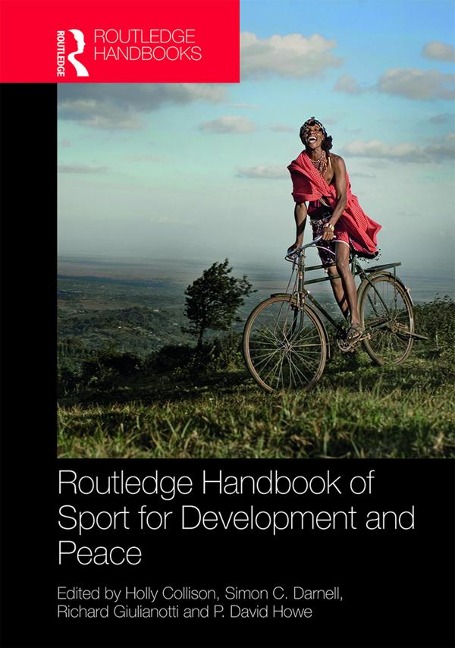
Sport and physical activity are now regularly used to promote social and economic development, peacebuilding and conflict resolution, on an international scale. The emergence of the 'Sport for Development and Peace' (SDP) sector, comprised of governments, NGOs, sport organizations and others, reveals a high level of institutionalization of this activity, while SDP now constitutes an important element of the scholarly analysis of sport. This volume analyses and critically discusses the central elements of, and research issues within, the field of SDP and also provides a series of case studies (substantive and geographic) of key research. It is the most holistic and far-reaching text published on this topic to date. Featuring multidisciplinary perspectives from world-leading researchers and practitioners from around the world, the book covers a wide range of topics, including SDP structures, policies and funding streams, how SDP relates to human rights, social exclusion and corporate social responsibility, SDP and gender, SDP and disability, SDP and health, SDP and homelessness, and SDP and the environment. The Handbook of Sport for Development and Peace is a vital resource for researchers, students and educators in the fields of sports studies, physical education, sport for development and peace, sport-based youth development, sport and politics, sociology of sport, and sport policy.
Holly Collison is Lecturer at the Institute of Sport Business, Loughborough University London, United Kingdom. Simon C. Darnell is Assistant Professor at the Faculty of Kinesiology and Physical Education, University of Toronto, Canada. Richard Giulianotti is Professor at the School of Sport, Exercise and Health Sciences, Loughborough University, United Kingdom and Professor II in the Department of Sports, Physical Education and Outdoor Studies, University of Southeast Norway, Norway. P. David Howe is Associate Professor at the School of Kinesiology, Western University, Canada.
Introduction, Part I: The SDP Sector, 1. The History of SDP, 2. The SDP Sector, 3. SDP and Global Development, 4. SDP Structures, Policies and Funding Streams, 5. International Governmental Organizations in the SDP Sector, 6. Non-Governmental Organizations in the SDP system, 7. SDP and Partnerships, 8. SDP and Olympism, 9. SDP and Corporate Social Responsibility, 10. SDP and Sustainable Development Goals, 11. SDP and Monitoring and Evaluation, 12. SDP and Human Rights, 13. SDP and Social Exclusion, Part II: The Social Study of SDP, 14. SDP and Social Theory, 15. SDP and Research Methods, 16. SDP and Research Ethics, 17. SDP and Feminist Theory, 18. SDP and Postcolonial Theory, 19. SDP and Social Anthropology, 20. SDP and Sport Psychology, 21. SDP and Sport Management, Part III: Themes and Issue in SDP, 22. SDP and Gender, 23. SDP and Peace, 24. SDP and Disability, 25. SDP and Volunteering, 26. SDP and Social Capital, 27. SDP and Health - Non-Communicable Diseases, 28. SDP and Health - HIV/AIDS, 29. SDP and Education, 30. SDP and Positive Youth Development, 31. SDP and Youth in the Global North, 32. SDP and Action Sports, 33. SDP and Homelessness, 34. SDP and Refugees, 35. SDP and the Environment, 36. SDP and Coaching, Part IV: SDP in National and Regional Contexts, 37. Africa - SDP and Sports Academies, 38. Belgium: Community Sport in Flanders, 39. Cambodia - Reconciliation, Hope and Different Ways of Seeing, 40. Canada and Australia - SDP and Indigenous Peoples, 41. Cuba - Revolutionary Games, 42. Liberia: Tournaments and T-Shirts, 43. Norway - Charity or Development?, 44. South Africa - Trends and Scholarship, 45. South Pacific - Fostering Healthy Lifestyles, 46. Zambia- The SDP Ideal?
Dieses eBook wird im PDF-Format geliefert und ist mit einem Adobe Kopierschutz (DRM) versehen. Sie können dieses eBook mit allen Geräten lesen, die das PDF-Format und den Adobe Kopierschutz (DRM) unterstützen.
Zum Beispiel mit den folgenden Geräten:
• tolino Reader
Laden Sie das eBook direkt über den Reader-Shop auf dem tolino herunter oder übertragen Sie das eBook auf Ihren tolino mit einer kostenlosen Software wie beispielsweise Adobe Digital Editions.
• Sony Reader & andere eBook Reader
Laden Sie das eBook direkt über den Reader-Shop herunter oder übertragen Sie das eBook mit der kostenlosen Software Sony READER FOR PC/Mac oder Adobe Digital Editions auf ein Standard-Lesegeräte mit epub- und Adobe DRM-Unterstützung.
• Tablets & Smartphones
Möchten Sie dieses eBook auf Ihrem Smartphone oder Tablet lesen, finden Sie hier unsere kostenlose Lese-App für iPhone/iPad und Android Smartphone/Tablets.
• PC & Mac
Lesen Sie das eBook direkt nach dem Herunterladen mit einer kostenlosen Lesesoftware, beispielsweise Adobe Digital Editions, Sony READER FOR PC/Mac oder direkt über Ihre eBook-Bibliothek in Ihrem Konto unter „Meine eBooks“ - „online lesen“.
Schalten Sie das eBook mit Ihrer persönlichen Adobe ID auf bis zu sechs Geräten gleichzeitig frei.
Bitte beachten Sie, dass die Kindle-Geräte das Format nicht unterstützen und dieses eBook somit nicht auf Kindle-Geräten lesbar ist.