Und dann auf "Zum Home-Bildschirm [+]".

Stöbern
genialokal zum Startbildschirm hinzufügen
Installieren Sie die genialokal App auf Ihrem Startbildschirm für einen schnellen Zugriff und eine komfortable Nutzung.
Installieren Sie die genialokal App auf Ihrem Startbildschirm für einen schnellen Zugriff und eine komfortable Nutzung.
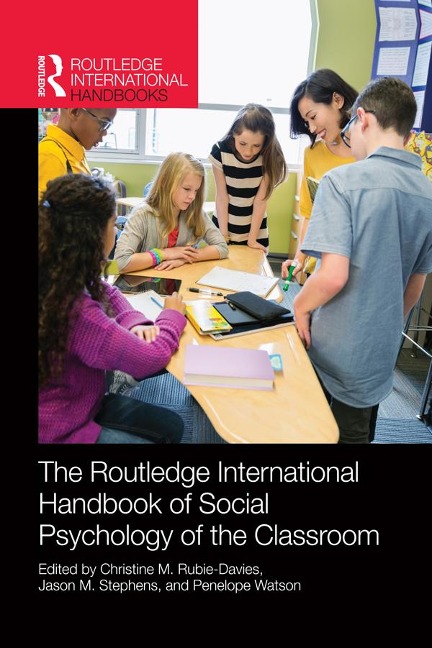
The Routledge International Handbook of Social Psychology of the Classroom presents the first comprehensive and integrated compilation of theory and research on topics related to the social cohesion of the classroom. Many of these topics have been studied independently; for example, motivation, self-concept, class management, class climate, and teacher expectations are generally studied separately by different groups of researchers. This handbook brings the evidence from different fields in social psychological classroom research together in one place for the first time to explore how these topics relate and how each factor influences students and their learning. With chapters by established international leaders in their fields, as well as emerging new talent, this handbook offers cutting edge research and surveys the state of the art in the social psychology of the classroom. Major areas covered include: - Motivation - Belief, self-concept, and personality - Emotional engagement - Teacher-student relationships - Teacher expectation - Classroom management - Culture and identity The Routledge International Handbook of Social Psychology of the Classroom provides a review of current theories related to the social psychology of the classroom, including how these theories apply to classrooms and learners. Current evidence clearly shows that areas explored by social psychology - and brought together for the first time in this volume - can have a very significant impact on classroom learning and student achievement (J. Hattie, Visible Learning: A Synthesis of over 800 Meta-Analyses Relating to Achievement, Routledge 2009). This handbook is a must for all academics whose research relates to the social psychology of the classroom. It is also an invaluable resource for teachers and teacher education students who want to understand why they are effective instructors and yet still encounter students in their classes who are not responding as expected.
Christine M. Rubie-Davies is currently Senior Lecturer in the Faculty of Education, the University of Auckland, New Zealand. Jason M. Stephens is a Senior Lecturer in the School of Learning, Development and Professional Practice, Faculty of Education, the University of Auckland, New Zealand. Penelope Watson is a Lecturer in the School of Learning, Development and Professional Practice, Faculty of Education, the University of Auckland, New Zealand.
PART 1 Student motivation 1. Children's achievement motivation in school Allan Wigfield, Katherine Muenks and Emily Q. Rosenzweig 2. Seeing the big picture: A systemic perspective on motivation, and its implications for social and psychological research Patricia L. Hardré 3. The relationship between social class and students' academic achievement goals: Three hypotheses Nathan Berger and Jennifer Archer4. Motivated learning: The relationship between student needs and attitudes Jasmine Taylor, Helena D. Cooper-Thomas and Elizabeth R. Peterson 5. The role of parents in students' motivational beliefs and values Rebecca Lazarides, Judith Harackiewicz, Elizabeth Canning, Laura Pesu, and Jaana Viljaranta 6. The role of meaning systems in the development of motivation Helen Patrick and Panayota Mantzicopoulos PART 2 Responding to student culture 7. Racial and ethnic identity Frank Worrell 8. Stigma: Implications for student achievement and mentoring C. Malik Boykin, Rodolfo Mendoza-Denton and Colette E. Patt 9. Optimizing Maori student success with the other three Rs: Racial-ethnic identity, resilience and responsiveness Melinda Webber 10. In-school versus online discrimination: Effects on mental health and motivation among diverse adolescents in the United States Brendesha M. Tynes, Sophia Hiss, Allison M. Ryan and Chad Rose 11. Countervailing forces in minority identity: Enacting and avoiding 'good student' behaviors Rochelle M. Burnaford PART 3 Student beliefs and peer relationships 12. Origins and consequences of social status differences in middle childhood Clark McKown 13. Academic talk in the classroom: Developments in research Robyn M. Gillies14. Stereotype threat: Looking back and moving forward Penelope W. St J. Watson... part contents
Dieses eBook wird im PDF-Format geliefert und ist mit einem Adobe Kopierschutz (DRM) versehen. Sie können dieses eBook mit allen Geräten lesen, die das PDF-Format und den Adobe Kopierschutz (DRM) unterstützen.
Zum Beispiel mit den folgenden Geräten:
• tolino Reader
Laden Sie das eBook direkt über den Reader-Shop auf dem tolino herunter oder übertragen Sie das eBook auf Ihren tolino mit einer kostenlosen Software wie beispielsweise Adobe Digital Editions.
• Sony Reader & andere eBook Reader
Laden Sie das eBook direkt über den Reader-Shop herunter oder übertragen Sie das eBook mit der kostenlosen Software Sony READER FOR PC/Mac oder Adobe Digital Editions auf ein Standard-Lesegeräte mit epub- und Adobe DRM-Unterstützung.
• Tablets & Smartphones
Möchten Sie dieses eBook auf Ihrem Smartphone oder Tablet lesen, finden Sie hier unsere kostenlose Lese-App für iPhone/iPad und Android Smartphone/Tablets.
• PC & Mac
Lesen Sie das eBook direkt nach dem Herunterladen mit einer kostenlosen Lesesoftware, beispielsweise Adobe Digital Editions, Sony READER FOR PC/Mac oder direkt über Ihre eBook-Bibliothek in Ihrem Konto unter „Meine eBooks“ - „online lesen“.
Schalten Sie das eBook mit Ihrer persönlichen Adobe ID auf bis zu sechs Geräten gleichzeitig frei.
Bitte beachten Sie, dass die Kindle-Geräte das Format nicht unterstützen und dieses eBook somit nicht auf Kindle-Geräten lesbar ist.