Und dann auf "Zum Home-Bildschirm [+]".

Stöbern
genialokal zum Startbildschirm hinzufügen
Installieren Sie die genialokal App auf Ihrem Startbildschirm für einen schnellen Zugriff und eine komfortable Nutzung.
Installieren Sie die genialokal App auf Ihrem Startbildschirm für einen schnellen Zugriff und eine komfortable Nutzung.
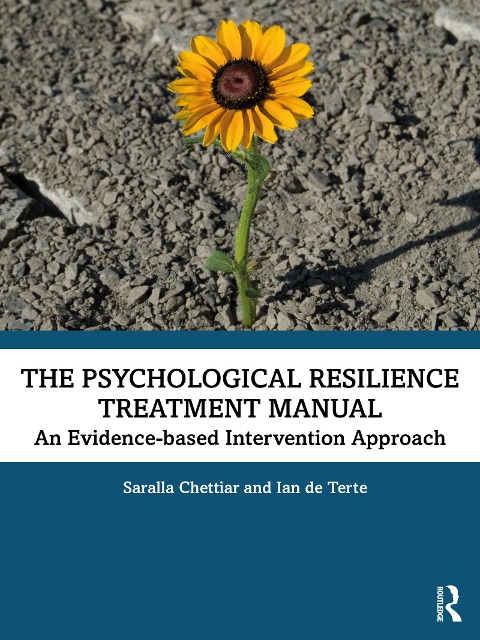
The Psychological Resilience Treatment Manual (PRTM) provides mental health professionals with an evidence-based guide to psychological resilience treatment designed to equip clients with a toolbox of adaptive coping strategies. This intervention treatment manual is for practitioners working with clients to develop resilience and the skills they need to cope with daily challenges, reduce stress levels, and increase general well-being without necessarily diagnosing a specific disorder, such as anxiety or depression. The manual is structured around four guided intervention modules: Passive Coping, Self-Care Behaviour, Social Support, and Active Coping. Each module encompasses four one-hour sessions and includes a contents framework, overview, and target objectives for each session. The manual includes 16 client worksheets that correspond to each session, and relapse prevention therapy is incorporated at the end of each module. Flexible in nature, the manual can be used by practitioners in its entirety or modules can be selected as appropriate, depending on a client's needs. The Psychological Resilience Treatment Manual is an essential resource for qualified and registered psychologists, qualified cognitive behavioural therapy (CBT) practitioners, psychiatrists, and postgraduate counselling psychology students.
Saralla Chettiar is a PhD candidate at the School of Psychology at Massey University in New Zealand and a practising clinical psychologist in Malaysia. Her published works include reviewing a book on military stress and resilience. Her PhD initiative was cited as a highly commendable contribution to public health and safety at a conference in Edinburgh, Scotland, in 2019. Ian de Terte, PhD, is a senior lecturer and clinical psychologist at the School of Psychology at Massey University in New Zealand. He has published over 50 articles and has been invited to present at local and international meetings on over 30 occasions on the subject of psychological resilience, coping strategies, and traumatic stress with high-risk or first-responder populations. Dr. de Terte is a former detective with the New Zealand Police and a reservist clinical psychologist with the New Zealand Defence Force.
List of figures List of tables Acknowledgements Introduction Objective Abstract and module overview Disclaimer Recommendations to mental health professionals Module 1: Passive Coping 1. The Psychology of Coping and Venting Session 2. Reviewing Behaviour Disengagement and Self-distraction activities 3. Addressing self-blame and denial tendencies 4. Metacognition and relapse prevention exercises Appendix A: Client worksheets for Passive Coping Module Module 2: Self-Care Behaviours 5. Getting Active and Right Nutrition-Paying attention 6. Mindfulness practice-All about thoughts, feelings, and body sensations 7. Practising self-compassion techniques 8. Learning how to relax, managing time, space, and meaning-making activities; revisiting relapse prevention exercises Appendix B:. Client worksheets for Self-Care Module Module 3: Social Support 9. Structural and Functional Social Support 10. Emotional Social Support 11. Instrumental or Material Social Support 12. Information or Cognitive Social Support and relapse prevention exercises Appendix C: Client worksheets for Social Support Module Module 4: Active Coping 13. Introduction to active coping, stress experience, and reactions 14. Positive reframing, tracking thoughts, behaviour, and learning effective problem-solving techniques 15. Utilising restraint coping, grateful journaling, and relapse prevention exercises 16. Humour-an active coping strategy Appendix D: Client worksheets for Active Coping Module Index
Dieses eBook wird im PDF-Format geliefert und ist mit einem Adobe Kopierschutz (DRM) versehen. Sie können dieses eBook mit allen Geräten lesen, die das PDF-Format und den Adobe Kopierschutz (DRM) unterstützen.
Zum Beispiel mit den folgenden Geräten:
• tolino Reader
Laden Sie das eBook direkt über den Reader-Shop auf dem tolino herunter oder übertragen Sie das eBook auf Ihren tolino mit einer kostenlosen Software wie beispielsweise Adobe Digital Editions.
• Sony Reader & andere eBook Reader
Laden Sie das eBook direkt über den Reader-Shop herunter oder übertragen Sie das eBook mit der kostenlosen Software Sony READER FOR PC/Mac oder Adobe Digital Editions auf ein Standard-Lesegeräte mit epub- und Adobe DRM-Unterstützung.
• Tablets & Smartphones
Möchten Sie dieses eBook auf Ihrem Smartphone oder Tablet lesen, finden Sie hier unsere kostenlose Lese-App für iPhone/iPad und Android Smartphone/Tablets.
• PC & Mac
Lesen Sie das eBook direkt nach dem Herunterladen mit einer kostenlosen Lesesoftware, beispielsweise Adobe Digital Editions, Sony READER FOR PC/Mac oder direkt über Ihre eBook-Bibliothek in Ihrem Konto unter „Meine eBooks“ - „online lesen“.
Schalten Sie das eBook mit Ihrer persönlichen Adobe ID auf bis zu sechs Geräten gleichzeitig frei.
Bitte beachten Sie, dass die Kindle-Geräte das Format nicht unterstützen und dieses eBook somit nicht auf Kindle-Geräten lesbar ist.