Und dann auf "Zum Home-Bildschirm [+]".

Stöbern
genialokal zum Startbildschirm hinzufügen
Installieren Sie die genialokal App auf Ihrem Startbildschirm für einen schnellen Zugriff und eine komfortable Nutzung.
Installieren Sie die genialokal App auf Ihrem Startbildschirm für einen schnellen Zugriff und eine komfortable Nutzung.
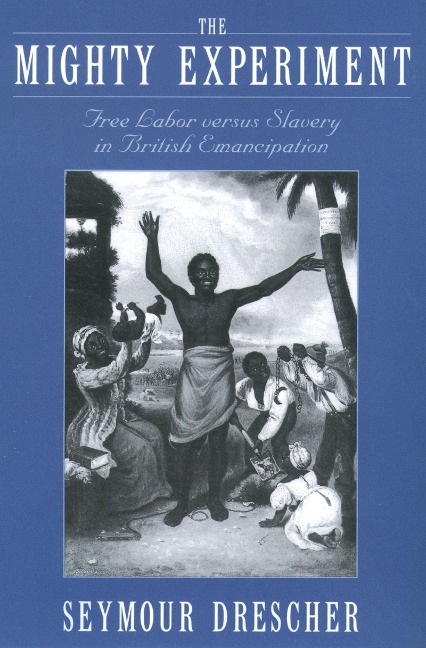
By the mid-eighteenth century, the transatlantic slave trade was considered to be a necessary and stabilizing factor in the capitalist economies of Europe and the expanding Americas. Britain was the most influential power in this system which seemed to have the potential for unbounded growth. In 1833, the British empire became the first to liberate its slaves and then to become a driving force toward global emancipation. There has been endless debate over the reasons behind this decision. This has been portrayed on the one hand as a rational disinvestment in a foundering overseas system, and on the other as the most expensive per capita expenditure for colonial reform in modern history. In this work, Seymour Drescher argues that the plan to end British slavery, rather than being a timely escape from a failing system, was, on the contrary, the crucial element in the greatest humanitarian achievement of all time. The Mighty Experiment explores how politicians, colonial bureaucrats, pamphleteers, and scholars taking anti-slavery positions validated their claims through rational scientific arguments going beyond moral and polemical rhetoric, and how the infiltration of the social sciences into this political debate was designed to minimize agitation on both sides and provide common ground. Those at the inception of the social sciences, such as Adam Smith and Thomas Malthus, helped to develop these tools to create an argument that touched on issues of demography, racism, and political economy. By the time British emancipation became legislation, it was being treated as a massive social experiment, whose designs, many thought, had the potential to change the world. This study outlines the relationship of economic growth to moral issues in regard to slavery, and will appeal to scholars of British history, nineteenth century imperial history, the history of slavery, and those interested in the history of human rights.
Seymour Drescher is University Professor of History and Professor of Sociology at the University of Pittsburgh. He is the author of Econocide: British Slavery in the Age of Abolition (1977), Capitalism and Antislavery (OUP, 1987), and From Slavery to Freedom (1999) and the co-editor of Slavery (OUP, 2001).
Dieses eBook wird im PDF-Format geliefert und ist mit einem Adobe Kopierschutz (DRM) versehen. Sie können dieses eBook mit allen Geräten lesen, die das PDF-Format und den Adobe Kopierschutz (DRM) unterstützen.
Zum Beispiel mit den folgenden Geräten:
• tolino Reader
Laden Sie das eBook direkt über den Reader-Shop auf dem tolino herunter oder übertragen Sie das eBook auf Ihren tolino mit einer kostenlosen Software wie beispielsweise Adobe Digital Editions.
• Sony Reader & andere eBook Reader
Laden Sie das eBook direkt über den Reader-Shop herunter oder übertragen Sie das eBook mit der kostenlosen Software Sony READER FOR PC/Mac oder Adobe Digital Editions auf ein Standard-Lesegeräte mit epub- und Adobe DRM-Unterstützung.
• Tablets & Smartphones
Möchten Sie dieses eBook auf Ihrem Smartphone oder Tablet lesen, finden Sie hier unsere kostenlose Lese-App für iPhone/iPad und Android Smartphone/Tablets.
• PC & Mac
Lesen Sie das eBook direkt nach dem Herunterladen mit einer kostenlosen Lesesoftware, beispielsweise Adobe Digital Editions, Sony READER FOR PC/Mac oder direkt über Ihre eBook-Bibliothek in Ihrem Konto unter „Meine eBooks“ - „online lesen“.
Schalten Sie das eBook mit Ihrer persönlichen Adobe ID auf bis zu sechs Geräten gleichzeitig frei.
Bitte beachten Sie, dass die Kindle-Geräte das Format nicht unterstützen und dieses eBook somit nicht auf Kindle-Geräten lesbar ist.