Und dann auf "Zum Home-Bildschirm [+]".

Stöbern
genialokal zum Startbildschirm hinzufügen
Installieren Sie die genialokal App auf Ihrem Startbildschirm für einen schnellen Zugriff und eine komfortable Nutzung.
Installieren Sie die genialokal App auf Ihrem Startbildschirm für einen schnellen Zugriff und eine komfortable Nutzung.
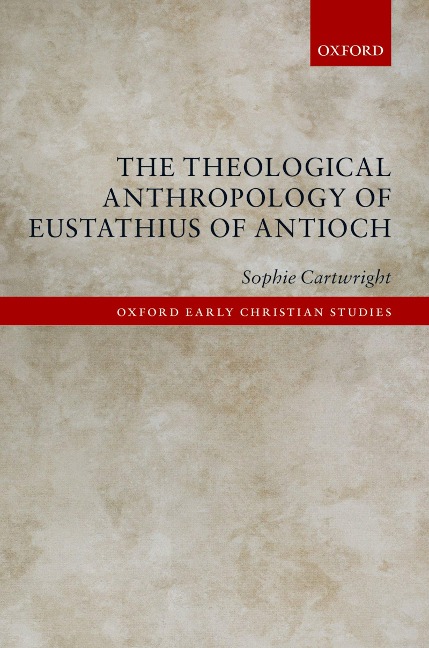
This authoritative study explores Eustathius of Antioch's theological anthropology, offering insight into one of the most important thinkers of the early Arian controversy. Sophie Cartwright situates Eustathius' thought in relation to the early 'Arian' controversy, the Constaninian Revolution, the theological legacies of Irenaeus and Origen, and the philosophical commentary tradition. She also locates Eustathius within his historical context and provides a detailed overview of the sources for his complex and fragmented corpus.
Eustathius' anthropology is indebted to a tradition shaped by the theology of Irenaeus, that had already come into conversation with Origen. Dr Cartwright suggests that Origen's own thought was indebted to Irenaeus but that he had a radically different cosmology; this shaped subsequent engagement with both thinkers. Eustathius' theology of embodiment draws on Irenaeus, in opposition to what he perceives as the Origenist and Platonist anthropology which, in his anti-Arian works, he associates with Eusebius of Caesarea. However, he is deeply indebted to Origen for his doctrine of Christ's human soul and, consequently, his wider psychology. He places humanity at a great distance from God and seeks to give humanity autonomous value, especially in his discourse on God's image. This represents one logical negotiation of the rejection of Origen's eternal intelligible world. Eustathius' divisive Christology offers a picture of Christ as the perfect human being that echoes Irenaeus' Adam-Christ typology, fleshed out by an Origenian discourse on Christ's human soul and infused with a keen awareness of the chasm between God and humankind. He proffers a doctrine of inherited sinfulness as an alternative to Origen's doctrine of the fall and looks to a corporeal eschatological kingdom ruled over by the human Christ; this eschatology probably reflects discomfiture with Constantine's role in the church.
Dr Sophie Cartwright is a Postdoctoral Research Fellow at Heythrop College, London.
- Preface - Introduction - 1: Eustathius' Life - 2: The Evidence, Content, and Context of Eustathius' Writings - 3: Body and Soul - 4: The Image of God - 5: Soteriology: The Tragedy and Potential of Human History - 6: Eschatology: The Human Kingdom - Conclusion - Bibliography
Dieses eBook wird im PDF-Format geliefert und ist mit einem Adobe Kopierschutz (DRM) versehen. Sie können dieses eBook mit allen Geräten lesen, die das PDF-Format und den Adobe Kopierschutz (DRM) unterstützen.
Zum Beispiel mit den folgenden Geräten:
• tolino Reader
Laden Sie das eBook direkt über den Reader-Shop auf dem tolino herunter oder übertragen Sie das eBook auf Ihren tolino mit einer kostenlosen Software wie beispielsweise Adobe Digital Editions.
• Sony Reader & andere eBook Reader
Laden Sie das eBook direkt über den Reader-Shop herunter oder übertragen Sie das eBook mit der kostenlosen Software Sony READER FOR PC/Mac oder Adobe Digital Editions auf ein Standard-Lesegeräte mit epub- und Adobe DRM-Unterstützung.
• Tablets & Smartphones
Möchten Sie dieses eBook auf Ihrem Smartphone oder Tablet lesen, finden Sie hier unsere kostenlose Lese-App für iPhone/iPad und Android Smartphone/Tablets.
• PC & Mac
Lesen Sie das eBook direkt nach dem Herunterladen mit einer kostenlosen Lesesoftware, beispielsweise Adobe Digital Editions, Sony READER FOR PC/Mac oder direkt über Ihre eBook-Bibliothek in Ihrem Konto unter „Meine eBooks“ - „online lesen“.
Schalten Sie das eBook mit Ihrer persönlichen Adobe ID auf bis zu sechs Geräten gleichzeitig frei.
Bitte beachten Sie, dass die Kindle-Geräte das Format nicht unterstützen und dieses eBook somit nicht auf Kindle-Geräten lesbar ist.