Und dann auf "Zum Home-Bildschirm [+]".

Stöbern
genialokal zum Startbildschirm hinzufügen
Installieren Sie die genialokal App auf Ihrem Startbildschirm für einen schnellen Zugriff und eine komfortable Nutzung.
Installieren Sie die genialokal App auf Ihrem Startbildschirm für einen schnellen Zugriff und eine komfortable Nutzung.


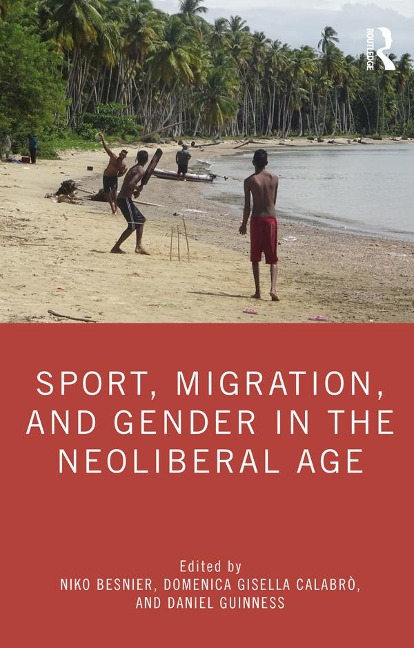
This ethnographic collection explores how neoliberalism has permeated the bodies, subjectivities, and gender of youth around the world as global sport industries have expanded their reach into marginal areas, luring young athletes with the dream of pursuing athletic careers in professional leagues of the Global North. Neoliberalism has reconfigured sport since the 1980s, as sport clubs and federations have become for-profit businesses, in conjunction with television and corporate sponsors. Neoliberal sport has had other important effects, which are rarely the object of attention: as the national economies of the Global South and local economies of marginal areas of the Global North have collapsed under pressure from global capital, many young people dream of pursuing a sport career as an escape from poverty. But this elusive future is often located elsewhere, initially in regional centres, though ultimately in the wealthy centres of the Global North that can support a sport infrastructure. The pursuit of this future has transformed kinship relations, gender relations, and the subjectivities of people. This collection of rich ethnographies from diverse regions of the world, from Ghana to Finland and from China to Fiji, pulls the reader into the lives of men and women in the global sport industries, including aspiring athletes, their families, and the agents, coaches, and academy directors shaping athletes' dreams. It demonstrates that the ideals of neoliberalism spread in surprising ways, intermingling with categories like gender, religion, indigeneity, and kinship. Athletes' migrations provide a novel angle on the global workings of neoliberalism. This book will be of key interest to scholars in Gender Studies, Anthropology, Sport Studies, and Migration Studies.
Niko Besnier is Professor of Cultural Anthropology at the University of Amsterdam. In 2012-17, he directed the ERC-funded project titled "Globalization, Sport, and the Precarity of Masculinity" (GLOBALSPORT), which inspired this edited volume. With Susan Brownell and Thomas F. Carter, he coauthored The Anthropology of Sport: Bodies, Borders, Biopolitics (2018), which has been translated into French, Spanish, and Japanese. His other works have focused on sexuality and gender, globalization, precarity, and language. Domenica Gisella Calabrò holds a Ph.D. in Cultural Anthropology from the University of Messina, Italy, and is currently discipline coordinator and lecturer in Gender Studies at the University of the South Pacific in Suva, Fiji. She was a postdoctoral researcher in the GLOBALSPORT project. Her research has focused on indigeneity, sport and gender in Aotearoa New Zealand. She is now also involved in research on gender-based violence in the Pacific Islands. Daniel Guinness holds a D.Phil. in Anthropology from the University of Oxford and was a postdoctoral researcher in the GLOBALSPORT project. His interests are in the changing social relations and performances of masculinities in the context of globalized neoliberal labour markets, particularly those involving sporting migration. He has undertaken ethnographic field research in Fiji, Argentina, and Europe.
1. Introduction: Sport, Mobility, and Gender in the Neoliberal Age; Neoliberal Sport and Social Relations; 2. Benevolent Hosts, Ungrateful Guests: African Footballers, Hospitality and the Sports Business in Istanbul; 3. "This is Business!": Ethiopian Runners in a Global Marketplace; 4. Labouring Athletes, Labouring Mothers: Ethiopian Women Athletes' Bodies at Work; 5. From Liberation Cricket to Neoliberal Cricket: Race, Mobility, and Masculinity in the Caribbean; 6. Friendship, Respect, and Success: Kenyan Runners in Japan; 7. Neoliberalism, Masculinity, and Social Mobility in Chinese Tennis; 8. Fijian Rugby Wives and the Gendering of Globally Mobile Families; 9. The Global Warrior: Maori, Rugby, and Diasporic Indigeneity; 10. Being "the Best Ever": Contradictions of Immobility and Aspiration for Boxers in Accra, Ghana; 11. The Dream Is to Leave: Imagining Migration and Mobility Through Sport in Senegal; 12. "This is a Business, not a Charity": Football Academies, Political Economy, and Masculinity in Cameroon; 13. Skating on Thin Ice: Hockey Hope for Young Male Players in the Neoliberal Age; Epilogue; 14. Neoliberalism, the Gift Economy, and Gender; ;
Dieses eBook wird im PDF-Format geliefert und ist mit einem Adobe Kopierschutz (DRM) versehen. Sie können dieses eBook mit allen Geräten lesen, die das PDF-Format und den Adobe Kopierschutz (DRM) unterstützen.
Zum Beispiel mit den folgenden Geräten:
• tolino Reader
Laden Sie das eBook direkt über den Reader-Shop auf dem tolino herunter oder übertragen Sie das eBook auf Ihren tolino mit einer kostenlosen Software wie beispielsweise Adobe Digital Editions.
• Sony Reader & andere eBook Reader
Laden Sie das eBook direkt über den Reader-Shop herunter oder übertragen Sie das eBook mit der kostenlosen Software Sony READER FOR PC/Mac oder Adobe Digital Editions auf ein Standard-Lesegeräte mit epub- und Adobe DRM-Unterstützung.
• Tablets & Smartphones
Möchten Sie dieses eBook auf Ihrem Smartphone oder Tablet lesen, finden Sie hier unsere kostenlose Lese-App für iPhone/iPad und Android Smartphone/Tablets.
• PC & Mac
Lesen Sie das eBook direkt nach dem Herunterladen mit einer kostenlosen Lesesoftware, beispielsweise Adobe Digital Editions, Sony READER FOR PC/Mac oder direkt über Ihre eBook-Bibliothek in Ihrem Konto unter „Meine eBooks“ - „online lesen“.
Schalten Sie das eBook mit Ihrer persönlichen Adobe ID auf bis zu sechs Geräten gleichzeitig frei.
Bitte beachten Sie, dass die Kindle-Geräte das Format nicht unterstützen und dieses eBook somit nicht auf Kindle-Geräten lesbar ist.