Und dann auf "Zum Home-Bildschirm [+]".

Stöbern
genialokal zum Startbildschirm hinzufügen
Installieren Sie die genialokal App auf Ihrem Startbildschirm für einen schnellen Zugriff und eine komfortable Nutzung.
Installieren Sie die genialokal App auf Ihrem Startbildschirm für einen schnellen Zugriff und eine komfortable Nutzung.
Ihr gewünschter Artikel ist in 0 Buchhandlungen vorrätig - wählen Sie hier eine Buchhandlung in Ihrer Nähe aus:

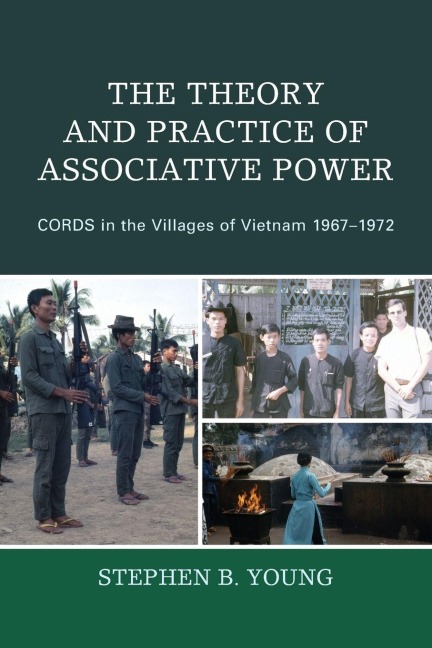
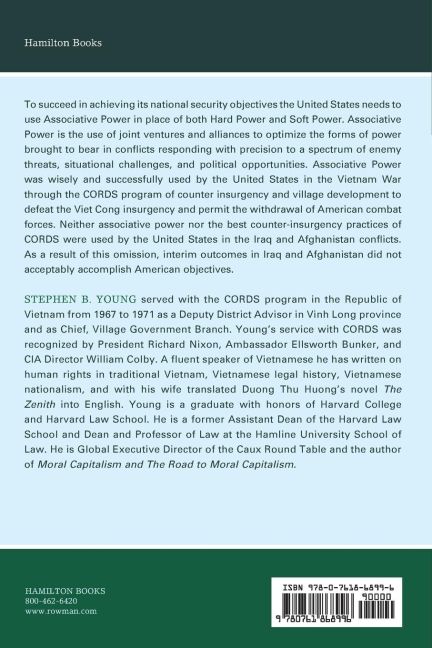
This book asserts that the United States needs to use Associative Power in place of both Hard Power and Soft Power to succeed in achieving its national security objectives. The author uses the CORDs program during the Vietnam War as an example of Associative Power.
Stephen Young served with the CORDS program in the Republic of Vietnam from 1967 to 1971 as a Deputy District Advisor in Vinh Long province and as Chief, Village Government Branch. Young's service with CORDS was recognized by President Richard Nixon, Ambassador Ellsworth Bunker, and CIA Director William Colby. A fluent speaker of Vietnamese he has written on human rights in traditional Vietnam, Vietnamese legal history, Vietnamese nationalism, and with his wife translated Duong Thu Huong's novel The Zenith into English. Young is a graduate with honors of Harvard College and Harvard Law School. He is a former Assistant Dean of the Harvard Law School and Dean and Professor of Law at the Hamline University School of Law. He is Global Executive Director of the Caux Round Table and the author of Moral Capitalism and The Road to Moral Capitalism.
Forward: Associative Power and American National Security, John R. Allen Introductory Thoughts: Associative Power and Strategic National Intelligence Capabilities, David Durenberger Preface, Stephen B. Young Chapter One: ASSOCIATIVE POWER: Holding the Center Chapter Two: The Origins of CORDS Chapter Three: Vietnamese Nationalism Chapter Four: Getting the Right Context in Place Chapter Five: CORDS Gets Its Opportunity Chapter Six: CORDS Version 1.0 Chapter Seven: The South Vietnamese Nationalists Save Their Country: Phase 1-1969 Chapter Eight: The South Vietnamese Nationalists Save Their Country: Phase 2-1970/1971 Chapter Nine: CORDS Version 2.0-1971 Pacification and Development Plan Chapter Ten: South Vietnam Holds Off an Onslaught Chapter Eleven: A Vietnamese Village Chapter Twelve: Iraq: An Episode of Amateur (and Feckless) Colonial Pretension Chapter Thirteen: Afghanistan: A Kabul-Centric Quagmire Chapter Fourteen: Securing the American Future through Associative Power Afterword: A Perso