Und dann auf "Zum Home-Bildschirm [+]".

Stöbern
genialokal zum Startbildschirm hinzufügen
Installieren Sie die genialokal App auf Ihrem Startbildschirm für einen schnellen Zugriff und eine komfortable Nutzung.
Installieren Sie die genialokal App auf Ihrem Startbildschirm für einen schnellen Zugriff und eine komfortable Nutzung.
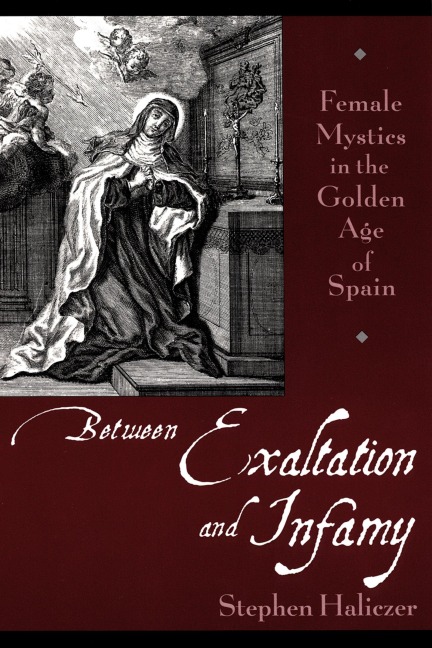
One day in 1599, in the Spanish village of Saria, seven-year-old Maria Angela Astorch fell ill and died after gorging herself on unripened almonds. Maria's sister Isabel, a nun, came to view the body with her mother superior, an ecstatic mystic and visionary named Maria Angela Serafina. Overcome by the sight of the dead girl's innocent face, Serafina began to pray fervently for the return of the child's soul to her body. Entering a trance, she had a vision in which the Virgin Mary gave her a sign. At once little Maria Angela started to show signs of life. A moment later she scrambled to the ground and was soon restored to perfect health.
During the Counter-Reformation, the Church was confronted by an extraordinary upsurge of feminine religious enthusiasm like that of Serafina. Inspired by new translations of the lives of the saints, devout women all over Catholic Europe sought to imitate these "athletes of Christ" through extremes of self-abnegation, physical mortification, and devotion. As in the Middle Ages, such women's piety often took the form of ecstatic visions, revelations, voices and stigmata.
Stephen Haliczer offers a comprehensive portrait of women's mysticism in Golden Age Spain, where this enthusiasm was nearly a mass movement. The Church's response, he shows, was welcoming but wary, and the Inquisition took on the task of winnowing out frauds and imposters. Haliczer draws on fifteen cases brought by the Inquisition against women accused of "feigned sanctity," and on more than two dozen biographies and autobiographies. The key to acceptance, he finds, lay in the orthodoxy of the woman's visions and revelations. He concludes that mysticism offered women a way to transcend, though not to disrupt, the control of the male-dominated Church.
Stephen Haliczer is Distinguished Research Professor of History at Northern Illinois University. He is the author of Sexuality in the Confessional: A Sacrament Profaned (Oxford, 1996) and many other books and articles.
Dieses eBook wird im PDF-Format geliefert und ist mit einem Adobe Kopierschutz (DRM) versehen. Sie können dieses eBook mit allen Geräten lesen, die das PDF-Format und den Adobe Kopierschutz (DRM) unterstützen.
Zum Beispiel mit den folgenden Geräten:
• tolino Reader
Laden Sie das eBook direkt über den Reader-Shop auf dem tolino herunter oder übertragen Sie das eBook auf Ihren tolino mit einer kostenlosen Software wie beispielsweise Adobe Digital Editions.
• Sony Reader & andere eBook Reader
Laden Sie das eBook direkt über den Reader-Shop herunter oder übertragen Sie das eBook mit der kostenlosen Software Sony READER FOR PC/Mac oder Adobe Digital Editions auf ein Standard-Lesegeräte mit epub- und Adobe DRM-Unterstützung.
• Tablets & Smartphones
Möchten Sie dieses eBook auf Ihrem Smartphone oder Tablet lesen, finden Sie hier unsere kostenlose Lese-App für iPhone/iPad und Android Smartphone/Tablets.
• PC & Mac
Lesen Sie das eBook direkt nach dem Herunterladen mit einer kostenlosen Lesesoftware, beispielsweise Adobe Digital Editions, Sony READER FOR PC/Mac oder direkt über Ihre eBook-Bibliothek in Ihrem Konto unter „Meine eBooks“ - „online lesen“.
Schalten Sie das eBook mit Ihrer persönlichen Adobe ID auf bis zu sechs Geräten gleichzeitig frei.
Bitte beachten Sie, dass die Kindle-Geräte das Format nicht unterstützen und dieses eBook somit nicht auf Kindle-Geräten lesbar ist.