Und dann auf "Zum Home-Bildschirm [+]".

Stöbern
genialokal zum Startbildschirm hinzufügen
Installieren Sie die genialokal App auf Ihrem Startbildschirm für einen schnellen Zugriff und eine komfortable Nutzung.
Installieren Sie die genialokal App auf Ihrem Startbildschirm für einen schnellen Zugriff und eine komfortable Nutzung.


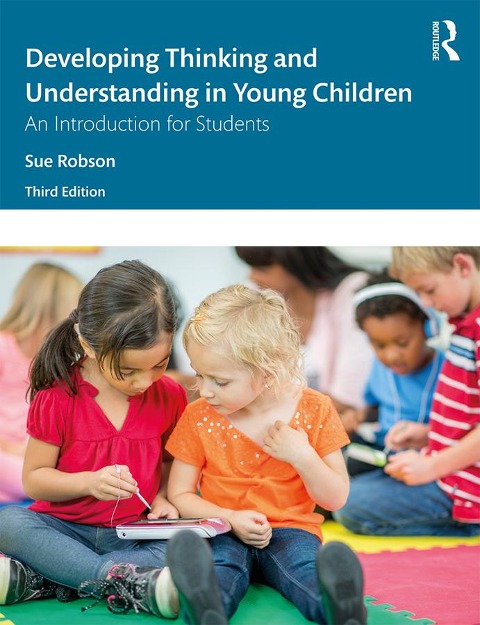
The third edition of this essential book presents a comprehensive and accessible overview of contemporary theory and research about young children's developing thinking and understanding. Sue Robson's detailed exploration of the ideas and theories is enlivened by transcripts of children's activities and conversations taken from practice and contemporary research, helping readers to make links between theory, research and practice. This new edition brings together up-to-date research into neuroscience and digital learning, combining theory with discussions for best practice. Each chapter also includes ideas for further reading and suggested activities. Key chapters explore the following: - Theories of cognitive development - The social, emotional and cultural contexts of children's thinking - Developments in brain science and young children - The central roles of play and language in young children's developing thinking - Children's conceptual development; visual thinking and thinking in music This book is crucial reading for all those interested in how young children develop through their thoughts and actions, including students of Early Years studies, teachers and early years practitioners.
Sue Robson is Honorary Research Fellow in the Early Childhood Research Centre, Froebel College, at the University of Roehampton. Sue taught in early years and primary settings before moving into higher education, where she was Principal Lecturer and Subject Leader for Early Childhood Studies at the University of Roehampton. Her research interests include cognition in early childhood, in particular self-regulation and metacognition (the subject of her doctoral studies), young children's creative thinking, well-being and early childhood practitioner development. She is particularly interested in working with young children as participants in research, using a range of research methods to elicit their perspectives. Sue is a National Teaching Fellow and a Trustee and Member of Council of the Froebel Trust. Sue has written and presented widely.
1. How can we think about young children's thinking? 2. Theories of cognitive development: learning to think and thinking to learn 3. The social, cultural and emotional contexts of thinking and understanding 4. The brain and the body: neuroscience and embodied cognition 5.Knowing about the mind: executive function, theory of mind, self-regulation and metacognition 6. Observing, describing and documenting children's thinking and understanding 7. Language, communication and thought 8. Knowing about the world: the development of children's concepts 9. Young children's visual thinking 10. Young children's thinking in music 11. Approaches to developing young children's thinking and understanding
Dieses eBook wird im PDF-Format geliefert und ist mit einem Adobe Kopierschutz (DRM) versehen. Sie können dieses eBook mit allen Geräten lesen, die das PDF-Format und den Adobe Kopierschutz (DRM) unterstützen.
Zum Beispiel mit den folgenden Geräten:
• tolino Reader
Laden Sie das eBook direkt über den Reader-Shop auf dem tolino herunter oder übertragen Sie das eBook auf Ihren tolino mit einer kostenlosen Software wie beispielsweise Adobe Digital Editions.
• Sony Reader & andere eBook Reader
Laden Sie das eBook direkt über den Reader-Shop herunter oder übertragen Sie das eBook mit der kostenlosen Software Sony READER FOR PC/Mac oder Adobe Digital Editions auf ein Standard-Lesegeräte mit epub- und Adobe DRM-Unterstützung.
• Tablets & Smartphones
Möchten Sie dieses eBook auf Ihrem Smartphone oder Tablet lesen, finden Sie hier unsere kostenlose Lese-App für iPhone/iPad und Android Smartphone/Tablets.
• PC & Mac
Lesen Sie das eBook direkt nach dem Herunterladen mit einer kostenlosen Lesesoftware, beispielsweise Adobe Digital Editions, Sony READER FOR PC/Mac oder direkt über Ihre eBook-Bibliothek in Ihrem Konto unter „Meine eBooks“ - „online lesen“.
Schalten Sie das eBook mit Ihrer persönlichen Adobe ID auf bis zu sechs Geräten gleichzeitig frei.
Bitte beachten Sie, dass die Kindle-Geräte das Format nicht unterstützen und dieses eBook somit nicht auf Kindle-Geräten lesbar ist.