Und dann auf "Zum Home-Bildschirm [+]".

Stöbern
genialokal zum Startbildschirm hinzufügen
Installieren Sie die genialokal App auf Ihrem Startbildschirm für einen schnellen Zugriff und eine komfortable Nutzung.
Installieren Sie die genialokal App auf Ihrem Startbildschirm für einen schnellen Zugriff und eine komfortable Nutzung.

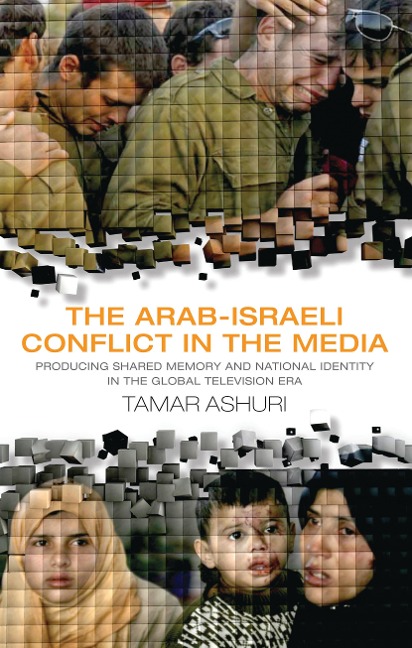
The television industry has metamorphosised from a national and largely-monopolized sector to a commercial and global enterprise. This has profoundly altered the way 'historical truth' and shared memory are constructed and conveyed. Here Ashuri provides a groundbreaking study of the changes through the vantage point of an illuminating mode of television production, international co-productions. By taking an example based on current events in the Middle East - a television documentary on the Arab Israeli conflict co-produced by three television networks (BBC, PBS, MBC) - her study enriches contemporary media research, providing an unprecedented, behind-the-scenes look at the entire production process of a co-produced television history.She shows that making the documentary on the Arab-Israeli struggle turned into a war: a war over competing memories, interpretation, editing, and finally narration. Ashuri's analysis of transnational documentary collaborations reveals inherent tensions between economic constraints and cultural forces, between the local and global, and between 'shared' and 'cosmopolitan' memory.
Enriching political economy studies of media by exploring the cultural negotiations at the heart of television production process, and highlighting the economic processes that underlie the contested constructions of national histories, "The Arab-Israeli Conflict in the Media" will be essential reading for those interested in media and television studies, as well as globalization and cultural identity.
Tamar Ashuri is a lecturer at Ben-Gurion University's Department of Communication Studies and in the School of Communications at Sapir Academic College, Ashkelon. She received her PhD from the Research Programme in Media and Communications at the London School of Economics and Political Science. Her recent publications have appeared, inter alia, in 'Media, Culture & Society' and 'Nation and Nationalism', and her new book on the history of media technologies will be published in 2008.
TABLE OF CONTENTS
Introduction
Chapter 1: 'The Television Documentary' and the Representation of National Identity and Shared Memory
Chapter 2: Television, Nationalism, and Globalization
Chapter 3: Co-Producing Television Programmes
Chapter 4: The Cultural Economy of 'Televised History' through the Lenses of 'The Fifty Year War: Israel and the Arabs' Pre-production
Chapter 5: Editing Nation and Culture: the Three Final Cuts
Chapter 6: TV 'Tension': Globalization vs. Nationalism and Shared vs. Cosmopolitan Memory in Co-Produced Television Documentaries
Conclusion