Und dann auf "Zum Home-Bildschirm [+]".

Stöbern
genialokal zum Startbildschirm hinzufügen
Installieren Sie die genialokal App auf Ihrem Startbildschirm für einen schnellen Zugriff und eine komfortable Nutzung.
Installieren Sie die genialokal App auf Ihrem Startbildschirm für einen schnellen Zugriff und eine komfortable Nutzung.
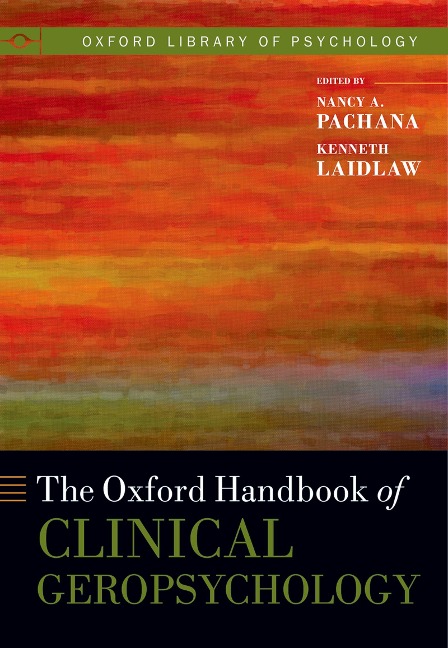
Throughout the world, the population of older adults continues to grow. The rise in geriatric populations has seen an increase in research on clinical diagnostic, assessment, and treatment issues aimed at this population. Clinical geropsychologists have increased their interest both in providing mental health services as well as developing approaches to improve quality of life for all older adults.
The Oxford Handbook of Clinical Geropsychology is a landmark publication in this field, providing broad and authoritative coverage of the research and practice issues in clinical geropsychology today, as well as innovations expanding the field's horizons. Comprising chapters from the foremost scholars in clinical geropsychology from around the world, the handbook captures the global proliferation of activity in this field.
In addition to core sections on topics such as sources of psychological distress, assessment, diagnosis, and intervention, the handbook includes valuable chapters devoted to methodological issues such as longitudinal studies and meta-analyses in the field, as well as new and emerging issues such as technological innovations and social media use in older populations. Each chapter offers a review of the most pertinent international literature, outlining current issues as well as important cultural implications and key practice issues where relevant, and identifying possibilities for future research and policy applications.
The book is essential to all psychology researchers, practitioners, educators, and students with an interest in the mental health of older adults. In addition, health professionals - including psychiatrists, social workers, mental health nurses, and trainee geriatric mental heatlh workers - will find this a invaluable resource.
Older adults comprise a growing percentage of the population worldwide. Clinical psychologists with an interest in older populations have increased the amount of research and applied knowledge about effectively improving mental health later in life, and this book captures that information on an international level. The book addresses how to diagnose, assess and treat mental illness in older persons, as well as ways to improve quality of life in all older persons. It has a great breadth of coverage of the area, including chapters spanning how research is conducted to how new technologies such as virtual reality and social media are used with older people to improve mental health. The book would appeal to all psychology researchers, practitioners, educators and students with an interest in the mental health of older adults. It would also appeal to other health professionals, including psychiatrists, social workers, and mental health nurses who work with older people. It is a valuable resource for trainee geriatric mental health workers because it highlights key readings and important practice implications in the field.
Nancy A. Pachana, PhD is Professor of Clinical Psychology and co-director of the Ageing Mind Initiative at The University of Queensland, Brisbane, Australia. Dr. Pachana's research and clinical work focuses broadly in the area of geriatric mental health, particularly late-life anxiety disorders. She co-developed the Geriatric Anxiety Inventory (GAI), a published short self-report inventory in wide clinical and research use globally, and translated into over two dozen languages. Her other research interests include novel empirical interventions in residential aged care and for caregivers, measurement of cognitive decline, and general health and well-being in later life. She has published 160+ original articles in peer-reviewed international journals, including 23 book chapters, and 1 authored and 3 edited books. Dr. Pachana mentors graduate and undergraduate student research and teaches courses on clinical geropsychology and leadership and clinical skills at her university.
Professor Laidlaw qualified as a clinical psychologist in 1995. In 1999 he was awarded a Winston Churchill Fellowship and travelled to the US to meet experts in CBT. From 1999 to 2000 he was invited to spend a year at University of Pennsylvania (PENN) in Philadelphia with Aaron T. Beck. In 2006 he completed his PhD part-time while working academically and clinically. Ken has always maintained a strong clinical commitment in the past and was professional lead for an older adults service in Edinburgh prior to his appointment at UEA. He was the Principal Investigator on the first UK RCT of CBT for late Life depression published in 2008. His manual for this trial has subsequently been used in other clinical trials. He also led the development of the creation of a cross-cultural Attitudes to Ageing Questionnaire (AAQ), that was pilot and field trialled in 20 countries worldwide. His conceptualization framework for CBT with older people is part of the IAPT curriculum materials for HI IAPT workers.
- 1: Eva-Marie Kessler, Hans Werner-Wahl and Andreas Kruse: Perspectives on Clinical Geropsychology - 2: John Beard: Demographics of Mental Health and Ageing: An update - 3: Kaarin J. Anstey, Alex Bahar-Fuchs and Kerry Sargent-Cox: Longitudinal Studies and Clinical Geropsychology - 4: Martin Pinquart and Silvia Sörensen: Meta-analyses in Clinical Geropsychology - 5: Nardi Steverink: Successful development and Aging - 6: Toni Antonucci, Kristine Ajrouch, and Sojung Park: Social capital and gender - 7: Jacqueline Zöllig, Mike Martin, and Vera Schumacher: Cognitive development in aging - 8: Karen Munk: Transitions in Later Life - 9: Lindsay A. Gerolimatos, M.S., Jeffrey J. Gregg, M.S., and Barry Edelstein: Interviewing Older People - 10: Rocío Fernández-Ballesteros: Psychological Assessment Strategies - 11: Dustin Hammers, Kevin Duff, and Gordon Chelune: Assessing trajectories of cognitive change over time in later life - 12: MaryBeth Bailar and Jennifer Moye: International Perspectives on Capacity Assessment - 13: Alisa O'Riley, Kimberly Van Orden, and Yeates Conwell: Suicidal Ideation in Later Life - 14: Phillip Ruppert and Deborah Attix: Clinical evaluation and intervention methods - 15: Holly Tuokko and Colette Smart: Functional sequelae of cognitive declines in later life - 16: Victor Molinari, Kathryn Hyer, and Elizabeth: Understanding the Environment of Long-term Care - 17: Julia Kasl-Godley and Holly G Prigerson: Advanced Illness and the End of Life - 18: Constança Paúl: Loneliness and Disability in Later life - 19: Sergio Starkstein: Neuropsychiatric Approaches to Working with Older People - 20: Forrest Scogin and Elizabeth Di Napoli: Late-Life Depression - 21: Philip Mosley and Jeffrey Lyness: Physical co-morbidity with mood disorders - 22: Beyon Miloyan, Nancy A. Pachana, and Gerard Byrne: Late-life Anxiety - 23: Colin Depp: Psychosis in Older Adults - 24: Joel Sadavoy: Personality Disorders - 25: Megan E. Ruiter Petrov, Gregory S. Vander Wal, and Kenneth Lichstein: Late Life Insomnia - 26: Kirsten Lawton Barry and Frederic C. Blow: Substance Abuse - 27: Paul Kingston and Nageen Mustafa: Elder Abuse: A global epidemic - 28: Yunhwan Lee: Life Risks and Cognitive Health - 29: Ken Laidlaw: Cognitive Behavioral Therapy Approaches - 30: Greg Hinrichsen and Marie-Geneviève Iselin: Interpersonal Psychotherapy - 31: David Gillanders and Ken Laidlaw: Acceptance and Commitment Therapy with Older People - 32: Andres Losada, Maria Marquez, and Rosa Romero-Moreno: Acceptance and Commitment Therapy with Caregivers - 33: Sunil Bhar: Reminiscence Therapy Approaches - 34: Michelle Hamil and Alastair Gaskell: Cognitive Analytic Therapy Approaches - 35: Sara Qualls: Family Therapy with Older Adults - 36: Ann M. Steffen, Antonette M. Zeiss, and Michele J. Karel: Interprofessional Geriatric Healthcare: Competencies and Resources for Teamwork - 37: Ian James: CBT Approaches to Dealing with Challenging Behaviors in Dementia - 38: Douglas C. Kimmel and Linda A. Travis: Lesbian, Gay, Bisexual, and Transgender Aging: Considerations for interventions - 39: Marian Tzuang and Dolores Gallagher-Thompson: Caring for Caregivers of a Person with Dementia - 40: Liora Bar-Tur and Ruth Malkinson: Bereavement and Grief in Later Life - 41: Jill Stoddard, Christopher Barmann, Eric Lenze, and Julie Wetherell,: Treating mood disorders using combined psychotherapy and medication - 42: Lynn Snow: Psychological approaches to pain management with cognitively impaired older adults - 43: Maria Armento and Melinda Stanley: New Horizons: Psychological Interventions in Primary Care Settings - 44: Liora Bar-Tur and Ruth Malkinson: Positive aging: New horizons for older adults - 45: Candace Konnert: Barriers to Accessing Psychological Services for Older Adults - 46: Galit Nimrod: Seniors' online communities and well-being in later life - 47: Duncan Babbage: Portable Interactive Technology in Rehabilitation Services - 48: Paul M.G. Emmelkamp and Katharina Meyerbröker: Use of Virtual Reality Technologies in Psychotherapy - 49: Linda Teri, Susan M. McCurry, and Rebecca Logsdon: Exercise and Health Promotion for Older Adults with Cognitive Impairment - 50: Dahua Wang and Xianmin Gong: Rising geropsychology practice in China - 51: Nancy A. Pachana: Why we need an international clinical geropsychology
Dieses eBook wird im PDF-Format geliefert und ist mit einem Adobe Kopierschutz (DRM) versehen. Sie können dieses eBook mit allen Geräten lesen, die das PDF-Format und den Adobe Kopierschutz (DRM) unterstützen.
Zum Beispiel mit den folgenden Geräten:
• tolino Reader
Laden Sie das eBook direkt über den Reader-Shop auf dem tolino herunter oder übertragen Sie das eBook auf Ihren tolino mit einer kostenlosen Software wie beispielsweise Adobe Digital Editions.
• Sony Reader & andere eBook Reader
Laden Sie das eBook direkt über den Reader-Shop herunter oder übertragen Sie das eBook mit der kostenlosen Software Sony READER FOR PC/Mac oder Adobe Digital Editions auf ein Standard-Lesegeräte mit epub- und Adobe DRM-Unterstützung.
• Tablets & Smartphones
Möchten Sie dieses eBook auf Ihrem Smartphone oder Tablet lesen, finden Sie hier unsere kostenlose Lese-App für iPhone/iPad und Android Smartphone/Tablets.
• PC & Mac
Lesen Sie das eBook direkt nach dem Herunterladen mit einer kostenlosen Lesesoftware, beispielsweise Adobe Digital Editions, Sony READER FOR PC/Mac oder direkt über Ihre eBook-Bibliothek in Ihrem Konto unter „Meine eBooks“ - „online lesen“.
Schalten Sie das eBook mit Ihrer persönlichen Adobe ID auf bis zu sechs Geräten gleichzeitig frei.
Bitte beachten Sie, dass die Kindle-Geräte das Format nicht unterstützen und dieses eBook somit nicht auf Kindle-Geräten lesbar ist.