Und dann auf "Zum Home-Bildschirm [+]".

Stöbern
genialokal zum Startbildschirm hinzufügen
Installieren Sie die genialokal App auf Ihrem Startbildschirm für einen schnellen Zugriff und eine komfortable Nutzung.
Installieren Sie die genialokal App auf Ihrem Startbildschirm für einen schnellen Zugriff und eine komfortable Nutzung.

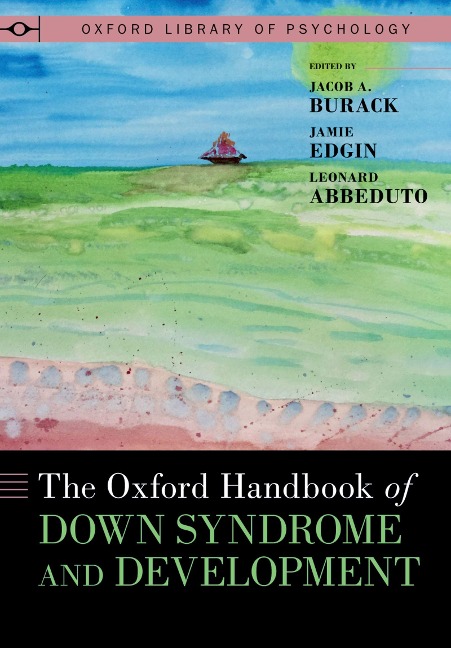
The Oxford Handbook of Down Syndrome and Development comprises cutting-edge and provocative integrative reviews of essential theory and research about persons with Down syndrome at various stages of the lifespan. The volume opens with a brief section on historic and contemporary scientific approaches to understanding the development of persons with Down syndrome with subsequent sections on social development and family relations, cognition and neuropsychology, and comorbid conditions. Together these chapters provide extensive background that leads to a comprehensive understanding of the development and well-being of persons with Down syndrome across many different aspects of everyday living. The final section contains innovative and forward-looking chapters on interventions and directions for future research. The contributors to all these chapters are leading scholars in the study of persons with Down syndrome and other neurodevelopmental conditions. However, the final word of the volume is left to those with lived experience -persons with Down syndrome and their family members who share and reflect on their life stories. This handbook is essential reading for all those interested in the development of persons with Down syndrome.
Jacob A. Burack is Professor of School and Applied Child Psychology and Human Development in the Department of Educational and Counselling Psychology at McGill University. He is the founder and director of the McGill Youth Study Team (MYST), the scientific director of the Summit Center for Education, Research, and Training (SCERT), and was a founding co-investigator of the Autism Research Training (ART) and National Aboriginal Mental Health Research (NAMHR) networks that were funded by the Canadian Institutes for Health Research. Together with his students, Dr. Burack's work is guided by the MYST motto of "excellence in the study and education of all children." Jamie Edgin is Associate Professor and Director of the Cognition and Neural Systems Program in the Department of Psychology at the University of Arizona. Her area of expertise is sleep and neuropsychological development in typical and atypical development, including over 20 years of work with individuals with Down syndrome. She has served on the science advisory board of NDSS since 2016. Dr. Edgin currently directs the University of Arizona Public Policy Fellowship in the Sonoran UCEDD, focused on policy development and advocacy for persons with developmental disabilities. Leonard Abbeduto is Director of the MIND Institute, the Tsakopoulos-Vismara Endowed Chair, and Professor of Psychiatry and Behavioral Sciences at the University of California, Davis. His current research is focused on understanding variation in language outcomes in various conditions associated with intellectual disability, the measurement of treatment effects in clinical trials, and the use of distance technology to deliver behavioral treatment. He is the Director of the NICHD-funded MIND Institute Intellectual and Developmental Disabilities Research Center. He also co-directs the UC Davis Redwood SEED Scholars program, which is a 4-year, residential, inclusive college program for individuals with intellectual disabilities.
Section 1: Historic and Contemporary Scientific Approaches 1. History: Science, Policy, and Families Roy Brown, Margaret R. Kyrkou, Karen Watchman, and Robert M. Hodapp
2. Developmental Approaches Jacob A. Burack, Jessica Lai, Jillian Stewart, and Oriane Landry
3. Social-emotional Development Amanda Dimachkie and Connie Kasari
4. Animal Models Ana Moyer and Roger H. Reeves
Section 2: Social Development and Family Relations
5. Mother-Child Dyads Penny Hauser-Cram, Ashley Woodman, and Linda Gilmore
6. Parental Socialization & the Down Syndrome Advantage Robert Hodapp and Ellen Casale
7. The Roles of Siblings Monica Cuskelly
8. Fears, Phobias, and Rituals David W. Evans and Mirko Uljaravic
9. Family Care of Adults Robert Hodapp, Kelli Sanderson, and Maria Mello
Section 3: Cognition and Neuropsychology 10.Infant Development Hana D'Souza and Dean D'Souza
11. Lifespan Brain Development Nancy Raitano Lee, Manisha Udhnani, and Taralee Hamner
12. Perceptual Signatures Jacalyn Guy, Christina Marcone, and Armando Bertone
13. Attention Ellie Kaplan, Elizabeth P. McKernan, Justin B. Kopec, Erin Matsuba, and Natalie Russo
14. Working Memory Liz Smith and Chris Jarrold
15. Executive Function Deborah Fidler, Lisa A. Daunhauer, Elizabeth Will, and Emily Schworer
16. Language Development Leonard Abbeduto, Natalie Arias-Trejo, Angela John Thurman, Jessica Ramos-Sanchez, and Laura Del Hoyo Soriano
17. Motor Skills Shannon Ringenbach, Nathaniel Arnold, Kahyun Nam, Simon D. Holzapfel, Chih-Chia Chen, Corina Lopez, and Monica Szeto
Section 4: Comorbid Conditions 18. Brain Aging and Alzheimer's Disease Alex Helman, Kathryn L. Van Pelt, Frederick A. Schmitt, and Elizabeth Head
19. Autism Spectrum Disorder Cory Shulman
20. Sleep Disorders Katharine Hughes, Payal Khosla, Lauren Pisani, Goffredina Spanò, and Jamie O. Edgin
Section 5: Interventions & Future Directions 21. Language Steven Warren, Shelley L. Bredin-Oja, Laura J. Hahn, and Nancy Brady
22. Dementia Carla Startin, Shahid Zaman, and Andre Strydom
23. Animal Models and Development Nadine M. Aziz and Tarik Haydar
24. Future Directions Leonard Abbeduto, Jamie O. Edgin, and Jacob A. Burack
Epilogue: The Voices of Persons with Down Syndrome and their Families Jacob A. Burack and Emily Stubbert