Und dann auf "Zum Home-Bildschirm [+]".

Stöbern
genialokal zum Startbildschirm hinzufügen
Installieren Sie die genialokal App auf Ihrem Startbildschirm für einen schnellen Zugriff und eine komfortable Nutzung.
Installieren Sie die genialokal App auf Ihrem Startbildschirm für einen schnellen Zugriff und eine komfortable Nutzung.
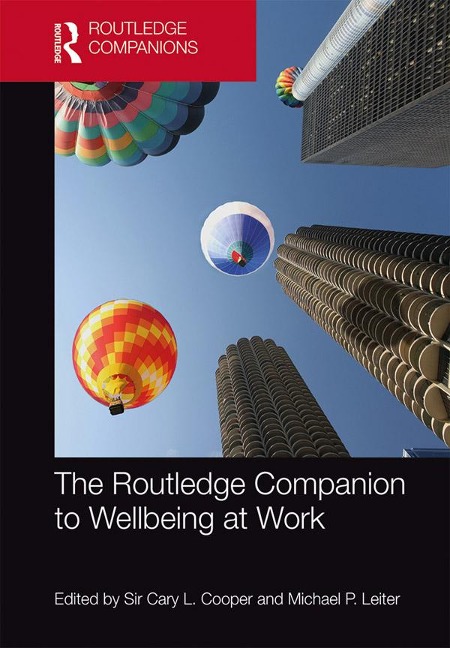
Over recent years, many companies have developed an awareness of the importance of an active, rather than passive, approach to wellbeing at work. Whilst the value of this approach is widely accepted, turning theory into effective practice is still a challenge for many companies. The Routledge Companion to Wellbeing at Work is a comprehensive reference volume addressing every aspect of the topic. Split into five parts, it explores different models of wellbeing; personal qualities contributing to wellbeing; job insecurity and organizational wellbeing; workplace supports for wellbeing; and initiatives to enhance wellbeing. The international team of contributors provide a solid foundation to research and practice, including contemporary topics such as architecture, coaching, and fitness in the workplace. Edited by two of the world's leading scholars on the subject, this text is a valuable tool for researchers, students, and practitioners in HRM and organizational psychology.
Sir Cary L. Cooper, CBE, is the 50th Anniversary Professor of Organizational Psychology and Health at the University of Manchester, UK. He is President of the CIPD, President of the British Academy of Management, and President of RELATE. In 2015 he was number one on HR Magazine's "Most Influential HR Thinkers" list, and he received a Knighthood from the Queen in 2014 for his contributions to the social sciences. Michael P. Leiter is Professor of Organizational Psychology at the School of Psychology, Deakin University, Geelong, Australia. He has published widely in all the leading journals in the field, and is a global scholar on job burnout, speaking throughout the world on this topic and on organizational health and wellbeing more generally.
1. The state of the art of workplace wellbeing Michael P. Leiter and Cary L. Cooper Part I Models of wellbeing 2. The resilient person and organization Jill Flint-Taylor and Alex Davda 3. Differentiating challenge, hindrance, and threat in the stress process Ben J. Searle and Michelle R. Tuckey 4. Psychological connections with work Christina Maslach and Cristina G. Banks 5. Determinants of mental health in the workplace Peter Hosie, Russel PJ Kingshott, and Piyush Sharma 6. Toward evidence-based practice in organizational wellbeing: methods and measures E. Kevin Kelloway Part II Personal qualities contributing to wellbeing 7. Character, personality, and psychological wellbeing Thomas A. Wright and Dorothy Klotz 8. Work characteristics, work-specific wellbeing, and employee sleep Christopher Budnick and Larissa Barber Part III Job insecurity and organizational wellbeing 9. Economic stressors and wellbeing at work: multilevel considerations Tahira M. Probst, Robert R. Sinclair and Janelle H. Cheung 10. Long working hours and presenteeism in Asia: a cultural psychological analysis Luo Lu and Chun-Yi Chou 11. Workplace incivility: a critical review and agenda for research and practice Ashlyn M. Patterson, Alexandra C. Chris, and M. Gloria Gonzales-Morales Part IV Workplace supports for wellbeing 12. Wellbeing and design at the office Chris Boyko and Rachel Cooper 13. Workplace empowerment and employee health and wellbeing Heather Spence Laschinger and Emily Read 14. Coworking communities as enablers of thriving at work Gretchen Spreitzer, Peter Bacevice, and Lyndon Garrett 15. The long-hours culture: implications for health and wellbeing Marian N. Ruderman, Cathleen Clerkin and Jennifer J. Deal 16. Rethinking work-life balance and wellbeing: the perspectives of fathers Clare Stovell, David Collinson, Caroline Gatrell, and Laura Radcliffe Part V Initiatives to enhance wellbeing 17. Wellbeing coaching Tim Anstiss and Jonathan Passmore 18. Work and wellbeing: creating a psychologically healthy workplace Matthew J. Grawitch, David W. Ballard, and Kaitlyn R. Erb 19. Job resources as contributors to wellbeing Evangelia Demerouti, Despoina Xanthopoulou, Machteld Van den Heuvel, Lonneke Dubbelt, and Heather J. Gordon 20. Stress management techniques in the workplace Oi Ling Su 21. Physical activity and workplace wellbeing Gemma Ryde and Helen Brown 22. Essential elements of programs to improve workplace wellbeing Arla Day and Samantha A. Penney 23. Improving employee wellbeing through leadership development Maria Karanika-Murray, Henna Hasson, Ulrika Von Thiele Schwarz, and Anne Richter 24. Participatory approach towards a healthy workplace in Japan Akihito Shimazu and Daniel Goering 25. Workplace conflict resolution interventions Debra Gilin Oore and Norman Dolan
Dieses eBook wird im PDF-Format geliefert und ist mit einem Adobe Kopierschutz (DRM) versehen. Sie können dieses eBook mit allen Geräten lesen, die das PDF-Format und den Adobe Kopierschutz (DRM) unterstützen.
Zum Beispiel mit den folgenden Geräten:
• tolino Reader
Laden Sie das eBook direkt über den Reader-Shop auf dem tolino herunter oder übertragen Sie das eBook auf Ihren tolino mit einer kostenlosen Software wie beispielsweise Adobe Digital Editions.
• Sony Reader & andere eBook Reader
Laden Sie das eBook direkt über den Reader-Shop herunter oder übertragen Sie das eBook mit der kostenlosen Software Sony READER FOR PC/Mac oder Adobe Digital Editions auf ein Standard-Lesegeräte mit epub- und Adobe DRM-Unterstützung.
• Tablets & Smartphones
Möchten Sie dieses eBook auf Ihrem Smartphone oder Tablet lesen, finden Sie hier unsere kostenlose Lese-App für iPhone/iPad und Android Smartphone/Tablets.
• PC & Mac
Lesen Sie das eBook direkt nach dem Herunterladen mit einer kostenlosen Lesesoftware, beispielsweise Adobe Digital Editions, Sony READER FOR PC/Mac oder direkt über Ihre eBook-Bibliothek in Ihrem Konto unter „Meine eBooks“ - „online lesen“.
Schalten Sie das eBook mit Ihrer persönlichen Adobe ID auf bis zu sechs Geräten gleichzeitig frei.
Bitte beachten Sie, dass die Kindle-Geräte das Format nicht unterstützen und dieses eBook somit nicht auf Kindle-Geräten lesbar ist.