Und dann auf "Zum Home-Bildschirm [+]".

Stöbern
genialokal zum Startbildschirm hinzufügen
Installieren Sie die genialokal App auf Ihrem Startbildschirm für einen schnellen Zugriff und eine komfortable Nutzung.
Installieren Sie die genialokal App auf Ihrem Startbildschirm für einen schnellen Zugriff und eine komfortable Nutzung.
Ihr gewünschter Artikel ist in 0 Buchhandlungen vorrätig - wählen Sie hier eine Buchhandlung in Ihrer Nähe aus:

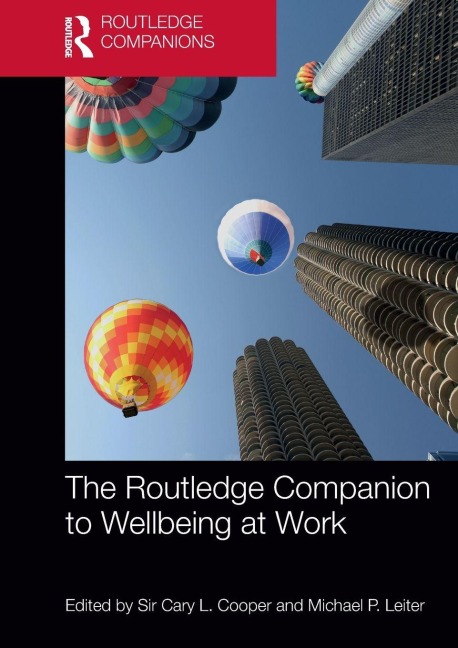
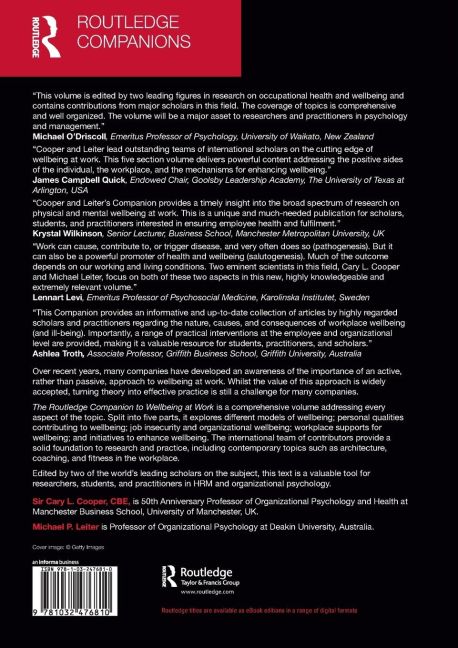
Over recent years, many companies have developed an awareness of the importance of an active, rather than passive, approach to wellbeing at work. Whilst the value of this approach is widely accepted, turning theory into effective practice is still a challenge for many companies.
The Routledge Companion to Wellbeing at Work is a comprehensive reference volume addressing every aspect of the topic. Split into five parts, it explores different models of wellbeing; personal qualities contributing to wellbeing; job insecurity and organizational wellbeing; workplace supports for wellbeing; and initiatives to enhance wellbeing. The international team of contributors provide a solid foundation to research and practice, including contemporary topics such as architecture, coaching, and fitness in the workplace.
Edited by two of the world's leading scholars on the subject, this text is a valuable tool for researchers, students, and practitioners in HRM and organizational psychology.
Sir Cary L. Cooper, CBE, is the 50th Anniversary Professor of Organizational Psychology and Health at the University of Manchester, UK. He is President of the CIPD, President of the British Academy of Management, and President of RELATE. In 2015 he was number one on HR Magazine's "Most Influential HR Thinkers" list, and he received a Knighthood from the Queen in 2014 for his contributions to the social sciences. Michael P. Leiter is Professor of Organizational Psychology at the School of Psychology, Deakin University, Geelong, Australia. He has published widely in all the leading journals in the field, and is a global scholar on job burnout, speaking throughout the world on this topic and on organizational health and wellbeing more generally.
1. The state of the art of workplace wellbeing Part I Models of wellbeing 2. The resilient person and organization 3. Differentiating challenge, hindrance, and threat in the stress process 4. Psychological connections with work 5. Determinants of mental health in the workplace 6. Toward evidence-based practice in organizational wellbeing: methods and measures Part II Personal qualities contributing to wellbeing 7. Character, personality, and psychological wellbeing 8. Work characteristics, work-specific wellbeing, and employee sleep Part III Job insecurity and organizational wellbeing 9. Economic stressors and wellbeing at work: multilevel considerations 10. Long working hours and presenteeism in Asia: a cultural psychological analysis 11. Workplace incivility: a critical review and agenda for research and practice Part IV Workplace supports for wellbeing 12. Wellbeing and design at the office 13. Workplace empowerment and employee health and wellbeing 14. Coworking communities as enablers of thriving at work 15. The long-hours culture: implications for health and wellbeing 16. Rethinking work-life balance and wellbeing: the perspectives of fathers Part V Initiatives to enhance wellbeing 17. Wellbeing coaching 18. Work and wellbeing: creating a psychologically healthy workplace 19. Job resources as contributors to wellbeing 20. Stress management techniques in the workplace 21. Physical activity and workplace wellbeing 22. Essential elements of programs to improve workplace wellbeing 23. Improving employee wellbeing through leadership development 24. Participatory approach towards a healthy workplace in Japan 25. Workplace conflict resolution interventions