Und dann auf "Zum Home-Bildschirm [+]".

Stöbern
genialokal zum Startbildschirm hinzufügen
Installieren Sie die genialokal App auf Ihrem Startbildschirm für einen schnellen Zugriff und eine komfortable Nutzung.
Installieren Sie die genialokal App auf Ihrem Startbildschirm für einen schnellen Zugriff und eine komfortable Nutzung.
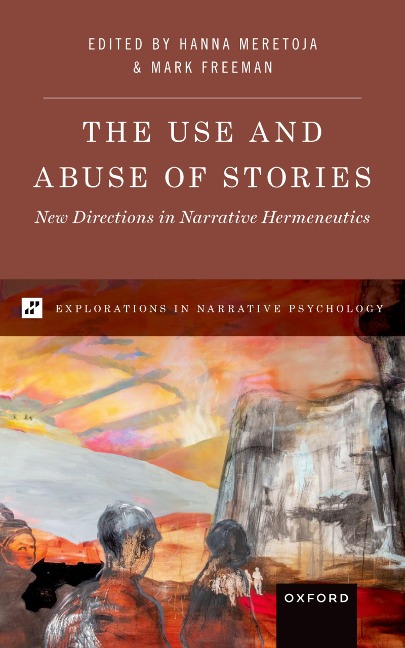
Narrative practice has come under attack in the current "post-truth" era. In fact, many associate "narrative hermeneutics"--the field of inquiry concerned with reflection on the meaning and interpretation of stories--directly with this putative movement beyond truth. Challenging this view, The Use and Abuse of Stories argues that this broad arena of inquiry instead serves as a vitally important vehicle for addressing and redressing the social and political problems at hand. Hanna Meretoja and Mark Freeman have gathered an interdisciplinary group of esteemed authors to explore how interpretation is relevant to current discussions in narrative studies and to the broader debate that revolves around issues of truth, facts, and narrative. The contributions turn to the tradition of narrative hermeneutics to emphasize that narrative is a cultural meaning-making practice that is integral to how we make sense of who we are and who we could be. Addressing topics ranging from the dangers of political narratives to questions of truth in medical and psychiatric practice, this volume shows how narrative hermeneutics contributes to topical debates both in interdisciplinary narrative studies and in the current cultural and political situation in which issues of truth have gained new urgency.
Hanna Meretoja is Professor of Comparative Literature and Director of SELMA: Centre for the Study of Storytelling, Experientiality and Memory at the University of Turku (Finland) and Principal Investigator in the Academy of Finland research consortium "Instrumental Narratives: The Limits of Storytelling and New Story-Critical Narrative Theory" (2018-2023). Her monographs include The Ethics of Storytelling: Narrative Hermeneutics, History, and the Possible (Oxford, 2018) and The Narrative Turn in Fiction and Theory (2014), and she has co-edited The Routledge Companion to Literature and Trauma (2020, with Colin Davis) and Storytelling and Ethics: Literature, Visual Arts and the Power of Narrative (2018), Memory Studies special issue "Cultural Memorial Forms" (2021, with Eneken Laanes), and Poetics Today special issue "Critical Approaches to the Storytelling Boom" (2022, with Maria Mäkelä). Mark Freeman is Distinguished Professor of Ethics and Society in the Department of Psychology at the College of the Holy Cross. He is the author of numerous works, including Rewriting the Self: History, Memory, Narrative (1993); Hindsight: The Promise and Peril of Looking Backward (Oxford, 2010); The Priority of the Other: Thinking and Living Beyond the Self (Oxford, 2014); and, most recently, Do I Look at You with Love? Reimagining the Story of Dementia (2021). Winner of the Theodore R. Sarbin Award from the Society for Theoretical and Philosophical Psychology and the Joseph B. Gittler Award from the American Psychological Foundation, Freeman is a Fellow in the American Psychological Association and serves as Editor for the Oxford University Press series "Explorations in Narrative Psychology."
Introduction: Challenges and Prospects of Narrative Hermeneutics in Tumultuous Times Hanna Meretoja and Mark Freeman Part I: Politics of Storytelling Chapter 1: The Inevitability, and Danger, of Narrative Mark Freeman Chapter 2: Testimony: Truth, Lies, and the Hermeneutics of Suspicion Colin Davis Chapter 3: Hermeneutic Awareness in Uncertain Times: Post-truth, Narrative Agency, and Existential Diminishment Hanna Meretoja Part II: Understanding the Self Chapter 4: Verstehen and narrative Jens Brockmeier Chapter 5: "Be Loyal to the Story": Sorrow, Narrative, and Truth-telling Molly Andrews Chapter 6: Narrative as an Interpretation of Self-Pattern Shaun Gallagher Chapter 7: Speaking of Elves, Dragons, and Werewolves: Narrative Hermeneutics and Other-than-Human Identities Clive Baldwin, Lauren Ripley, and Shania Arsenault Part III: Understanding the Other Chapter 8: Identity, Understanding, and Narrative Georgia Warnke Chapter 9: Found in Translation: Solicitude and Linguistic Hospitality in Storytelling Andreea Deciu Ritivoi Chapter 10: The Hermeneutics of Darkness: Interpreting Perpetrators on their Crimes Brian Schiff, Kaylee Altimore, and Genevieve Bougher Chapter 11: Perpetrator Histories, Silencing and Untold Stories: A View from Contemporary Psychoanalysis Roger Frie Part IV: Narrative Practices Chapter 12: Literary and Film Narratives Jakob Lothe Chapter 13: Queer Perspectives on Narrative Practices in Asylum Politics Ada Schwanck Chapter 14: Narrative Medicine: The Book at the Gates of Biomedicine Danielle Spencer Chapter 15: Psychiatric Truth and Narrative Hermeneutics Bradley Lewis Index
Dieses eBook wird im PDF-Format geliefert und ist mit einem Adobe Kopierschutz (DRM) versehen. Sie können dieses eBook mit allen Geräten lesen, die das PDF-Format und den Adobe Kopierschutz (DRM) unterstützen.
Zum Beispiel mit den folgenden Geräten:
• tolino Reader
Laden Sie das eBook direkt über den Reader-Shop auf dem tolino herunter oder übertragen Sie das eBook auf Ihren tolino mit einer kostenlosen Software wie beispielsweise Adobe Digital Editions.
• Sony Reader & andere eBook Reader
Laden Sie das eBook direkt über den Reader-Shop herunter oder übertragen Sie das eBook mit der kostenlosen Software Sony READER FOR PC/Mac oder Adobe Digital Editions auf ein Standard-Lesegeräte mit epub- und Adobe DRM-Unterstützung.
• Tablets & Smartphones
Möchten Sie dieses eBook auf Ihrem Smartphone oder Tablet lesen, finden Sie hier unsere kostenlose Lese-App für iPhone/iPad und Android Smartphone/Tablets.
• PC & Mac
Lesen Sie das eBook direkt nach dem Herunterladen mit einer kostenlosen Lesesoftware, beispielsweise Adobe Digital Editions, Sony READER FOR PC/Mac oder direkt über Ihre eBook-Bibliothek in Ihrem Konto unter „Meine eBooks“ - „online lesen“.
Schalten Sie das eBook mit Ihrer persönlichen Adobe ID auf bis zu sechs Geräten gleichzeitig frei.
Bitte beachten Sie, dass die Kindle-Geräte das Format nicht unterstützen und dieses eBook somit nicht auf Kindle-Geräten lesbar ist.