Und dann auf "Zum Home-Bildschirm [+]".

Stöbern
genialokal zum Startbildschirm hinzufügen
Installieren Sie die genialokal App auf Ihrem Startbildschirm für einen schnellen Zugriff und eine komfortable Nutzung.
Installieren Sie die genialokal App auf Ihrem Startbildschirm für einen schnellen Zugriff und eine komfortable Nutzung.
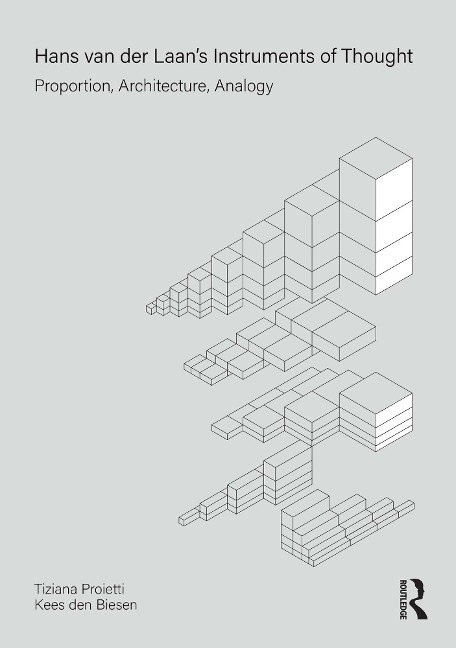
The work of the Dutch Benedictine monk and architect Hans van der Laan (1904-1991) offers important insights into the ways in which artifacts address the complexity of human physical, cognitive, and social needs. Van der Laan developed a number of powerful lines of thought, three of which are introduced here: the search for a theory of architecture; the establishment of a three-dimensional system of proportions named Plastic Number; and analogy as the mainspring of human thinking. This triad of deeply interconnected intellectual strategies represents his most important 'instruments of thought' and is rooted in the careful observation of phenomena as they are presented to us rather than relying on conventional beliefs. Van der Laan's instruments of thought lead us to reconsider the origins of human creation, urging a deeper examination of our perceptual and cognitive response to the limitlessness of the surrounding environment. On this basis, Van der Laan develops a unique philosophy of culture and design that includes considerations on the relationship between nature, culture, and religious ritual. Although this book is informative, its principal aim is to be formative. On the basis of Van der Laan's instruments of thought, the authors develop a methodology to explore the Plastic Number theory and the many ways in which we perceive and interpret proportion. Reintroducing playful creativity and intellectual exploration into architectural pedagogy and design practice, this book is a gateway for a deeper understanding of the effects of the built environment on human behavior and the various ways in which the human mind perceives and decodes artifacts.
Tiziana Proietti is an architect, educator, and researcher. She is Professor at the C. Gibbs College of Architecture at the University of Oklahoma where she holds joint appointments in the Departments of Architecture and Interior Design. She is director of the Sense Base Laboratory, a hub for interdisciplinary research aiming toward bridging neuroscience and architecture and testing human response to architectural proportion. Kees den Biesen is an independent scholar in literature, philosophy, and theology, specialized in early Christian literature, architectural theory, and symbolical theology. His main interest is in the interaction between art, thought, and religion. He is primarily engaged in publishing in the field of Syriac studies and teaches at the Pontifical Oriental Institute in Rome.
1. Introduction 2. From Things to Thoughts to Understanding 3. From Thoughts to Things to Practice 4. The Great Play of Forms Annex
Dieses eBook wird im PDF-Format geliefert und ist mit einem Adobe Kopierschutz (DRM) versehen. Sie können dieses eBook mit allen Geräten lesen, die das PDF-Format und den Adobe Kopierschutz (DRM) unterstützen.
Zum Beispiel mit den folgenden Geräten:
• tolino Reader
Laden Sie das eBook direkt über den Reader-Shop auf dem tolino herunter oder übertragen Sie das eBook auf Ihren tolino mit einer kostenlosen Software wie beispielsweise Adobe Digital Editions.
• Sony Reader & andere eBook Reader
Laden Sie das eBook direkt über den Reader-Shop herunter oder übertragen Sie das eBook mit der kostenlosen Software Sony READER FOR PC/Mac oder Adobe Digital Editions auf ein Standard-Lesegeräte mit epub- und Adobe DRM-Unterstützung.
• Tablets & Smartphones
Möchten Sie dieses eBook auf Ihrem Smartphone oder Tablet lesen, finden Sie hier unsere kostenlose Lese-App für iPhone/iPad und Android Smartphone/Tablets.
• PC & Mac
Lesen Sie das eBook direkt nach dem Herunterladen mit einer kostenlosen Lesesoftware, beispielsweise Adobe Digital Editions, Sony READER FOR PC/Mac oder direkt über Ihre eBook-Bibliothek in Ihrem Konto unter „Meine eBooks“ - „online lesen“.
Schalten Sie das eBook mit Ihrer persönlichen Adobe ID auf bis zu sechs Geräten gleichzeitig frei.
Bitte beachten Sie, dass die Kindle-Geräte das Format nicht unterstützen und dieses eBook somit nicht auf Kindle-Geräten lesbar ist.