Und dann auf "Zum Home-Bildschirm [+]".

Stöbern
genialokal zum Startbildschirm hinzufügen
Installieren Sie die genialokal App auf Ihrem Startbildschirm für einen schnellen Zugriff und eine komfortable Nutzung.
Installieren Sie die genialokal App auf Ihrem Startbildschirm für einen schnellen Zugriff und eine komfortable Nutzung.
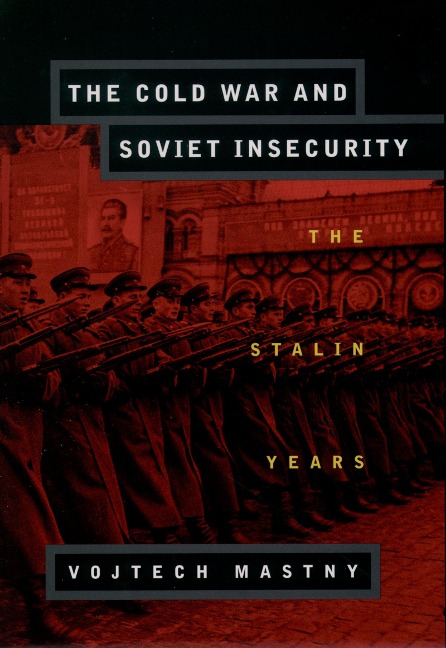
The child of a small coup rather than an extension of popular will, the Soviet State was intrinsically insecure, its leaders ever fearful of internal and external threats. They did not feel that their regime would be safe until the revolution triumphed abroad, convinced that the outside world was implacably hostile. None felt this more strongly than Stalin. Indeed, as eminent historian of the Soviet Union Vojtech Mastny argues, it was Stalin's insatiable craving for security, more than anything else, that was the root cause of East-West tensions and the Cold War. In The Cold War and Soviet Insecurity, the long-awaited sequel to his acclaimed work, Russia's Road to the Cold War, Mastny offers a masterful history of the birth of the Cold War, drawing on extensive research in newly opened Soviet archives. Here Stalin takes center stage during the critical years 1947 to 1953, stamping East-West tensions with his personal blend of paranoia, ideology, ruthlessness, and wishful thinking. Indeed, given Stalin's personality and his unquenchable thirst for security, Mastny argues, the Cold War arose as an "unexpected but predetermined" event--far from planned, yet scarcely avoidable. As Mastny unfolds the history of this climactic era, he offers a new understanding of important aspects of the developing conflict--throwing sharp light, for example, on the Kremlin's relationship with foreign Communist parties (in both Eastern and Western Europe) and its very different responses to Tito and Mao. Indeed, the break with Tito demonstrates the depths of Stalin's paranoia: the Yugoslav leader actually thought he was doing Stalin's will, when all along his very similarity to Stalin alienated the Soviets--a case of "incompatible affinities," as Mastny writes. Here too is a fresh view of the outbreak of the Korean War: Stalin not only approved the attack, he actively armed and prepared the North's Communist army. And yet, he strangely left the most crucial war decisions to the North Koreans. Mastny brilliantly analyzes these events, showing the impact of the fighting in Korea on European relations--especially the question of divided Germany. And throughout the volume, Mastny offers many thought-provoking observations--he shows, for instance, that U.S. covert operations (especially the attempted infiltration of armed agents into Eastern Europe) may have had greater historical impact, by reinforcing Stalin's paranoia, than the better-known Soviet espionage efforts in the West; and that the West's failure to exploit instability--especially in East Germany--after Stalin's death, may have allowed a shaky Soviet regime to regain its footing and survive for another forty years. Russia's Road to the Cold War provided the definitive portrait of Stalin's foreign policy during World War II. Now, in The Cold War and Soviet Insecurity, Mastny provides an equally superb account of Stalin's foreign policy during his last years. Combining important new research with the fascinating insight of one of the leading authorities on Soviet affairs, this authoritative volume illuminates a crucial period in recent world history.
About the Author: Vojtech Mastny has taught history and international relations at Columbia University, the University of Illinois, and the Johns Hopkins University School of Advanced International Studies. His many books include The Helsinki Process and the Reintegration of Europe and The Czechs under Nazi Rule, which won the Clarke F. Ansley award.
Dieses eBook wird im PDF-Format geliefert und ist mit einem Adobe Kopierschutz (DRM) versehen. Sie können dieses eBook mit allen Geräten lesen, die das PDF-Format und den Adobe Kopierschutz (DRM) unterstützen.
Zum Beispiel mit den folgenden Geräten:
• tolino Reader
Laden Sie das eBook direkt über den Reader-Shop auf dem tolino herunter oder übertragen Sie das eBook auf Ihren tolino mit einer kostenlosen Software wie beispielsweise Adobe Digital Editions.
• Sony Reader & andere eBook Reader
Laden Sie das eBook direkt über den Reader-Shop herunter oder übertragen Sie das eBook mit der kostenlosen Software Sony READER FOR PC/Mac oder Adobe Digital Editions auf ein Standard-Lesegeräte mit epub- und Adobe DRM-Unterstützung.
• Tablets & Smartphones
Möchten Sie dieses eBook auf Ihrem Smartphone oder Tablet lesen, finden Sie hier unsere kostenlose Lese-App für iPhone/iPad und Android Smartphone/Tablets.
• PC & Mac
Lesen Sie das eBook direkt nach dem Herunterladen mit einer kostenlosen Lesesoftware, beispielsweise Adobe Digital Editions, Sony READER FOR PC/Mac oder direkt über Ihre eBook-Bibliothek in Ihrem Konto unter „Meine eBooks“ - „online lesen“.
Schalten Sie das eBook mit Ihrer persönlichen Adobe ID auf bis zu sechs Geräten gleichzeitig frei.
Bitte beachten Sie, dass die Kindle-Geräte das Format nicht unterstützen und dieses eBook somit nicht auf Kindle-Geräten lesbar ist.