Und dann auf "Zum Home-Bildschirm [+]".

Stöbern
genialokal zum Startbildschirm hinzufügen
Installieren Sie die genialokal App auf Ihrem Startbildschirm für einen schnellen Zugriff und eine komfortable Nutzung.
Installieren Sie die genialokal App auf Ihrem Startbildschirm für einen schnellen Zugriff und eine komfortable Nutzung.
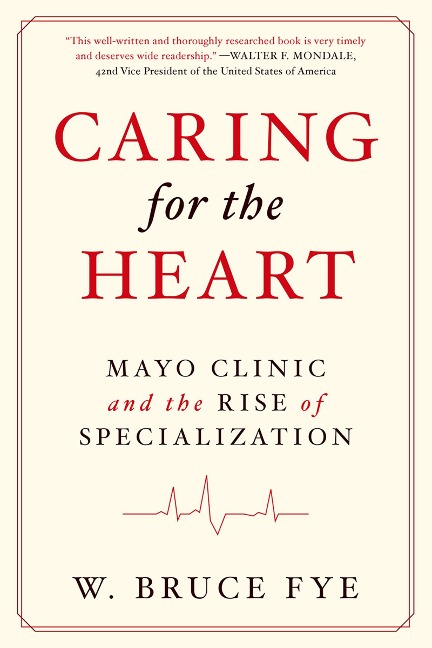
This groundbreaking book weaves together three important themes. It describes major developments in the diagnosis and treatment of heart disease in the twentieth century, explains how the Mayo Clinic evolved from a family practice in Minnesota into one of the world's leading medical centers, and reveals how the invention of new technologies and procedures promoted specialization among physicians and surgeons. Caring for the Heart is written for general readers as well as health care professionals, historians, and policy analysts. Unlike traditional institutional or disease-focused histories, this book places individuals and events in national and international contexts that emphasize the interplay of medical, scientific, technological, social, political, and economic forces that have resulted in contemporary heart care. Patient stories and media perspectives are included throughout to help general readers understand the medical and technological developments that are described. The book is a synthetic study, but it is written so that readers may pick and choose the chapters of most interest to them. Another feature of the book is that readers may follow the stories without looking at the notes. Those who are interested in delving deeper into the main topics will find a wealth of carefully chosen references that offer greater detail and additional perspectives. The descriptions and interpretations that fill the book benefit from the fact that the author has been a practicing cardiologist and medical historian for almost four decades. This is mainly a twentieth-century story, but it begins earlier--before there were physicians who were identified as cardiologists and at a time when medical specialization was just emerging in America. The final chapter, which addresses present-day concerns about health care costs, counterbalances earlier ones that might be read as celebrations of new technologies.
W. Bruce Fye, M.D. retired recently as a consultant in the Division of Cardiovascular Diseases at Mayo Clinic. Born and raised in Pennsylvania, he received his undergraduate and medical degrees from Johns Hopkins, where he was elected to Phi Beta Kappa and Alpha Omega Alpha. He completed a medical residency at New York Hospital-Cornell Medical Center in Manhattan before returning to Johns Hopkins for his cardiology fellowship. Selected as a Robert Wood Johnson Clinical Scholar, he also received a master's degree from the Institute of the History of Medicine at Hopkins. In 1978, Dr. Fye joined the Marshfield Clinic in Wisconsin, where he established the echocardiography laboratory. He was chair of the Cardiology Department from 1981 to 1999 and was vice-chief of staff of St. Joseph's Hospital in Marshfield from 1991 to 1999. He joined the Cardiovascular Division of the Mayo Clinic in 2000. A Professor of Medicine and the History of Medicine, he was the founding Medical Director of the Mayo Clinic Center for the History of Medicine. He is the author of more than 100 historical papers and two books, The Development of American Physiology: Scientific Medicine in the 19th Century (1987) and American Cardiology: The History of a Specialty and Its College (1996). Oxford University Press will publish his third book, Caring for the Heart: Mayo Clinic and the Rise of Specialization, early in 2015. Dr. Fye is a past president of the American College of Cardiology, the American Association for the History of Medicine, and the American Osler Society. He met his wife Lois in high school, and they recently celebrated their 45th wedding anniversary. They have two daughters and two grandsons.
List of Figures and Tables Foreword by Rosemary A. Stevens Preface (with Acknowledgements) Introduction Section One: Inventing the Mayo Clinic and Cardiology Chapter 1 The Nineteenth-Century Origins of the Mayo Practice Chapter 2 The Mayos' Invention of Multispecialty Group Practice Chapter 3 The Development of an Academic Medical Center in Rochester Chapter 4 Patient Care and Clinical Research in the 1920s Chapter 5 The Electrocardiograph and the Birth of Cardiology Chapter 6 Challenges and Changes during the Depression Section Two: Developments in the Diagnosis and Treatment of Heart Disease Chapter 7 President Roosevelt's Secret Hypertensive Heart Disease Chapter 8 The Reinvention of the American Heart Association, and the Invention of Cardiac Catheterization Chapter 9 Surgeons Begin Trying to Treat Heart Disease Chapter 10 Pioneering Open-Heart Surgery at the University of Minnesota and the Mayo Clinic Chapter 11 The Expansion of Open-Heart Surgery and Cardiac Catheterization Chapter 12 Beyond Mid-Century: Two Decades of Growth and Change Section Three: Technologies Transform Heart Care and Stimulate Subspecialization Chapter 13 Creating Coronary Care Units and Empowering Nurses Chapter 14 Coronary Angiography: The Cleveland Clinic Leads the Way Chapter 15 Coronary Artery Bypass Surgery Stimulates the Growth of Angiography Chapter 16 Transforming Cardiac Catheters into Treatment Tools Chapter 17 Analyzing and Managing Abnormal Heart Rhythms Chapter 18 Seeing the Heart: Echocardiography and Other Imaging Technologies Chapter 19 Treating Heart Failure and Preventing Cardiovascular Disease Chapter 20 Challenges and Opportunities around the New Millennium Appendix Alphabetical List of the Subjects of Oral Histories Notes Index
Dieses eBook wird im PDF-Format geliefert und ist mit einem Adobe Kopierschutz (DRM) versehen. Sie können dieses eBook mit allen Geräten lesen, die das PDF-Format und den Adobe Kopierschutz (DRM) unterstützen.
Zum Beispiel mit den folgenden Geräten:
• tolino Reader
Laden Sie das eBook direkt über den Reader-Shop auf dem tolino herunter oder übertragen Sie das eBook auf Ihren tolino mit einer kostenlosen Software wie beispielsweise Adobe Digital Editions.
• Sony Reader & andere eBook Reader
Laden Sie das eBook direkt über den Reader-Shop herunter oder übertragen Sie das eBook mit der kostenlosen Software Sony READER FOR PC/Mac oder Adobe Digital Editions auf ein Standard-Lesegeräte mit epub- und Adobe DRM-Unterstützung.
• Tablets & Smartphones
Möchten Sie dieses eBook auf Ihrem Smartphone oder Tablet lesen, finden Sie hier unsere kostenlose Lese-App für iPhone/iPad und Android Smartphone/Tablets.
• PC & Mac
Lesen Sie das eBook direkt nach dem Herunterladen mit einer kostenlosen Lesesoftware, beispielsweise Adobe Digital Editions, Sony READER FOR PC/Mac oder direkt über Ihre eBook-Bibliothek in Ihrem Konto unter „Meine eBooks“ - „online lesen“.
Schalten Sie das eBook mit Ihrer persönlichen Adobe ID auf bis zu sechs Geräten gleichzeitig frei.
Bitte beachten Sie, dass die Kindle-Geräte das Format nicht unterstützen und dieses eBook somit nicht auf Kindle-Geräten lesbar ist.