Und dann auf "Zum Home-Bildschirm [+]".

Stöbern
genialokal zum Startbildschirm hinzufügen
Installieren Sie die genialokal App auf Ihrem Startbildschirm für einen schnellen Zugriff und eine komfortable Nutzung.
Installieren Sie die genialokal App auf Ihrem Startbildschirm für einen schnellen Zugriff und eine komfortable Nutzung.
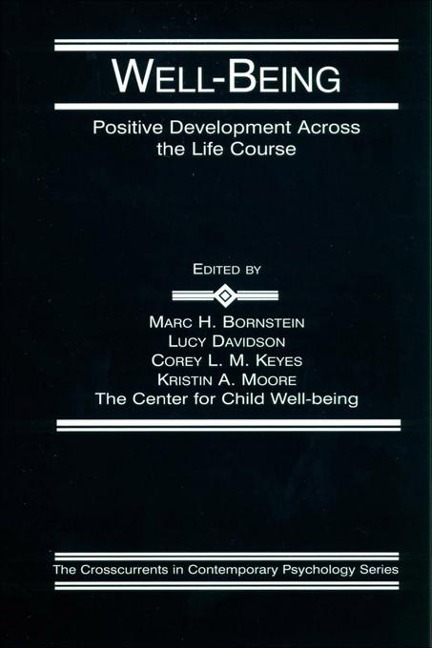
This volume derived from original presentations given at a conference in Atlanta, Georgia, under the auspices of the Center for Child Well-Being. Scholars, practitioners, public health professionals, and principals in the child development community convened to address a science-based framework for elements of well-being and how the elements might be developed across the life course. Integrating physical, cognitive, and social-emotional domains, Well-Being is the first scientific book to consider well-being holistically. Focusing on a set of core strengths grouped within these three domains, the book also includes a fourth section on developmental strengths through adulthood that broadly examines a continuum of health and development, as well as transitions in well-being. This volume takes a developmental perspective across the life course, describing foundational strengths for well-being--the capacities that can be actively developed, supported, or learned. These foundational strengths--problem solving, emotional regulation, and physical safety--are the positive underpinnings of early child health and development, as well as ongoing well-being across the life course. Working together and blending their respective disciplinary perspectives and expertise, 53 experts in psychology, sociology, child development, and medicine have contributed to the book.
Marc H. Bornstein, Lucy Davidson, Corey L.M. Keyes, Kristin A. Moore
Contents: M.H. Bornstein, Series Prologue. W.H. Foege, Foreword. K.A. Moore, C.L.M. Keyes, A Brief History of Well-Being in Children and Adults. E.L. Pollard, M.L. Rosenberg, The Strength-Based Approach to Child Well-Being: Let's Begin With the End in Mind. J.F. Zaff, D.C. Smith, M.F. Rogers, C.H. Leavitt, T.G. Halle, M.H. Bornstein, Holistic Well-Being and the Developing Child. Part I:Physical Domain.C.H. Leavitt, T.F. Tonniges, M.F. Rogers, Good Nutrition: The Imperative for Positive Development. T.F. Tonniges, C.H. Leavitt, Preventive Health Care in Early Childhood and Throughout the Life Span. J.M. Conner, Physical Activity and Well-Being. D.A. Sleet, J.A. Mercy, Promotion of Safety, Security, and Well-Being. J.M. Conner, J.E. Dewey, Reproductive Health. B.G. Simons-Morton, D.L. Haynie, Growing up Drug Free: A Developmental Challenge. Part II:Social-Emotional Domain.T.G. Halle, Emotional Development and Well-Being. W.G. Graziano, R.M. Tobin, Emotional Regulation From Infancy Through Adolescence. L.J. Bridges, Coping as an Element of Developmental Well-Being. L.J. Bridges, Autonomy as an Element of Developmental Well-Being. L.J. Bridges, Trust, Attachment, and Relatedness. M.J. Cox, K.S.M. Harter, Parent-Child Relationships. B.L. Volling, Sibling Relationships. W.M. Bukowski, Peer Relationships. J.F. Zaff, E.C. Hair, Positive Development of the Self: Self-Concept, Self-Esteem, and Identity. N. Eisenberg, Prosocial Behavior, Empathy, and Sympathy. Part III:Cognitive Domain.R.V. Kail, Information Processing and Memory. N. Wentworth, S.L. Witryol, Curiosity, Exploration, and Novelty-Seeking. K.D. Jennings, L.J. Dietz, Mastery Motivation and Goal Persistence in Young Children. R.S. Siegler, Thinking and Intelligence. D.C. Smith, Problem Solving as an Element of Developmental Well-Being. B. MacWhinney, M.H. Bornstein, Language and Literacy. S.B. Plank, D.J. MacIver, Educational Achievement. D.A. Hart, D.A. Burock, B.E. London, A.M. Miraglia, Moral Development in Childhood. E. Winner, Creativity and Talent. Part IV:Adult Development Domain.J. Eccles, J. Templeton, B. Barber, M. Stone, Adolescence and Emerging Adulthood: The Critical Passage Ways to Adulthood. E.L. Schneider, L. Davidson, Physical Health and Adult Well-Being. D.C. Reitzes, Social and Emotional Engagement in Adulthood. D.M. Isaacowitz, M.E.P. Seligman, Cognitive Styles and Well-Being in Adulthood and Old Age. C.L.M. Keyes, M.B. Waterman, Dimensions of Well-Being and Mental Health in Adulthood. Part V:Overarching Issues and Themes.R.M. Lerner, M.H. Bornstein, D.C. Smith, Child Well-Being: From Elements to Integration. L. Davidson, M.L. Rosenberg, K.A. Moore, Well-Being and the Future: Using Science Based Knowledge to Inform Practice and Policy.
Dieses eBook wird im PDF-Format geliefert und ist mit einem Adobe Kopierschutz (DRM) versehen. Sie können dieses eBook mit allen Geräten lesen, die das PDF-Format und den Adobe Kopierschutz (DRM) unterstützen.
Zum Beispiel mit den folgenden Geräten:
• tolino Reader
Laden Sie das eBook direkt über den Reader-Shop auf dem tolino herunter oder übertragen Sie das eBook auf Ihren tolino mit einer kostenlosen Software wie beispielsweise Adobe Digital Editions.
• Sony Reader & andere eBook Reader
Laden Sie das eBook direkt über den Reader-Shop herunter oder übertragen Sie das eBook mit der kostenlosen Software Sony READER FOR PC/Mac oder Adobe Digital Editions auf ein Standard-Lesegeräte mit epub- und Adobe DRM-Unterstützung.
• Tablets & Smartphones
Möchten Sie dieses eBook auf Ihrem Smartphone oder Tablet lesen, finden Sie hier unsere kostenlose Lese-App für iPhone/iPad und Android Smartphone/Tablets.
• PC & Mac
Lesen Sie das eBook direkt nach dem Herunterladen mit einer kostenlosen Lesesoftware, beispielsweise Adobe Digital Editions, Sony READER FOR PC/Mac oder direkt über Ihre eBook-Bibliothek in Ihrem Konto unter „Meine eBooks“ - „online lesen“.
Schalten Sie das eBook mit Ihrer persönlichen Adobe ID auf bis zu sechs Geräten gleichzeitig frei.
Bitte beachten Sie, dass die Kindle-Geräte das Format nicht unterstützen und dieses eBook somit nicht auf Kindle-Geräten lesbar ist.